When stress is not just a passing phase
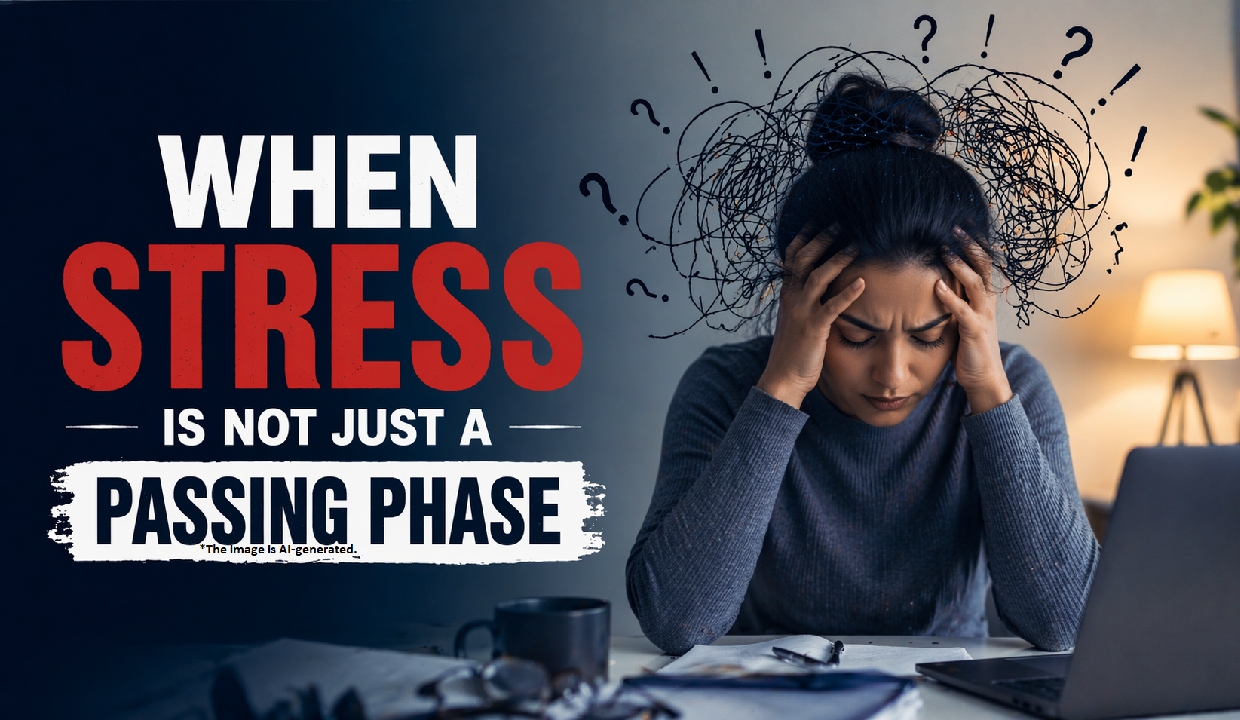
I remember the initial days of recognising ‘something abnormal’ in the way I was living my life. My first instinct was to dismiss it as my imagination, and then, when the condition persisted, I chalked it up to the S-word that is casually woven into our lives-stress. “Who is not stressed these days?” is the modern-day maxim, making the word reductive and the condition itself more dangerous than it seems. What in the beginning looked like a commonplace response to everyday pressures slowly settled in, taking residence in my nervous system and body, and before I knew it, the condition had crossed the line. From mere stress, it had leapt into a territory that became a long drawn-out health crisis. Prolonged stress, I realised, was not a state that moves on with time. It persists, finds places in our system to lodge, and slowly becomes a health challenge of unthinkable proportions. Stress by itself may not be dangerous if it rises and recedes with work and life situations, but when it becomes a habit to be constantly on edge, it turns into an anxiety disorder, putting us in a spiral of psychosomatic illnesses. The difficulty, however, is not in understanding this intellectually. It lies in recognising the moment of shift and taking action to prevent further deterioration. Because the line does not announce itself. It slips in quietly. One day, you are dealing with pressure; another day, you are unable to return to yourself even after the pressure has passed. What was once a reaction becomes a state of being. And that is perhaps the first sign that something has altered beneath the surface.
It is not always the large breakdowns that warn us. It is often the smaller, more persistent disturbances-sleep that refuses to come easily; a mind that will not switch off; a body that feels perpetually tense, as though bracing for something unnamed; irritability that has no clear cause; a heaviness that lingers through the day; the loss of interest in things that once offered ease; and a quiet dependence on distractions, stimulants, or substances to feel momentarily better. None of these seem alarming in isolation. Together, they form a pattern we are too quick to overlook.
We tell ourselves it is a phase, that it will pass. We tell ourselves this is simply what modern living looks like. In doing so, we normalise what is, in truth, a slow erosion of well-being. From being a hindrance, it becomes a series of ailments that can leave one indisposed both mentally and physically. Pre-emptive care, in this context, is not a grand corrective step taken after collapse. It is a series of small acknowledgements made before we get there. It begins with taking our own signals seriously, instead of dismissing them as weakness or exaggeration. It requires us to step back from the pace we have unquestioningly accepted and ask whether it is sustainable for the mind and body that must carry it.
It may mean allowing ourselves pauses without guilt, setting boundaries, and speaking openly instead of remaining silent. Most importantly, it means seeking help early and restoring basic rhythms-rest, movement, and quiet-without the pressure to be constantly productive.
Mental health is often addressed only in crisis, but its preservation lies in early attention. Not everything overwhelming is a disorder, yet not everything persistent is merely stress. Recognising this difference is crucial. When stress becomes a way of living rather than a response, it turns into an early warning. How we respond to it can shape our long-term well-being.
The writer is a Dubai-based author, columnist and children’s writing coach; Views presented are personal.