Prime Minister Modi’s five-nation outreach
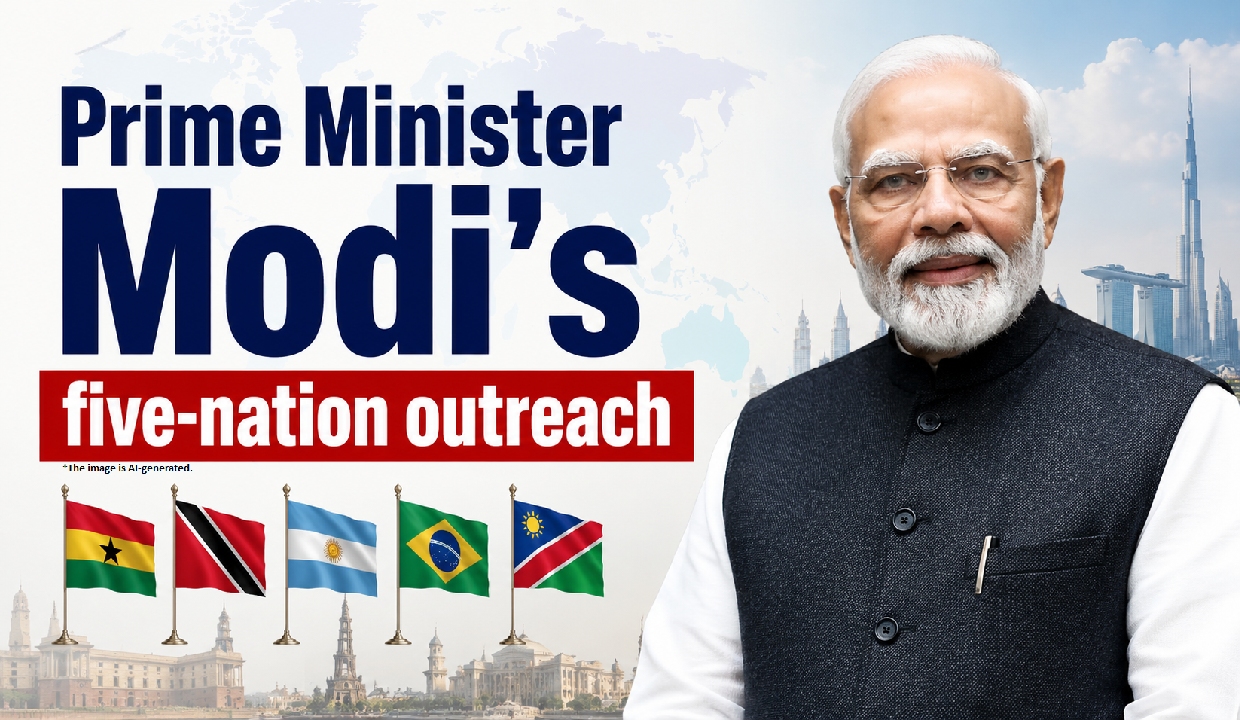
Modi’s trip signals that India’s foreign policy is moving beyond traditional diplomacy to strengthen technology alliances and ensure supply-chain security
Prime Minister Narendra Modi is on a whirlwind tour of five nations. He is visiting the United Arab Emirates, the Netherlands, Sweden, Norway and Italy. These are difficult times for the world, as supply lines are disrupted and energy uncertainties are playing havoc with the planning of emerging economies. This is not just a regular seasonal disruption, but the cumulative effect of the world economy undergoing a seismic change.
Powerful nations such as the USA, China and Russia are busy establishing their respective hegemonies and working overtime to ensure that their national interests are best served. However, this has unleashed uncertainty, as no one knows for sure what comes next — Trump tariffs, the Ukraine war, or Chinese aggression in the South China Sea.
In this scenario, a country like ours has to chart its own course. Modi’s international doctrine seems to stem from the erstwhile principles of non-alignment and neutrality, while staying out of power politics and, at the same time, connecting with countries that can not only provide what India needs but also offer markets for Indian goods and services. Prime Minister Modi has taken up the cudgels to spearhead the national campaign for self-sufficiency beyond borders. India is seeking investments, technology partnerships and greater strategic influence as it attempts to transform itself into a global manufacturing and innovation hub.
Modi’s five-nation tour, is an exercise in diversifying imports and opening up to new avenues. The approach has found a ready partner in the Netherlands, where India and the Dutch government elevated bilateral ties to the level of a strategic partnership. The talks between Modi and Dutch Prime Minister Rob Jetten paved the way for cooperation and synergy on various issues. This move reflects the growing importance of the relationship beyond traditional trade. The partnership now extends into semiconductors, maritime security, renewable energy, artificial intelligence, defence cooperation and resilient supply chains. India's efforts to build a domestic semiconductor ecosystem cannot succeed without partnerships of this nature. Modi's pitch to Dutch companies to “design, innovate and manufacture in India” aligns directly with New Delhi's broader ambition to reduce dependence on imports and integrate India into trusted global technology chains. The Scandinavian leg of the tour — particularly Sweden — was equally strategic.
Nordic countries are global leaders in green technologies, sustainable urban planning, innovation ecosystems and clean energy transitions. India's engagement with them is rooted in its need for advanced technological collaboration in areas such as hydrogen energy, climate resilience, smart manufacturing and digital governance. Sweden’s strong innovation-driven economy and Norway’s expertise in energy and maritime sectors make them natural partners for India’s developmental priorities. As India expands economic relations with European nations, it is also subtly balancing geopolitical equations by building diversified partnerships across the continent, reducing its dependence on the US and China.