G7 Summit: Yet another bid to reset world order
As global fault lines deepen, the G7 returns to where it was born — France with an agenda to revamp world order and reaffirm its relevance
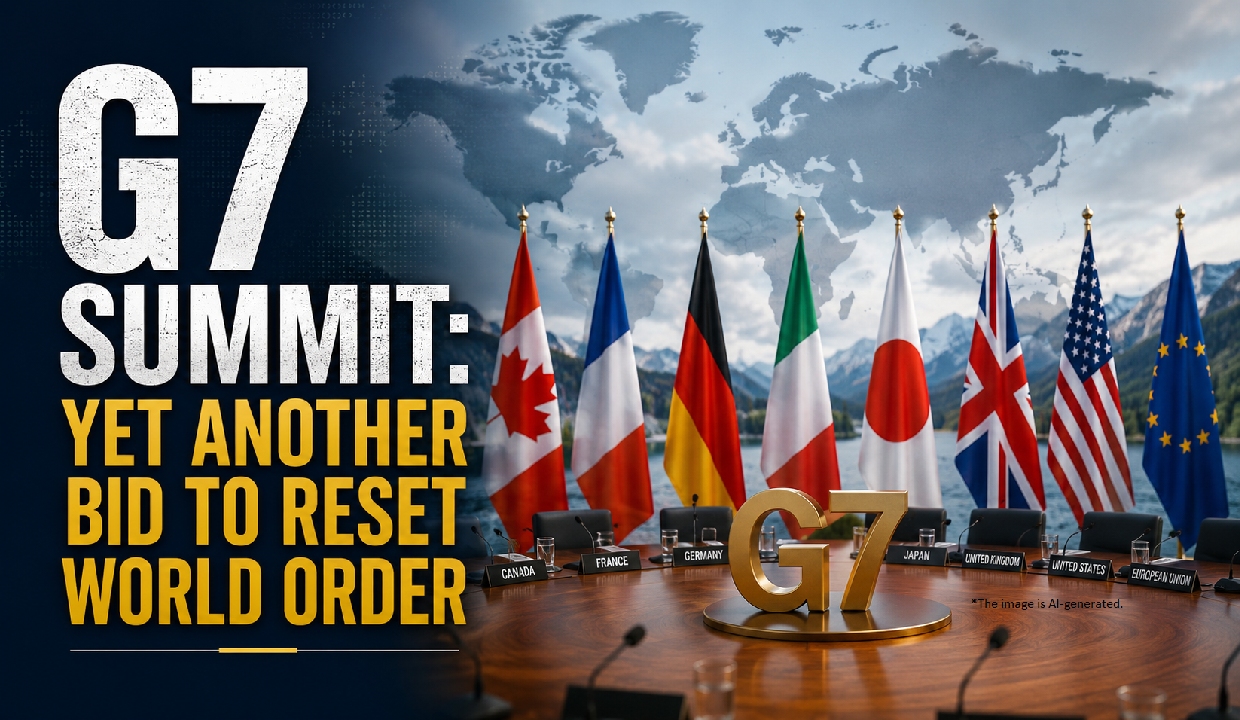
There is a certain poetry in the setting. The Group of Seven, born out of oil shocks in 1975, reconvenes in Évian-les-Bains, France, from June 15 to 17, in a year marked by geopolitical fragmentation, and renewed questions about the role of the forum itself. The anxieties may be the same as fifty years ago, but the stage has become far more complex.
France has carefully constructed its summit priorities around addressing macroeconomic imbalances, strengthening economic security and critical mineral supply chains, and reforming international development partnerships. President Macron has been unusually ambitious in his G7 presidency, seeking to push the grouping beyond its traditional comfort zones. He has invited Chinese representatives to a video call to address global imbalances — a bold move that signals Paris’s desire for genuine multilateralism rather than performative solidarity. Artificial intelligence is high on the G7 agenda, and Macron’s decision to invite OpenAI’s Sam Altman to summit discussions underlines his intent to position France as Europe’s AI powerhouse. Trade tensions, energy insecurity, sovereign debt crises, and the fallout from the Iran war are all expected to be on the table. The attendance of President Donald Trump, however, adds its own layer of uncertainty to the summit’s outcome. Trump’s transactional instincts and scepticism of multilateral frameworks have a way of rewriting summit scripts. France also wants to put dialogue, crisis-response, and renewed multilateralism at the heart of its G7 presidency, themes that sound aspirational given today’s fractured world order.
The Iran crisis, West Asia, and the security of commercial shipping lanes will inevitably dominate back-corridor conversations. Among the most anticipated moments of the summit is what will transpire on its sidelines between Prime Minister Narendra Modi and President Trump. The talks will be the first in-person meeting between Modi and Trump. The backdrop is complicated. India-US ties have faced occasional friction over trade policies, India’s purchases of Russian oil despite the personal bonhomie between the two leaders. New Delhi has bristled at the last claim in particular, viewing it as an overreach. Trump, meanwhile, congratulated Modi on becoming India’s longest-serving elected Prime Minister, reflecting his personal rapport with him. The two leaders are expected to discuss the stalled India-US trade framework, with New Delhi eager to reduce the tariff burden on Indian exports. Yet the ghost of last year’s Canada G7 looms — when Modi arrived ready to negotiate, only for Trump to leave the summit early. Modi’s visit is expected to reinforce New Delhi’s efforts to position itself as a leading voice of the Global South and an influential stakeholder in shaping future rules around artificial intelligence, economic cooperation, and sustainable development. That is a long-term diplomatic investment worth far more than any single meeting. Évian may not resolve the world’s crises. But how the leaders navigate their disagreements — and what Modi and Trump signal to each other behind closed doors — will be crucial for Indian subcontinent.