Today’s youth: The torchbearers of tomorrow
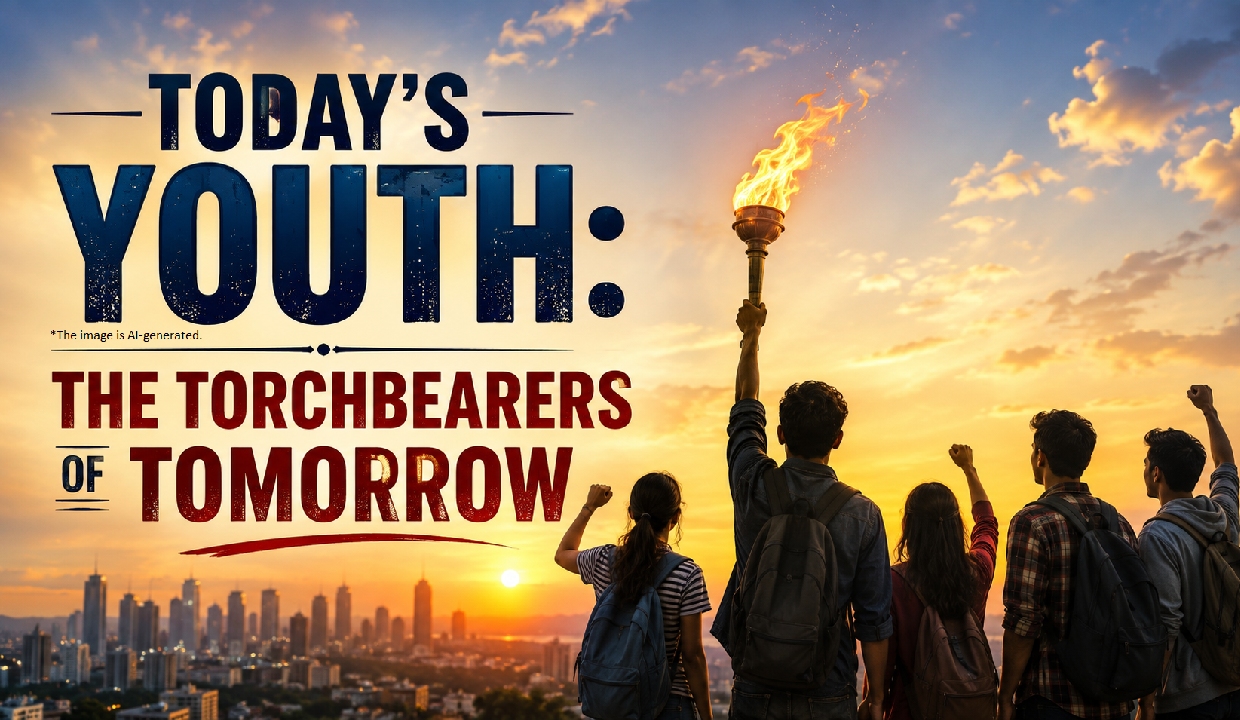
On this International Youth Day, India's and the world's young have already shown they know the way. The rest of us would do well to follow them
Every year on August 12, the world pauses to mark International Youth Day, and this year’s UN theme, "Different Contexts, Common Aspirations," could not be more apt. From the Swedish schoolgirl's solitary protest to the dusty protest grounds of Jantar Mantar, young people keep proving that age is no barrier to conscience, and conscience, once lit, becomes a torch that others follow.
Consider Malala Yousafzai. Shot by the Taliban at fifteen for daring to demand an education, she turned near-death into a global campaign, becoming, at seventeen, the youngest Nobel Peace Prize laureate in history. More than a decade on, she still travels the world to education forums, insisting that a girl's right to a classroom is non-negotiable, whatever her country or circumstance.
Then you have another torchbearer, Greta Thunberg, who at fifteen sat alone outside the Swedish parliament with a hand-painted sign, and within a year had inspired millions of students worldwide to walk out of classrooms under the banner of Fridays for Future, forcing climate change onto the agenda of governments that had long treated it as tomorrow's problem.
India needs no borrowed examples. This July, a satirical social media page named the Cockroach Janta Party, its name a defiant rejoinder to a jibe dismissing the country's youth as parasites, grew within weeks into a nationwide movement against examination paper leaks that had shaken millions of students' faith in fairness. It ended with the resignation of India's Union Education Minister, a rare instance of a leaderless youth movement altering the calculus of the world's largest democracy.
These are not aberrations. With nearly two-thirds of Indians under thirty-five, and roughly one in five of the world's under-25 population living here, India's youth are not a demographic statistic waiting to be harvested. They are increasingly the authors of the national conversation, and a growing presence well beyond it too, building start-ups, staffing research labs, and filling classrooms and boardrooms.
Yet the environment they must navigate is unforgiving: a job market reshaped overnight by automation and AI, examinations that too often reward rote memory over reasoning, a climate crisis they did not create but must inherit, and a digital world that monetises their anxiety as readily as their attention. Mental health strain among the young, in India and abroad, is no longer a private matter but a public one. Coping with this is not about grim endurance. It is what Malala, Greta and the Cockroach Janta Party all understood instinctively: organise instead of despairing, question loudly but build carefully, and treat setbacks as data, not verdicts. Institutions, schools, employers, governments, owe young people the same seriousness they demand of them. Torchbearers do not merely carry light; they choose where to walk.