The grammar of civilisational diplomacy
Strategic interests will always drive foreign policy, but they are often easier to pursue when reinforced by a deeper reservoir of historical trust
The India-Indonesia relationship demonstrates that the strongest diplomatic partnerships are not built merely through strategic interests. They endure because civilisational memory creates a level of political trust that diplomacy alone cannot manufacture.
Foreign policy is often explained through the language of interests. Nations cooperate because they share security concerns, economic priorities or geopolitical objectives. Yet some relationships defy this logic. The evolving partnership between India and Indonesia suggests that history can do more than decorate diplomacy. It can create a foundation of trust upon which contemporary strategy becomes easier to build.
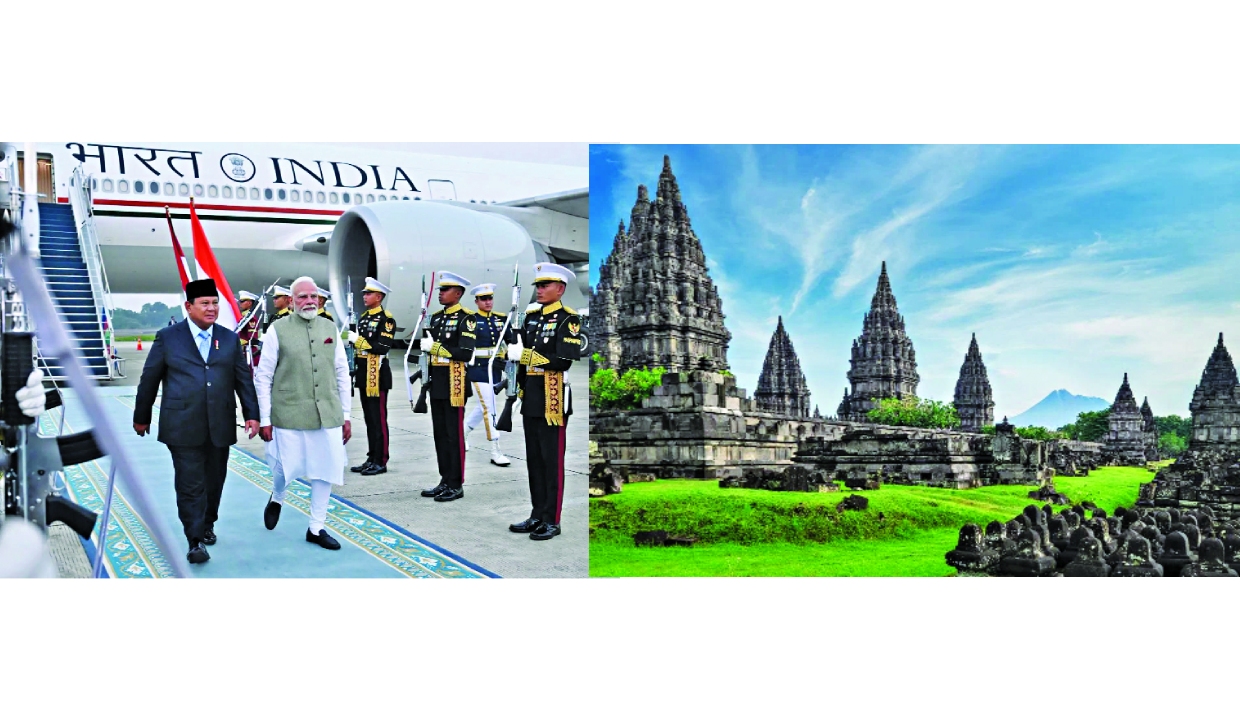
The temptation is to describe the India-Indonesia relationship through familiar symbols. References to Sanskrit, the Ramayana, Borobudur, Prambanan and ancient maritime trade have become staples of every diplomatic engagement. Yet civilisational diplomacy is something far deeper than shared languages or historical monuments. It is the persistence of a civilisational consciousness that survives changes in religion, governments and political systems. Indonesia offers one of the clearest illustrations of this idea. The magnificent temples of Borobudur and Prambanan stand not simply as reminders of India’s historical influence but as evidence of Indonesia’s ability to absorb and reinterpret Indic traditions. Even more remarkable is Bali, where Hindu and Buddhist priestly lineages continue to coexist in living practice. Several of the island’s most important religious ceremonies continue to require the participation and ritual sanction of both traditions. This is not symbolic coexistence designed for visitors. It is a living civilisational practice that has endured for centuries.
Despite this extraordinary inheritance, history did not automatically translate into strategic partnership. For decades, India and Indonesia remained cordial but distant. The Cold War reordered regional priorities, and Indonesia’s political transformation after 1965 altered Jakarta’s external orientation. Over time, Indonesia strengthened its engagement with China and developed closer defence cooperation with Pakistan, while India remained largely focused on its own continental priorities. Although diplomatic relations remained stable, the relationship lacked strategic momentum.
The past decade marks a clear departure. Under Prime Minister Narendra Modi, India has increasingly aligned its civilisational confidence with strategic policy. Indonesia has emerged as one of the strongest examples of this approach, where historical familiarity now reinforces cooperation across defence, maritime security, technology, connectivity and economic engagement. Rather than treating history as ceremonial diplomacy, the relationship has begun to use it as a foundation for contemporary cooperation.
President Prabowo Subianto’s remarks during his visit to India captured this transformation. His admiration for Prime Minister Modi’s leadership and governance model was notable. Even more striking was his observation that he carried "Indian DNA." The remark reflected the confidence of the President of the world’s largest muslim-majority nation in acknowledging that Indonesia’s historical identity cannot be understood without recognising India’s enduring civilisational imprint. Equally significant was his willingness to publicly speak of learning from India’s developmental experience. Few diplomatic statements combine historical memory with contemporary political admiration so naturally.
The growing partnership is visible in substance as much as symbolism. Defence cooperation through BrahMos has understandably attracted attention, but the relationship today extends well beyond military ties. Agreements on digital public infrastructure, Unified Payments Interface connectivity, maritime cooperation, higher education, resilient supply chains and critical minerals reflect an increasingly comprehensive partnership. Together, they demonstrate that civilisational familiarity is now being translated into practical cooperation.
One agreement deserves particular attention. India and Indonesia have agreed to strengthen cooperation between their Election Commissions, including collaboration on electoral management and Electronic Voting Machines. The irony is difficult to overlook. At a time when sections of India’s political opposition continue to question the credibility of EVMs, another democracy responsible for conducting one of the world’s largest elections has chosen to deepen institutional cooperation with India. Democracies rarely seek to learn from institutions they fundamentally distrust. International confidence does not settle domestic political debates, but it does demonstrate that India’s democratic institutions continue to command credibility well beyond its borders.
There is another remarkable convergence. Indonesia’s Emas Vision 2045 and India’s Viksit Bharat 2047 articulate similar ambitions of transforming large, diverse democracies into developed economies within the same historical generation. Their Independence Days fall just two days apart. India celebrates on August 15 and Indonesia on August 17. These parallels do not determine foreign policy, but they reinforce a shared vocabulary of national renewal and long- term development.
The significance of the India-Indonesia relationship, therefore, extends beyond trade figures or defence agreements. It illustrates how civilisational memory can strengthen contemporary diplomacy without becoming captive to nostalgia. Strategic interests will always drive foreign policy, but they are often easier to pursue when reinforced by a deeper reservoir of historical trust. In an increasingly transactional international order, that may prove to be India’s distinctive advantage. Civilisations do not replace strategy. They make strategy more durable. The relationship between India and Indonesia suggests that history is most valuable not when it is commemorated, but when it quietly enables the future. That, perhaps, is the true grammar of civilisational diplomacy.
Despite inheritance, history did not automatically translate into strategic partnership. For decades, India and Indonesia remained cordial but distant
The writer is a public policy expert with years of experience working across key ministries of the Govt of India; Views presented are personal.