America’s arsenal under strain
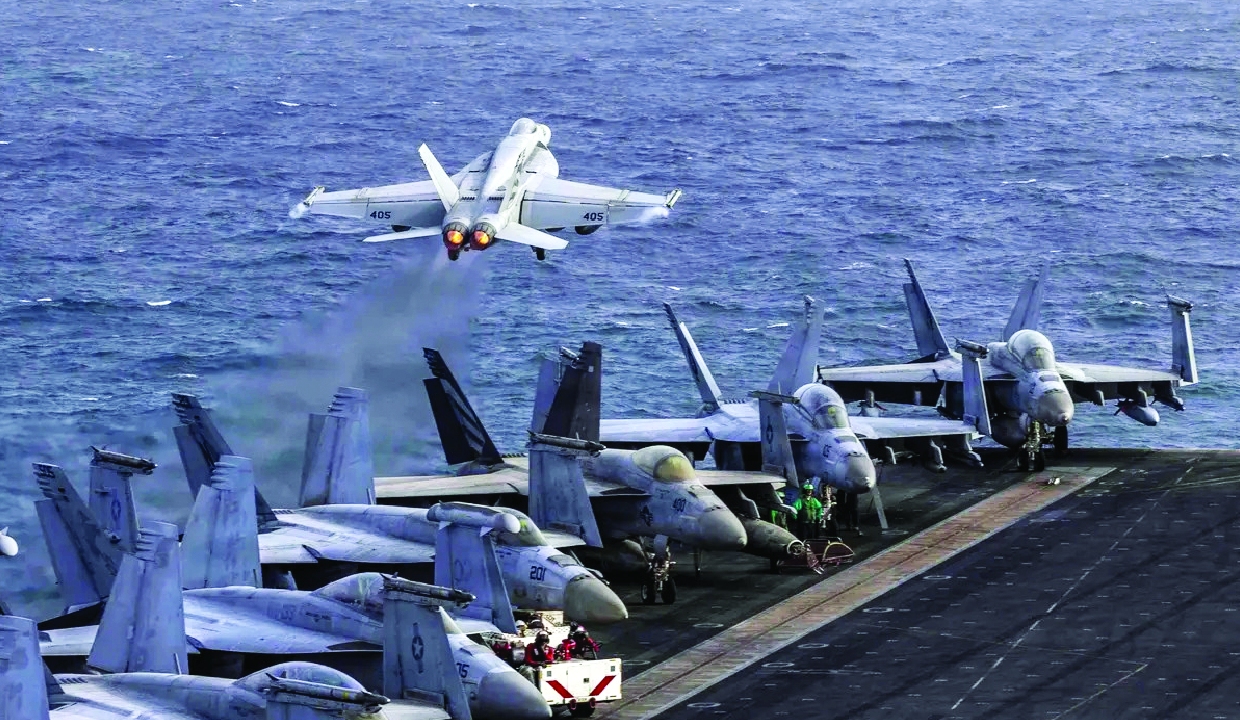
Strategic autonomy ultimately rests not just on acquiring advanced weapons, but on having the industrial capacity and diversified supply chains to keep them operational when a war lasts longer than expected.
History offers a sobering reminder that even the world’s most powerful militaries are not immune to depleted arsenals. The United States has repeatedly confronted the consequences of munitions shortages - from the opening months of the Korean War, when inadequate stockpiles and strained logistics forced commanders to ration artillery fire, to the prolonged campaigns in Vietnam and Afghanistan, where years of sustained operations exposed weaknesses in procurement, production capacity, and supply chains.
Each time, Washington recovered by mobilising its industrial base, expanding defence production, strengthening logistics, and rebuilding strategic reserves. Yet history appears to be echoing once again. Years of military assistance to Ukraine, combined with the demands of a prolonged conflict with Iran that has lasted far beyond initial expectations, have renewed concerns over the resilience of U.S. munitions inventories. The issue is not whether America possesses the world’s most advanced weapons. That it does. But whether it can manufacture, replenish, and sustain them at the pace demanded by modern high-intensity warfare.
The first visible indication of mounting pressure came with the administration’s request for emergency funding from Congress (reportedly around $87 billion) to support military operations and ‘rapidly replenish equipment and munitions’. Such a request is more than a budgetary measure; it reflects a strategic reality: even the United States can find its military capabilities constrained when operational demand outpaces industrial capacity.
The lesson from Korea remains relevant. In 1950, Washington expected a short campaign that many believed would end by Christmas. Instead, Chinese intervention transformed a limited ‘police action’ into a three-year war of attrition, forcing the United States to rapidly expand its defence industrial base. The conflict demonstrated a recurring truth of warfare, i.e., political timelines rarely match military realities, and ammunition stocks can be exhausted long before strategic objectives are achieved.
A similar challenge appears to have emerged during the Iran conflict. Operation Epic Fury was conceived as a rapid campaign aimed at achieving decisive military objectives. Instead, the conflict has continued for months, creating sustained demand for precision-guided munitions, air-defence interceptors, and long-range strike weapons. The resulting pressure on inventories has intensified calls for additional funding and accelerated production.
Defence analysts have highlighted the strain on U.S. missile stocks. The Center for Strategic and International Studies (CSIS) has estimated significant reductions in inventories of systems such as Patriot interceptors and Terminal High Altitude Area Defense (THAAD) missiles after sustained operational use. Such assessments have fueled concerns about whether Washington can maintain adequate reserves for future contingencies while meeting current commitments. They have also provided adversaries an opportunity to portray reported shortages as evidence of declining American military strength.
The debate has taken on a political dimension in Washington as well. Reports that President Donald Trump confronted Defence Secretary Pete Hegseth over possible weapons shortages intensified scrutiny of U.S. preparedness. The President strongly rejected such reporting, describing it as ‘treasonous’ and promising severe action against those responsible for leaks. Yet the controversy highlights a deeper issue - precise information about U.S. weapons inventories remains classified, and increased restrictions on Pentagon information have made independent assessments more difficult. Secrecy may protect operational details, but it can also amplify uncertainty.
If concerns over U.S. military preparedness and defence manufacturing capacity prove accurate, the implications extend well beyond America’s current conflicts. The question is not simply whether Washington can sustain ongoing operations, but whether it can continue to honour long-term security commitments while preserving reserves for unforeseen crises. The ability of the United States to simultaneously replenish weapons supplied to Ukraine, support its own forces, and respond to emerging threats will be closely watched by allies worldwide. For strategic partners such as India, the lesson is significant. Advanced American defence systems provide major operational advantages, but their effectiveness ultimately depends on assured access to ammunition, spare parts, upgrades, and sustainment support during a crisis. Modern warfare has shown that possessing sophisticated platforms is only one component of military power; the industrial ecosystem behind them is equally decisive. A nation may possess superior technology, but without the ability to produce at scale and sustain losses over time, that advantage can rapidly diminish in a prolonged conflict.
The credibility of defence partnerships is therefore measured not only by contracts signed during peacetime, but by the reliability of supply chains during wartime. Allies do not merely purchase weapons; they invest in the promise that those weapons will remain operational when national security is at stake.
The Iran conflict has therefore reinforced a strategic imperative for India, i.e., to accelerate indigenous defence manufacturing while avoiding excessive dependence on any single foreign supplier. Diversification combining domestic production with multiple trusted international partnerships provides insurance against geopolitical shocks, export restrictions, production delays, or the competing demands placed on supplier nations during prolonged conflicts.
Strategic autonomy does not mean isolation. It means ensuring that no external disruption can determine a nation’s ability to sustain combat power when it matters most. In future wars, the decisive advantage may belong not only to the country with the most advanced weapons, but to the one capable of producing and sustaining them after the opening phase of conflict has passed.
The credibility of defence partnerships is therefore measured not only by contracts signed during peacetime, but by the reliability of supply chains during wartime. Allies do not merely purchase weapons; they invest in the promise that those weapons will remain operational when national security is at stake
The writer, a military veteran, is a former Lt Governor of Andaman & Nicobar Islands and Puducherry; Views presented are personal.