Modi@12: Laying the foundations of a Viksit Bharat
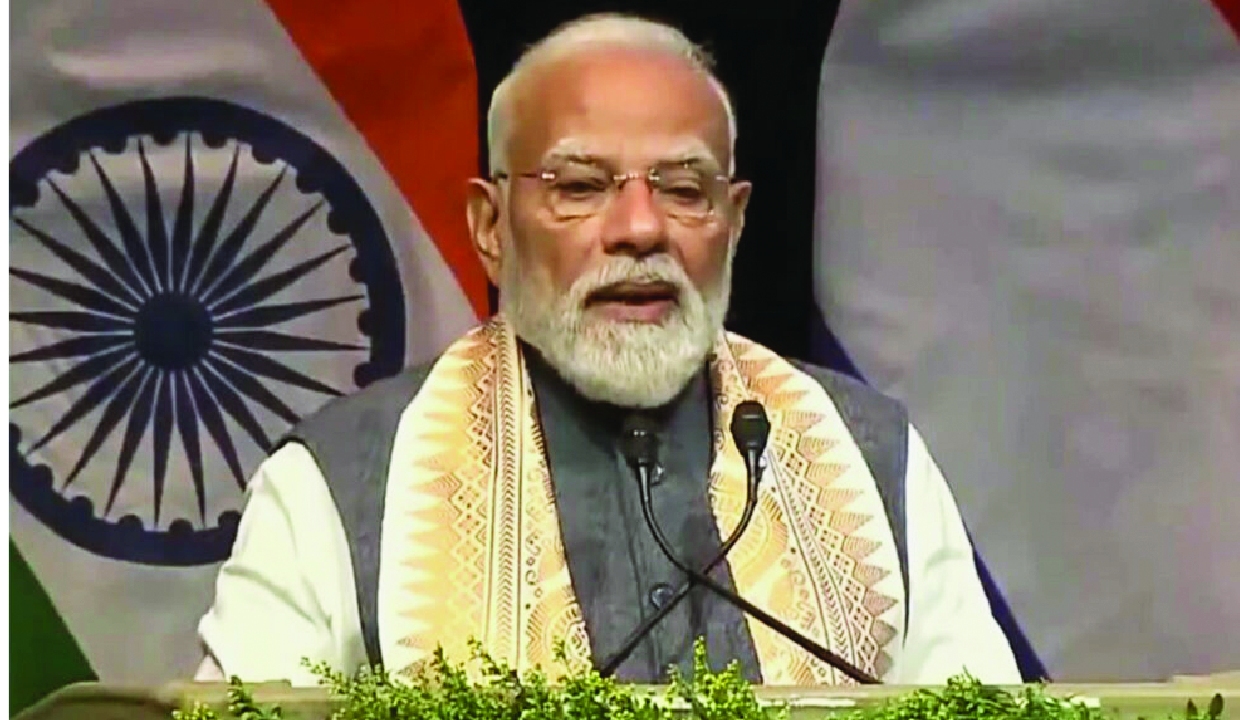
As Prime Minister Narendra Modi completes twelve years in office, becoming India’s longest-serving Prime Minister in independent India’s history, assessments of his legacy continue to evoke both admiration and criticism
With completion of twelve years in office, Shiri Narendra Modi has become the longest serving Prime Minister of independent India. He has proved to be a transformational leader who has restored national confidence, accelerated development and elevated India’s standing in the world. Critics question aspects of his governance, institutional approach and political style. Yet beyond the partisan debate lies a larger and more enduring question: what has India become after twelve years of the Modi era?
The answer is not that India has already become Viksit Bharat, a developed nation. No country of India’s size and complexity can complete such a journey in little more than a decade. Rather, the more persuasive argument is that the foundations of a Viksit Bharat have been laid in these twelve years. The significance of the Modi era lies in the creation of economic, infrastructural, digital, social and strategic foundations upon which a developed India can be built over the coming decades.
The scale of this transformation can perhaps be captured through a few numbers. India has risen from the world’s tenth-largest economy to become the fourth largest. More than 58 crore citizens have been brought into the formal banking system through Jan Dhan accounts.
Over 15 crore rural households have received tap-water connections, more than 10 crore poor women have received LPG connections, nearly 12 crore toilets have been constructed, and an estimated 25 crore Indians have moved out of multidimensional poverty. Taken individually, these figures represent efficient governance. Taken together, they tell a larger story: the laying of foundations for a more prosperous, inclusive and capable India. Beneath these achievements lies a deeper transformation. The central theme of the Modi era has been the strengthening of India’s state capacity-the ability of government to identify beneficiaries, deliver services, build infrastructure, respond to crises and pursue national objectives. In many ways, the journey of the past twelve years can be described as a movement from entitlement to empowerment, from leakage to delivery, from policy paralysis to execution, and from a hesitant India to a more confident India.
The first of these foundations is economic strength. In 2014, India was frequently described as a country of immense promise struggling to realise its potential. Twelve years later, India stands among the fastest-growing major economies in the world, recording average annual growth of around 7 per cent. Economic growth alone does not create a developed nation, but no nation has become developed without sustained economic expansion. The second foundation is infrastructure. The past twelve years have witnessed a sustained effort to close India’s infrastructure gap. National highways have expanded by nearly 60 per cent, port capacity has doubled, 88 airports have been operationalised in smaller cities and over 7.8 lakh kilometres of rural roads have been completed. Dedicated freight corridors have become operational and railway modernisation has accelerated. These are not merely construction statistics. They reflect the enhanced capacity of the Indian state to conceive, finance and execute projects at scale. Another important foundation has been the renewed emphasis on manufacturing. Through initiatives such as Make in India and Production Linked Incentive schemes, India has sought to strengthen domestic production capabilities and reduce strategic dependence in critical sectors. From electronics and mobile phones to defence production and semiconductors, the objective has been to create the productive capacity necessary for a developed economy.
The third foundation is digital transformation. The JAM Trinity-Jan Dhan, Aadhaar and Mobile-has fundamentally changed the relationship between citizen and state. India’s digital public infrastructure is now studied across the world, while UPI has made digital payments routine even among small traders and rural households. More importantly, technology has enabled the state to deliver services and monitor outcomes with a degree of precision that was previously impossible.The fourth foundation is social welfare and inclusion. For decades, India aspired to be a welfare state but often struggled to ensure that benefits reached intended recipients.
The opening of 58 crore Jan Dhan accounts represents far more than a banking initiative; it signifies the inclusion of millions who previously stood outside the formal economy. The real significance lies not merely in the opening of accounts but in the state’s ability to reach previously invisible citizens and deliver benefits directly to them. Similarly, LPG connections, toilets, housing assistance, tap-water connections and healthcare coverage have sought to improve the quality of life of those at the bottom of the social pyramid.
The fifth foundation is state capacity itself. The true test of governance is not the announcement of schemes but the ability to implement them. The government was able to transfer assistance directly into bank accounts, distribute food grains at enormous scale and administer one of the largest vaccination programmes in human history. Such outcomes were possible because the institutional architecture for delivery had already been established.
The sixth foundation is national security. Development requires stability, and stability requires security. India today appears more confident in protecting its interests than it did a decade ago. Major terrorist incidents have declined significantly, border infrastructure has improved, Left Wing Extremism has receded dramatically and is now confined to a much smaller geographical footprint, defence modernisation has accelerated and internal security challenges have become more manageable. India is today safer, more resilient and better prepared than it was twelve years ago.
The seventh foundation is India’s global standing. The India of 2026 enjoys greater international stature than the India of 2014. Its voice carries greater weight in global forums, its G20 Presidency demonstrated diplomatic confidence and organisational capability, and its growing strategic partnerships have strengthened its position in an increasingly multipolar world. The world no longer sees India merely as a country with potential; it increasingly sees India as a country shaping outcomes.
Perhaps the most important foundation, however, is confidence. Nations rise not only through economic indicators but through belief in their own capabilities. Whether through infrastructure, digital innovation, welfare delivery, space exploration or diplomacy, India increasingly behaves like a nation that expects to succeed. Confidence alone does not create prosperity, but prosperity rarely emerges in its absence. Yet it is important to distinguish between laying foundations and completing construction. Twelve years is not enough to transform a civilisation-sized nation into a fully developed country. It is, however, sufficient time to establish the pillars upon which future progress can rest. History will ultimately deliver the final verdict. But when historians look back at this period, they may conclude that the Modi era will be remembered less for any individual scheme and more for the foundations it laid-foundations of economic strength, digital capability, social inclusion, national security and, above all, national confidence-for the emergence of a Viksit Bharat.
Whether through infrastructure, digital innovation, welfare delivery, space exploration or diplomacy, India increasingly behaves like a nation that expects to succeed
The writer is former IFS officer and Chairman of Centre for Resource Management and Environment; Views presented are personal.