From conflict zone to growth engine: How Modi changed Chhattisgarh
As Prime Minister Modi completes twelve years in office, Chhattisgarh stands as evidence of what sustained political commitment and policy continuity can achieve. The journey is not complete, but the direction is unmistakable
As Prime Minister Narendra Modi completes 12 years in office, every state has its own story of change. Chhattisgarh's story is unique because it is not merely about development. It is about transformation. A decade ago, Chhattisgarh was known nationally for reasons that no state would want. Despite its rich mineral resources, vast forests and vibrant tribal culture, it was largely identified with Naxal violence, underdevelopment and administrative isolation. Large parts of Bastar were beyond the effective reach of governance. Roads were scarce, investment was hesitant, and welfare delivery struggled against both geography and insurgency.
Today, the conversation is very different.
The most important change has been in security. For years, Naxalism denied generations of tribal youth the opportunities available elsewhere in India. It discouraged investment, disrupted education and kept entire regions trapped in uncertainty. Prime Minister Modi's government adopted a strategy that combined firm security action with development and rehabilitation. The objective was not only to defeat violence but also to ensure that governance reached the areas where insurgency had flourished.
The outcome became visible on March 31, 2026, when Union Home Minister Amit Shah declared India free from Naxalism in Jagdalpur, the heart of Bastar. For the country, it was a major security achievement. For the people of Bastar, it was the restoration of normal life.
Peace, however, has value only when it creates opportunity. That is where the Prime Minister's development vision has made a decisive difference.
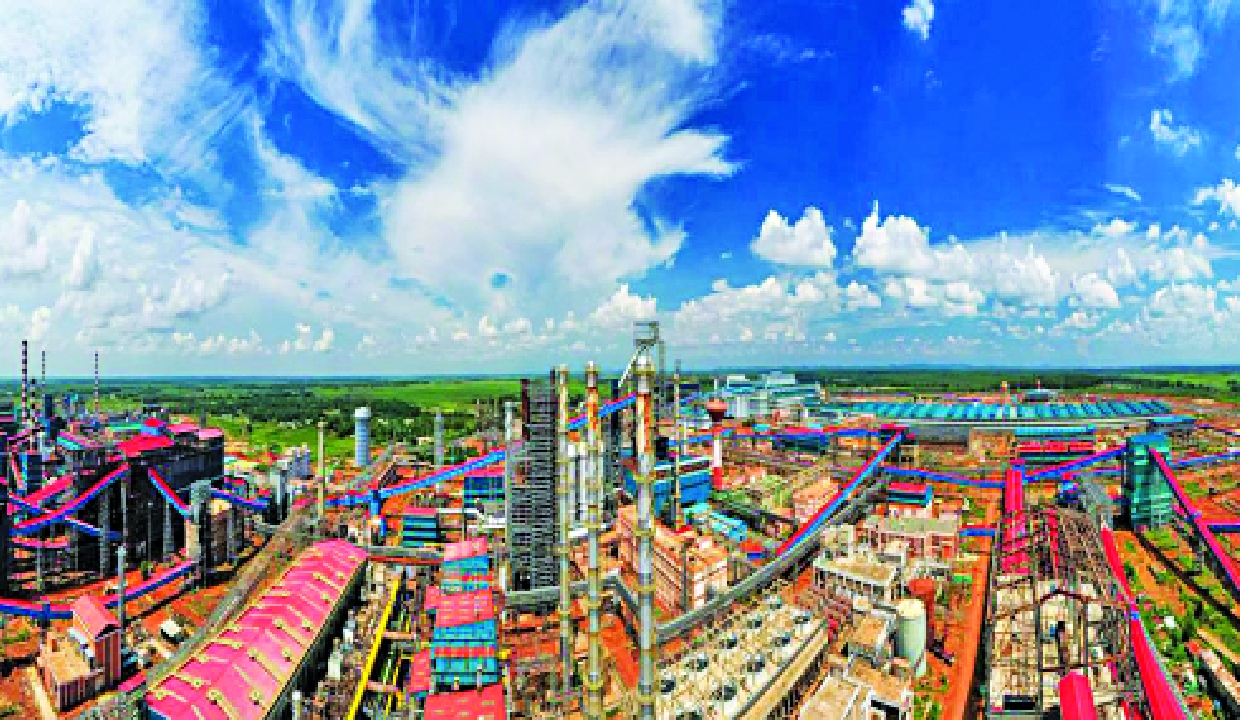
Few projects illustrate this better than the NMDC Steel Limited plant at Nagarnar. For decades, Bastar supplied some of the world's finest iron ore, while the value addition took place elsewhere. By dedicating a world-class integrated steel plant in Bastar itself, Prime Minister Modi sent a powerful message: regions rich in resources should also share in the prosperity generated by those resources.
The same approach can be seen in the major infrastructure projects launched across Chhattisgarh in recent years. Whether it is power generation, petroleum connectivity, city gas networks or railway expansion, the objective has been to integrate Chhattisgarh more deeply into India's growth story. These projects create jobs, attract investment and improve the state's long-term competitiveness.
Yet the true measure of development in Chhattisgarh lies not only in factories and infrastructure. It lies in the lives of tribal communities, which form the heart of our state's identity. As someone who comes from a tribal community, I have witnessed both the aspirations and the challenges of these regions. For decades, many tribal habitations remained disconnected from basic services. Development often arrived slowly, if at all.
The Modi government placed tribal welfare at the centre of its policy framework. Through initiatives such as PM-JANMAN for Particularly Vulnerable Tribal Groups and the Dharti Aaba Janjatiya Gram Utkarsh Abhiyan, some of India's most neglected communities have become a national priority.
The impact is visible on the ground. Roads are reaching remote habitations. Houses are being built for vulnerable families. Schools are being upgraded. Healthcare and mobile connectivity are expanding into areas that once remained isolated. A road into a tribal village is not merely an infrastructure project; it is a pathway to education, healthcare, markets and opportunity.
Equally significant has been the effort to ensure that tribal communities benefit from economic activity rather than remaining passive observers. Programmes supporting forest-produce value addition and tribal entrepreneurship are helping to create local livelihoods. The idea is simple but important: development must be inclusive if it is to be sustainable.
The broader lesson from Chhattisgarh's experience over the past twelve years is that security, development and social justice cannot be pursued separately. Peace creates the conditions for investment. Infrastructure improves access to welfare. Tribal empowerment strengthens social stability. Together, they reinforce one another. Of course, much remains to be done. Former conflict zones require sustained attention. Industrial investments must continue to generate local employment. Welfare programmes must be implemented with efficiency and accountability. Development is an ongoing process, not a finished project.
Yet it is impossible to ignore how far Chhattisgarh has travelled over the last twelve years. A state once identified primarily through the lens of insurgency is increasingly being recognised for connectivity, investment and tribal empowerment. Regions that once symbolised conflict are beginning to symbolise opportunity. The distance between remote villages and the state has narrowed significantly.
As Prime Minister Modi completes twelve years in office, Chhattisgarh stands as evidence of what sustained political commitment and policy continuity can achieve. The journey is not complete, but the direction is unmistakable. A state that once struggled to overcome its challenges is steadily emerging as a confident participant in India's growth story.
The broader lesson from Chhattisgarh's experience over the past twelve years is that security, development and social justice cannot be pursued separately. Peace creates the conditions for investment. Infrastructure improves access to welfare
The writer is the Chief Minister of Chhattisgarh; Views presented are personal.