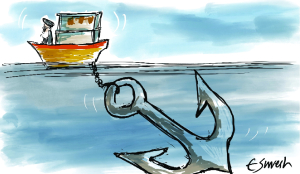
The price of Western pragmatism
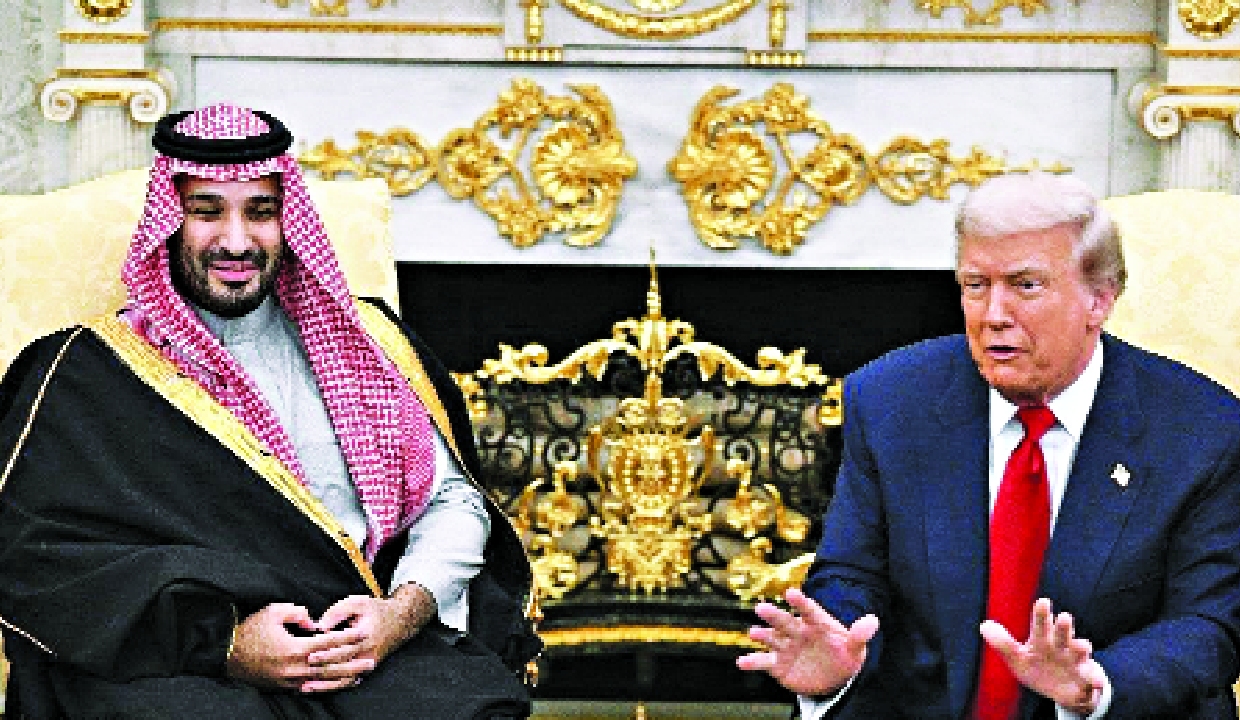
As Riyadh consolidates its regional influence despite persistent human rights concerns and a complex ideological legacy, the Kingdom's rise reflects a broader truth: in international politics, strategic interests often eclipse professed principles
Saudi Arabia and Iran were hardly natural allies during the reign of Shah Mohammad Reza Pahlavi, yet their rivalry remained largely contained within the conventions of statecraft. The Iranian Revolution of 1979 transformed that competition into something altogether different. From that moment onwards, West Asia became the arena for a struggle that extended far beyond borders, armies and diplomacy.
Over the following decades, sectarian identity became increasingly weaponised as political currency. Sunni and Shia communities that had coexisted for centuries across the region found themselves drawn into conflicts manufactured by states pursuing influence rather than reconciliation. Reports that circulated during the opening phase of Donald Trump's war on Iran suggested that Crown Prince Mohammed bin Salman, rather than Israeli Prime Minister Benjamin Netanyahu, had urged Washington that the moment had come to topple the already weakened government in Tehran. Whatever the extent of Riyadh's influence over Washington's decision-making, the broader strategic reality is unmistakable. The region has entered another dangerous phase, while Saudi Arabia finds itself emerging as one of its greatest geopolitical beneficiaries.
For decades, Western governments have presented themselves as guardians of democracy, human rights, freedom of expression and the international rules-based order. Yet these same standards have demonstrated remarkable flexibility whenever Saudi Arabia occupies the centre of the discussion. The murder of Saudi journalist Jamal Khashoggi inside the Saudi Consulate in Istanbul was not merely another human rights violation; it became one of the most thoroughly documented acts of state violence in modern diplomatic history. Yet only a few years later, many of those same governments, businesses and political figures returned to the Kingdom with remarkable enthusiasm, demonstrating how moral language often survives only until sufficiently large strategic or commercial incentives appear.
Amnesty International's latest report documents widespread abuse of Filipino domestic workers in Saudi Arabia, alleging excessive working hours, unpaid wages, physical and sexual abuse, and severe restrictions on their freedom under the Kingdom's labour sponsorship system. The organisation has urged Saudi authorities to strengthen legal protections, dismantle the remaining elements of the kafala system, and ensure accountability for employers accused of exploitation. The historical record surrounding Saudi Arabia's religious establishment presents another uncomfortable reality. The ideological movement established by Muhammad ibn Abd al-Wahhab emerged not merely as a theological reform movement but as a doctrine that sharply distinguished between those regarded as authentic believers and those deemed to have fallen into unbelief. As David Commins demonstrates in The Wahhabi Mission and Saudi Arabia, the alliance between religious doctrine and the House of Saud became one of the most enduring political partnerships in modern history.
The ideological infrastructure established through schools, charities and universities extended far beyond the Arabian Peninsula, with enormous resources invested in exporting a particular interpretation of Islam that profoundly shaped later generations of radical movements. The seizure of the Grand Mosque in Mecca in November 1979 exposed these contradictions. Yaroslav Trofimov's The Siege of Mecca presents the uprising as a moment that revealed the internal tensions of Saudi religious and political life. Juhayman al-Otaybi and his followers did not reject Wahhabi doctrine. They claimed to be restoring it to what they believed was its uncompromised form. Their rebellion emerged from accusations that the Saudi monarchy had abandoned genuine Islamic governance through its alliances with Western powers, growing wealth and accommodation with modernity.
Rather than fundamentally challenging the ideological assumptions that had nourished such radicalism, the monarchy strengthened many elements of the religious establishment in exchange for renewed political legitimacy. The global expansion of conservative religious institutions accelerated during precisely the same period that transnational jihadist movements were beginning to emerge.
The Soviet invasion of Afghanistan transformed this ideological current into an international military enterprise. Backed by the United States, Saudi Arabia and Pakistan during the Cold War, thousands of foreign volunteers, including Osama bin Laden, travelled to Afghanistan under the banner of jihad. Al-Qaeda emerged through a convergence of ideological, geopolitical and military circumstances rather than Saudi religious doctrine alone. Nevertheless, both bin Laden and fifteen of the nineteen perpetrators of the September 11, 2001 attacks were Saudi nationals, while al-Qaeda and the so-called Islamic State developed overwhelmingly within extremist Sunni traditions rather than Shia movements associated with Tehran. This does not absolve Iran of supporting armed proxies, a reality starkly illustrated by Yemen. It does, however, complicate simplistic narratives that portray one source of extremism as the exclusive threat.
Against this historical background, the newly signed civilian nuclear cooperation agreement between the United States and Saudi Arabia represents far more than an energy partnership. During the Cold War, Washington actively helped establish Iran's civilian nuclear programme under Shah Mohammad Reza Pahlavi, supplying its first research reactor, highly enriched uranium fuel and technical expertise through the Atoms for Peace initiative. That programme was presented as a peaceful endeavour, yet the infrastructure created with American support later became central to one of the world's most contentious nuclear disputes.
Reports indicate that the agreement departs from what has long been regarded as the American 'gold standard' for nuclear cooperation by not requiring Saudi Arabia permanently to renounce uranium enrichment and spent-fuel reprocessing. Those distinctions matter because civilian nuclear programmes and military nuclear capabilities exist upon a technological continuum. Not every country possessing civilian reactors pursues nuclear weapons, but every nuclear weapons programme requires technological foundations that civilian programmes may eventually provide. The issue is therefore not immediate weaponisation but future strategic options.
Perhaps the most revealing aspect of this agreement lies not within its technical provisions but within the broader political transformation that made it possible. History rarely rewards the most virtuous governments. More often, it rewards those that recognise that power is ultimately negotiated through interests rather than principles. Mohammed bin Salman appears to have understood this better than many of his counterparts. While liberal democracies continue to present themselves as defenders of human rights, democratic accountability and the international rules-based order, their policies towards Riyadh repeatedly demonstrate the exact opposite. Whatever history's final verdict on his legacy may be, one conclusion is difficult to dispute: Mohammed bin Salman has transformed Saudi Arabia's geopolitical position with remarkable effectiveness. In a region fractured by war, exhausted by proxy conflicts and increasingly shaped by transactional diplomacy, he has outmanoeuvred many of his rivals and critics alike. For now, he has the last laugh.
The seizure of the Grand Mosque in Mecca in November 1979 exposed these contradictions with extraordinary clarity. Yaroslav Trofimov's The Siege of Mecca presents the uprising not as an isolated act of fanaticism but as a moment that revealed the internal tensions of Saudi religious and political life
The writer is a columist based in Colombo; Views presented are personal.