Discipline: The foundation of a strong society
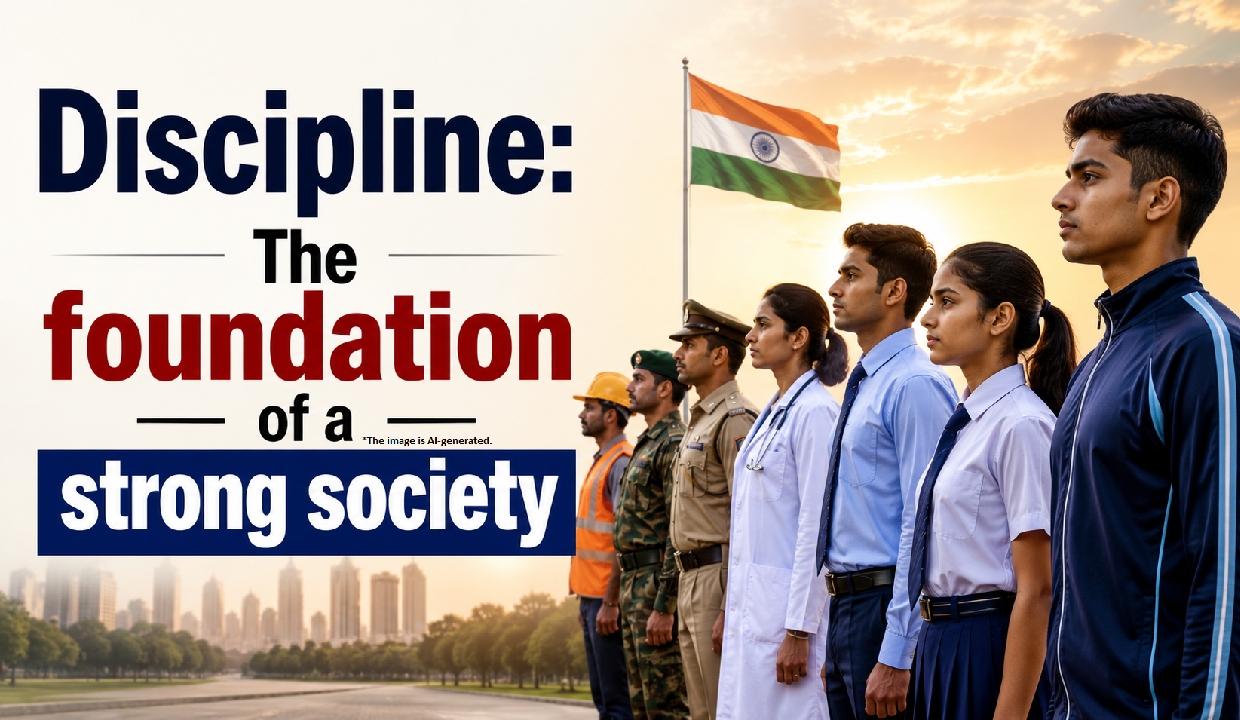
Discipline is essential for every living being, but for human beings, who are social by nature, it becomes even more important. Without discipline, society would descend into chaos, making peaceful coexistence impossible. Discipline is not something that can simply be learnt from books or imposed by others; it must become a natural part of daily life. From the moment a person wakes up until the time they go to sleep, discipline guides behaviour, thoughts and responsibilities.
The dictionary defines discipline as training oneself to act according to rules and maintaining a routine that develops skills and character. In reality, discipline acts as a control over emotions, actions and impulses. It helps individuals lead a balanced and organised life. Simple habits such as waking up on time, maintaining a healthy diet, exercising regularly and managing time properly are all reflections of discipline. However, discipline is not limited to routines alone. It also involves inner control — the ability to manage anger, speech, desires and reactions. A disciplined person may not be flawless, but such a person is dependable, calm and trustworthy. These qualities earn respect and create stability in both personal and social life.
In today’s world, indiscipline and the erosion of human values are becoming major concerns. Many social problems arise because people fail to exercise self-control and responsibility. No nation can progress without disciplined citizens. Lack of discipline often reflects frustration, dissatisfaction and a weakening of moral values. It leads to unrest, aggression and disrespect for social norms. What is often mistaken for freedom may actually be uncontrolled behaviour driven by the desire for attention and recognition. Such attitudes disturb peace within society and weaken the collective spirit of progress. The younger generation, in particular, requires proper guidance and constructive engagement. Youth possess immense energy, creativity and ambition, but without direction these qualities can turn into frustration and rebellion. Parents play a crucial role in shaping the character of their children. If they lead by example through honesty, sacrifice, understanding and integrity, children naturally learn to respect discipline. At the same time, children themselves must also take responsibility for their actions. Peer pressure and misguided influences often encourage negative behaviour and indiscipline among youngsters. One of the biggest reasons behind growing indiscipline is the decline of moral and spiritual education in schools, colleges and homes. Modern education focuses heavily on academic success and career growth, but often neglects values such as patience, humility, tolerance and respect for elders. Spiritual and moral teachings help individuals develop self-control and emotional balance. They transform restless minds into responsible and compassionate personalities dedicated to society.Another concern is the blind imitation of foreign lifestyles and cultures at the cost of traditional values. Modernisation itself is not harmful, but abandoning one’s cultural roots entirely creates confusion and weakens social identity. Indian culture has always emphasised respect, discipline, family values and harmony. These principles were carefully nurtured by previous generations, but many of them are gradually fading in today’s fast-changing world.
Therefore, the need of the hour is to revive strong moral foundations and cultural values among the younger generation. Discipline must begin at home and continue through education and society. Only by combining modern progress with strong ethical values can India create responsible citizens and a peaceful society. Discipline is the foundation of growth, harmony and success.
The writer is a spiritual teacher and a popular columnist; Views presented are personal.