The prejudices we still carry
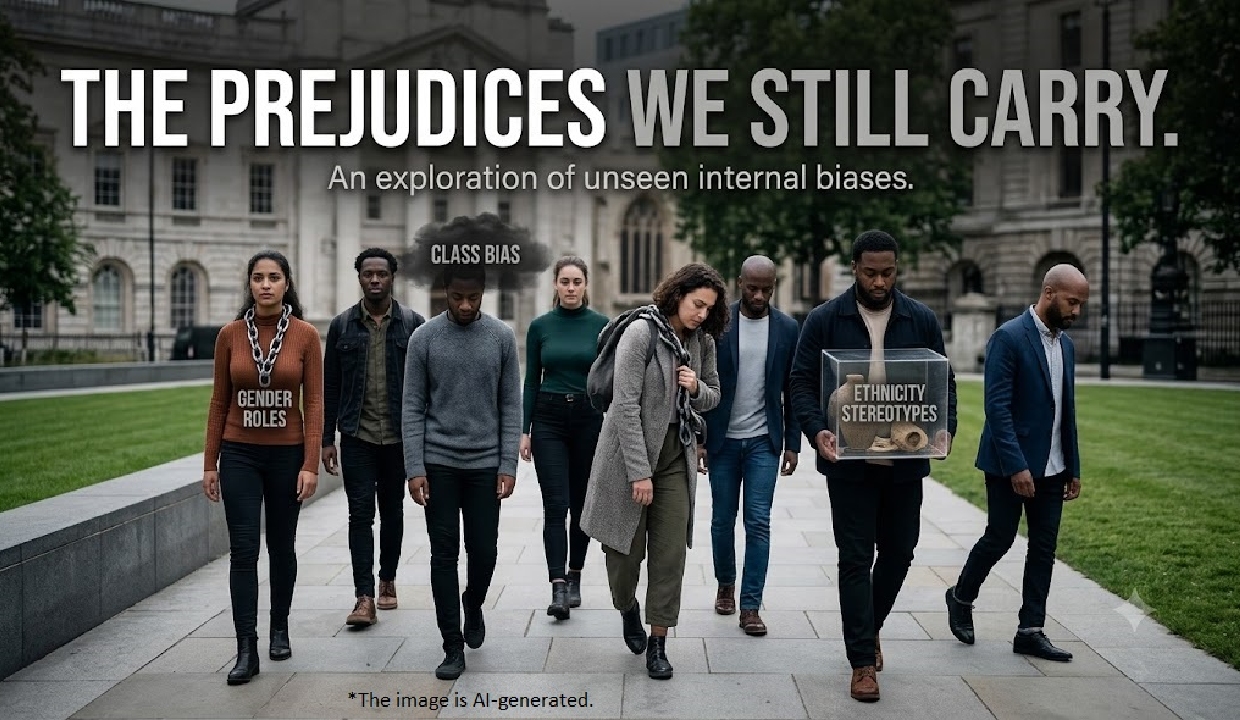
The ongoing society elections have generated the usual debates, disagreements, and campaign promises. Yet a few conversations I encountered recently stayed with me long after the election discussions themselves had faded.
One of the candidates is a woman who is widely known within the community for her commitment and hard work. She is often among the first to respond when residents face difficulties and among the last to leave when a task remains unfinished. Unlike many who appear only during elections, her engagement with the community has been visible throughout the year. A resident from her own tower recently advised her not to contest. His reasoning was straightforward. She would lose. Not because she lacked commitment or capability, but because she was a woman. He further suggested that she should recognise her limitations as a woman, particularly since an elected representative would be expected to deal with all kinds of people, including unsavoury elements. The advice was given as practical wisdom. A few days later, I overheard a group of morning walkers discussing another resident. Their conversation was punctuated by loud laughter and knowing glances. The object of their amusement had stated that the apartment was in his wife’s name and that she would cast her vote as she chose. What followed was not a discussion about voting rights or personal choice. The laughter was at the suggestion that a man who did not control his wife’s decisions had somehow failed in his role. These were accomplished professionals occupying senior positions in their respective fields.
The conversations reminded me of an evening nearly twenty-five years ago during an official visit to another city. I was taken to a prestigious club frequented by prominent politicians from rival parties. The atmosphere was relaxed and cordial, with political differences seemingly suspended over drinks and conversation. What I remember most clearly, however, was the laughter that followed an extremely sexist remark about a female politician.
The incidents occurred in different places and at different times. But they seemed connected by a common thread.
We often measure social progress through visible indicators. More women occupy leadership positions today than ever before. By almost every measurable standard, society has moved forward. Yet many old prejudices still survive in subtle forms - in assumptions disguised as concern, in jokes disguised as humour, and in opinions disguised as common sense. They appear when competence is acknowledged in principle but doubted in practice, when independence is celebrated publicly but mocked privately, and when equality is accepted as an idea but resisted as a lived reality. This is what makes such attitudes difficult to confront. Overt discrimination is easier to identify. Hidden prejudice often arrives wrapped in the language of realism, tradition, practicality, or experience. Those expressing it rarely see themselves as prejudiced at all.
Perhaps this is why legal and institutional measures, important though they may be, can only take society so far. Societies do not become truly equal when women are simply allowed to participate. They become equal when competence is judged independently of gender, when respect is extended without qualification, and when dignity is not contingent upon conformity to old expectations.
Progress, after all, is not measured only by what we claim to believe. It is measured by what we reveal about ourselves when we speak freely, laugh casually, and assume nobody is paying attention. The prejudices we fail to confront are often the ones we quietly pass on.
The writer is a founder of Kala - Krazy About Literature And Arts, is an author, speaker, coach, and strategy consultant; Views presented are personal.
Leave a Comment
Comments (1)
Definitely Sir.... Opinions are always biased and always will be. If we are at all progressive as you claimed we must move on and create our own free and good spaces. ' logo ka kaam hai kehna, khehne dijiya'. No one can collide head on with power weilding politicians. I know things are way better yet challenges are more. Yet every challenge must be seen as an opportunity. And it is not about the politician. It's about our thinking and manners. So many things are gender stereotyped...I can't even explain here in an open public forum.