Bihar’s silent land records revolution
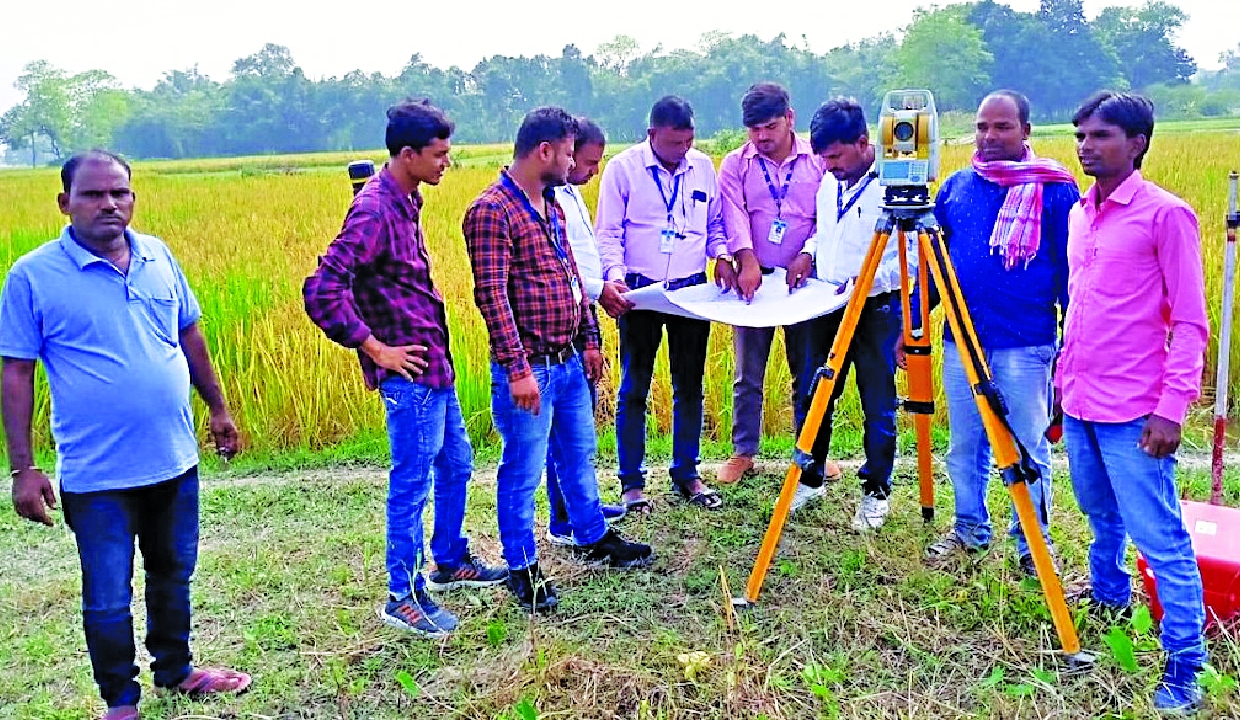
The future of land governance in India may not always emerge from the courtrooms, but from transparent, continuously updated, digitally secured revenue records
India’s economy runs on land records, but its legal imagination has never fully trusted them. Few administrative instruments have been as routinely dismissed as mutation entries — long treated as weak fiscal documents carrying little evidentiary value regarding ownership. Courts have repeatedly observed that mutation neither creates nor extinguishes title. Lawyers have viewed it as merely presumptive. Citizens have associated revenue records with manipulation, missing registers, opaque procedures, and arbitrary correction slips.
Much of this scepticism was justified — but it was justified in relation to a system that largely belonged to another era. The problem today is that India’s legal discourse on mutation remains trapped in the past, even as the architecture of land administration has changed dramatically in several states. One of the most striking examples of this transformation is Bihar, where a silent but far-reaching land records revolution has unfolded over the last decade.
Bihar was not an early mover in digitisation. Having embarked upon it as late as in 2017-18, within a short span, it emerged as one of the country’s most ambitious reformers, eventually being recognised as the most progressive state on the National Council of Applied Economic Research (NCAER) Land Records and Services Index in 2021. What makes Bihar’s experience particularly significant is that the reform was not merely technological. It was simultaneously legal, procedural, and institutional.
The state adopted what may be described as a “3-D Strategy” — Digitise, Distil, Deliver. The challenge before Bihar was uniquely complex. Zamindari-era land records carried enormous inconsistencies, missing links, overlapping claims, and fragmented documentation accumulated over generations. Mere scanning of old records could not solve the problem. Data had to be cleaned, reconciled, standardised, and continuously updated. Digitisation was, therefore, accompanied by distillation — validation, correction, integration, and dynamic updation of records through a transparent process ‘Parimarjan’ (meaning refurbishment). Without this process, digitisation would merely have fossilised historical inaccuracies into electronic form. The final stage was delivery. Technology was transformed into citizen-facing governance. Revenue services became increasingly online, transparent, and traceable.
Crucially, Bihar’s reforms were not built on technology alone. They were anchored in legal restructuring. Prior to the reforms of the last decade, land revenue administration across much of India functioned largely through executive conventions, departmental circulars, and manual practices. Bihar gradually moved away from this uncertain framework and introduced clearer statutory foundations governing mutations after 2011. Mutation thereby ceased to remain an informal administrative exercise and increasingly acquired the character of a legally regulated quasi-judicial process incorporating notice, hearing, objection, appeal, and revisional safeguards. Subsequent amendments after 2017 aligned digitised governance with modified statutory procedures. This distinction is critical. The objective was not merely to convert paper registers into electronic images but to create continuously updated, legally governed, and procedurally traceable land records. The subsequent integration of the Revenue Court Management System (RCMS) added another layer of transparency by digitally recording proceedings and making orders publicly accessible and institutionally traceable. The results have been striking. Within just one year of digitisation, mutation applications in Bihar increased from 13.41 lakh to 20.90 lakh. Citizens generally avoid dysfunctional systems. Burgeoning mutation applications indicated growing public trust and increasing willingness to formally record transfers, inheritance, and succession through official channels. Today, 100 percent of revisional survey maps in Bihar have been digitised and geo-referenced, significantly strengthening cadastral accuracy and future GIS-linked governance. Equally important has been the reduction in pendency. Within the last year itself, pending mutation cases have declined from 8.42 lakh to 1.32 lakh.
The scale of record updation is even more revealing. Out of 454.32 lakh digitised jamabandis in Bihar, approximately 93.5 lakh now reflect changes brought about through proper quasi-judicial proceedings. This translates into an updated Jamabandi Ratio of nearly 21 percent - evidence that land records are no longer static archival entries but living administrative instruments aligned with ground realities. Transparency in revenue adjudication has similarly improved. Of the 4.19 lakh online cases filed before Deputy Collectors Land Reforms (DCLRs), approximately 2.57 lakh cases have been disposed of — a disposal rate of nearly 61 percent. Meanwhile, citizen access has steadily expanded. Today, 22 online services are available through the Bihar Bhumi portal, progressively transforming land governance into accessible e-governance.
One of the standard criticisms against land revenue proceedings has been that revenue officers lack the legal training of judicial officers. But this condemnation often overlooks the specialised nature of land administration itself. Most conventional LL.B. programmes devote limited attention to highly state-specific land revenue laws, jamabandi systems, tenancy frameworks, survey administration, and mutation procedures. Revenue officers, on the other hand, are trained precisely in these domains and continuously work within an ecosystem involving succession disputes, partition claims, transfers, inheritance, possession patterns, and cadastral realities.
None of this implies that revenue courts should replace civil courts, or make current revenue record entries assume the mantle of an infallible declaration of title. Fraudulent transfers, forged deeds, coercive transactions, and complex title disputes will always require judicial adjudication. Yet the traditional tendency to dismiss mutation records as casually maintained fiscal entries no longer reflects contemporary administrative reality. Modern mutated records increasingly operate as the de facto current title recognised by the state machinery. Banks rely upon them before sanctioning loans. Government agencies use them during compensation proceedings. Purchasers scrutinise them during transactions. Utilities and welfare systems increasingly depend upon them. The law may still stop short of granting conclusive de jure status to mutation entries, but governance systems increasingly function on the assumption that mutation-backed records represent the current ownership framework.
Certainly, Bihar’s challenges remain enormous. The sheer scale of its land-related ailments - historical gaps, overlapping claims, tenancy complications, survey inconsistencies, family partitions, and procedural delays — forebode that disputes and grievances are persistent, and may continue to be so. But within the limitations of India’s land adjudication architecture, continuously updated and digitally secured mutation systems, like Bihar’s, are gradually bringing method to what was once near-chaotic land administration. Bihar’s experience demonstrates that land revenue administration need not remain trapped in the shadows of its past. The convergence of statutory safeguards, digitised records, geo-referenced mapping, transparent revenue adjudication, and continuous record updation can fundamentally alter the credibility index of land governance.
Certainly, Bihar’s challenges remain enormous. The sheer scale of its land-related problems — historical gaps, overlapping claims, tenancy complications, survey inconsistencies, family partitions, and procedural delays — suggests that disputes and grievances are persistent and may continue to remain so
The writer is an ex-IAS officer and is presently Chairman, RERA Bihar. He served as Principal Secretary, Department of Revenue and Land Reforms, Bihar; Views presented are personal.
Leave a Comment
Comments (1)
Perfect with real problem and inherent real solutions. Dear sir! Your articles always throw light on practical insight of the land related problems and allow us to peep into the real obstacles in solutions.👌