Rage bait: When anger becomes the product
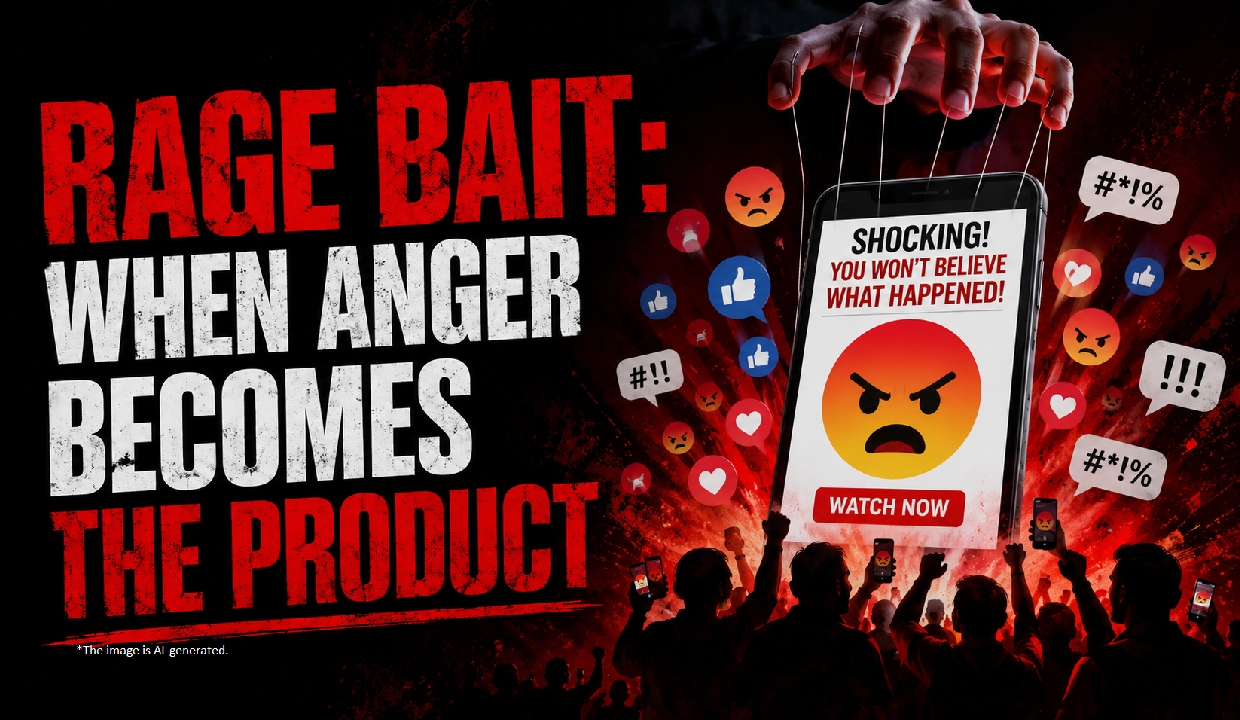
Some social media posts are designed neither to inform, entertain nor inspire, but simply to provoke anger.
They are easy to recognise: the sudden surge of indignation, the tightening of the jaw, the thumb already hovering over the reply button.
What often escapes notice in that moment is that the outrage was never accidental. It was the intended outcome, carefully engineered and delivered. The individual’s anger was the product.
Rage baiting, the deliberate fabrication of provocative, false or upsetting content to elicit outrage, has become one of the internet’s quietest yet most potent motors.
The creator may not even believe what has been posted. What matters is not the belief behind the content, but the reaction it produces: comments, reposts, quote-shares and ultimately, the algorithmic reward that follows.
Young people are especially vulnerable to this economy of outrage. As an educator, I often see students arrive at school already disturbed by something they encountered while scrolling through their phones. They carry a borrowed anger that they cannot fully explain, directed at people or issues they barely understand.
Their vision of the world is increasingly moulded not by what is real, but by what is incendiary. When fury is rewarded online, discipline begins to appear weak and brutality starts disguising as heroism. That is a dangerous curriculum for any child.
The consequences are not merely personal. A society trained to react rather than reflect becomes easier to manipulate and harder to govern.
Rage bait reduces complex questions involving education, faith, gender and public policy to shouting matches in which the loudest voice appears to win. Genuine disagreement is essential to democracy, but meaningful debate is increasingly drowned out by conflict designed merely to attract attention.
We begin to mistake digital noise for national conversation.
What makes rage baiting especially insidious is that it hides behind our virtues. The instinct to challenge falsehood, defend the vulnerable and speak against injustice is precisely what the rage baiter exploits.
The angrier and more righteous we feel, the more useful we become to someone quietly monetising our attention. The defence is not indifference, but discernment. Before sharing or replying, one should ask: who benefits if I amplify this?
Often, the answer is not the cause we imagine we are supporting, but the person who provoked us.
This is a sort of digital literacy that must be taught purposefully, both in classrooms and at kitchen tables. Children should learn to evaluate the emotional architecture of a post as thoroughly as they examine its words. They must be taught to understand when content is aiming to control their feelings rather than educate their judgment.
We already teach children not to trust a stranger who tries to frighten them on the street. We must now teach them to recognise the stranger who tries to terrify them through a screen.
Anger can drive good social change, but anger that is fake, sold for money and controlled by computers is not true belief. It is a trap used to control us and the first step to freedom is seeing it.
The writer is an educator and councillor; Views presented are personal.