A drug-free India begins with its youth
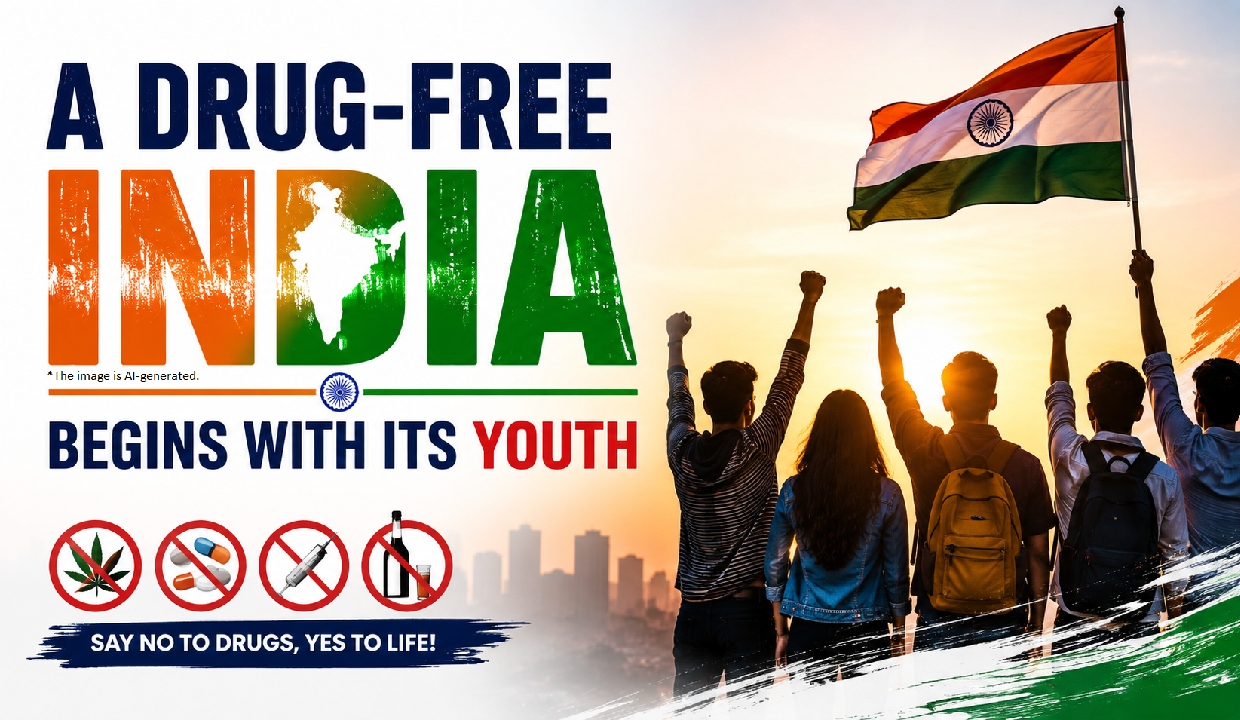
As India aspires to become a Viksit Bharat by 2047, protecting its young from the scourge of drugs must be treated as a national priority requiring collective action
On Sunday, Prime Minister Narendra Modi addressed over a crore young Indians connected from more than 28,000 locations to launch the Nasha Mukt Yuva for Viksit Bharat Sankalp Abhiyan-a campaign asking the country’s youth to be both its target audience and its foot soldiers. The ambition matched the scale: a 100-week movement, unfolding every Sunday, woven into the larger project of a developed India by 2047. The message was blunt-a nation cannot be built on a generation numbed by addiction. The urgency is not manufactured. Government surveys already count close to ten crore Indians touched by narcotics in some form-sixteen crore users of alcohol, over three crore cannabis users, and close to two crore linked to opioids. The Narcotics Control Bureau seized 1.33 lakh kilograms of narcotics worth nearly Rs 2,000 crore last year, arresting 994 traffickers as conviction rates climbed to 66.8 per cent. States along the Punjab border and the industrial belts of Uttar Pradesh and Maharashtra have long topped the case count. The Supreme Court, while hearing a narco-terror case in 2024, went so far as to warn that the fallout of rising addiction leaves a “generational imprint” on public health and national security. Against that backdrop, a campaign built around the country’s youngest citizens is not premature. If anything, it is overdue. What distinguishes this from the Nasha Mukt Bharat Abhiyaan, running since 2020, is its idiom. Modi leaned on identity rather than prohibition-calling recovering users “warriors” instead of casting them out, and drawing over 125 spiritual and civil society organisations into what might otherwise have read as another government notice.
Tying sobriety to the Viksit Bharat vision gives young Indians a stake larger than compliance: abstinence becomes nation-building, not mere obedience to the law. Arriving days after student protests over examination reforms unsettled Delhi, the launch also reads as an attempt to re-engage a restive Gen Z on the government’s own terms.
Yet pledges and pageantry have been tried before. The older Abhiyaan counts over fourteen crore participants and lakhs of partner institutions-and, by most accounts, addiction levels have barely moved. Critics are right to point out that India’s shortfall lies less in messaging than in infrastructure: too few de-addiction centres, a scarcity of trained counsellors, and a stigma that still keeps families from seeking help before a crisis strikes. A pledge taken at a rally offers little to a teenager with nowhere to turn the following morning. If this campaign is to outlast its own launch, the 100 Sundays ahead must build treatment capacity as visibly as they stage awareness drives. Symbolism has its place in a democracy of this size — a Prime Minister speaking directly to a crore young citizen is not nothing. But Viksit Bharat will not be won by slogans. The real test of the Nasha Mukt Yuva Abhiyan lies away from the cameras, in whether counsellors, treatment beds and second chances multiply as fast as the pledges do. Only then does a sankalp become a cure.