Compensation cannot mend the loss
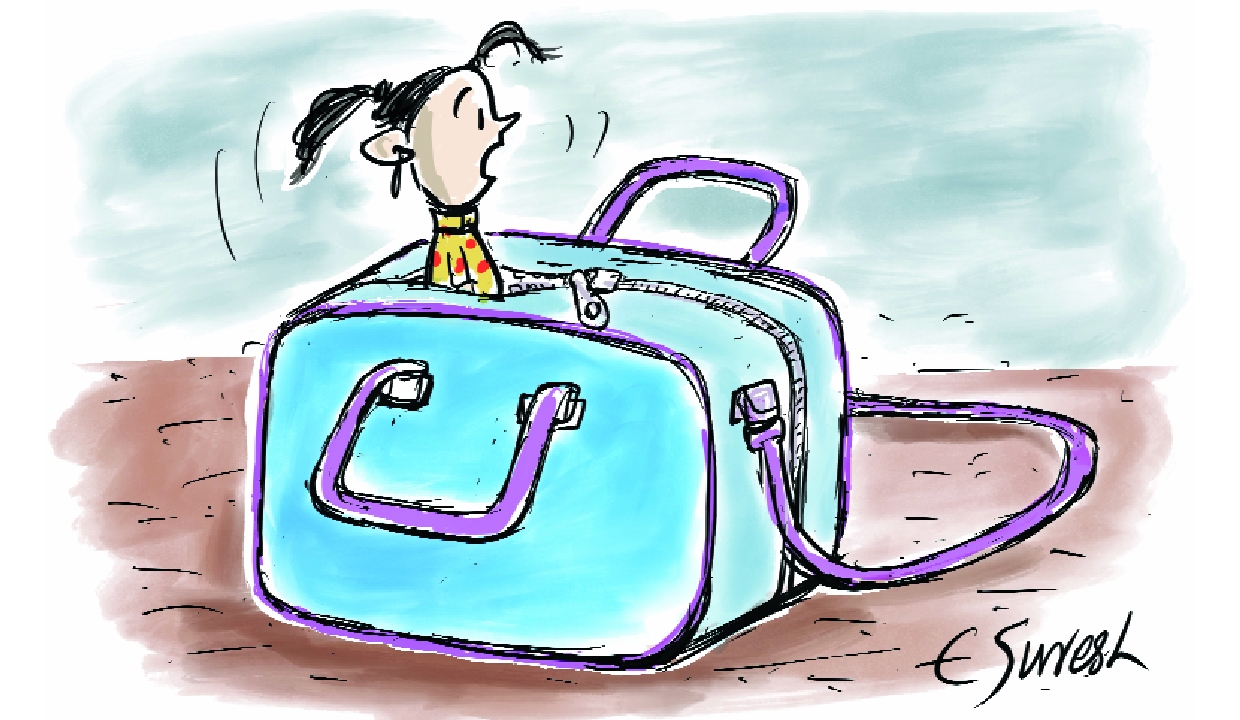
The NEET protests may have ended but can the death of a young student, driven to suicide by an examination system already tainted by leaks and repeated uncertainty, really be reduced to compensation? The government may call it relief; for grieving families, it risks becoming an unkindest cut—placing a price on lives that should never have been lost
The just-ended protests by students at Jantar Mantar ended with a sort of symbolic victory both for students and the Government as the Education Minister, Dharmendra Pradhan, was forced to resign and an agreement was signed between the Government and the striking students.
Sonam Wangchuk, the unlikely hero who jumped in the protest launched by the Cockroach Janta Party to take out the sting from the protest, was turned into Anna Hazare two days before the pact was signed between students and the Government.
Among other things, the joint press conference televised by two Ministers of the BJP and two leaders of CJP agreed to adequately compensate for the loss of lives due to the NEET paper leakages and reexamination between 2024/2026.
This is the unkindest cut of all to my mind.
All of us should be thankful to social media, for a change this time, for showing live coverage of how the Delhi Police pounced on young, unarmed girls with their batons, giving them electric shocks here, there, everywhere.
If this protest has been indeed an eye-opener, it’s not for BJP or CJP but for these gutsy girls brought up on the slogan ‘Beti Padhao’ ‘Beti Bachao’ for the last 13 years.
Do they still have that option?
Those of us who have been writing on the education scenario for the last several years have watched with growing distress how young boys and girls, primarily from middle-class families in India, have been ending their lives because they could not live up to the expectations of their ‘greedy’ parents.
Kota, with its coaching mafias in Rajasthan, takes the lead in catering to this greed (they term it ‘dreams’ to lure parents). And Bollywood has only glamorised this scenario by making several films on it.
But the compensation promised by the Government on July 25 is only for students who committed suicide in the last two years due to leaks in the NEET examination.
Only!
A little research shows that among the 12 students who committed suicide due to NEET leak in 2024 and re-exam in 2026, around half were girls.
Among those documented from various sources are Akanksha Chaturvedi Nagpur, Riya Kumari (23) (Dehradun), Sheikh Sana (19) Hyderabad, Anika Pande (17) (Delhi), Ruchi Kumari (Jharkhand) and Bhagyashree (Karnataka), one each from Maharashtra and Tamil Nadu.
Does this government understand what compensation for suicides of young girls means in India, where girls continue to be unwelcome even before they are born.
Not for nothing has the Government banned ultrasound tests for pregnancy to check female foeticide, though some clinics continue to perform these tests because even if arrested they have earned enough to last two generations.
Once the girl child is born, the first priority of the parents, whether rich or poor, is arranging for their dowry, not education, because even in the year 2026 it’s the arranged marriage that gets social acceptance, even if it ends with dowry killings showed as suicides.
By the way, the West terms arranged marriages as ‘human trafficking’ because they cannot understand how two total strangers can decide to spend their entire lives together without dating or knowing each other.
For a girl child in India and more so in ‘Bharat’ it’s always a fight for survival for a girl.
If she does not do well in studies (which means she must take up science and beat the much-pampered boys), she should be married off.
But girls have been doing well in sciences for some time.
The percentage of girls joining the Police and IAS may be dismal (less than 13 per cent as mentioned in these columns earlier) but they are competing with boys as far as admissions to engineering courses is concerned (20 per cent). Similarly, they have also started excelling in management courses, as the results of entrance to IITs and IIMs show (30/40%).
For medical education, for which NEET is held, the percentage of girls is as high as 57 per cent.
For the remaining girls who take up Arts or Humanities, it’s a double whammy. They are looked down upon by their peers and are put up in the marriage market because they are not good enough to become an engineer or a doctor.
Under these circumstances, imagine the shock of the grieving parents who had pinned all their hopes and dreams on their daughters because they themselves were either too lazy or incompetent to compete themselves.
When this government talks of compensating for the deaths of these girls, it’s a huge insult to these parents and the departed souls.
Let’s stop this talk before the bargaining begins!
Once the girl child is born, the first priority of the parents, whether rich or poor, is arranging for their dowry, not education, because even in the year 2026 it’s the arranged marriage that gets social acceptance, even if it ends with dowry killings shown as suicides
The writer is a political and social activist; Views presented are personal.