PoK burns while Pakistan looks away
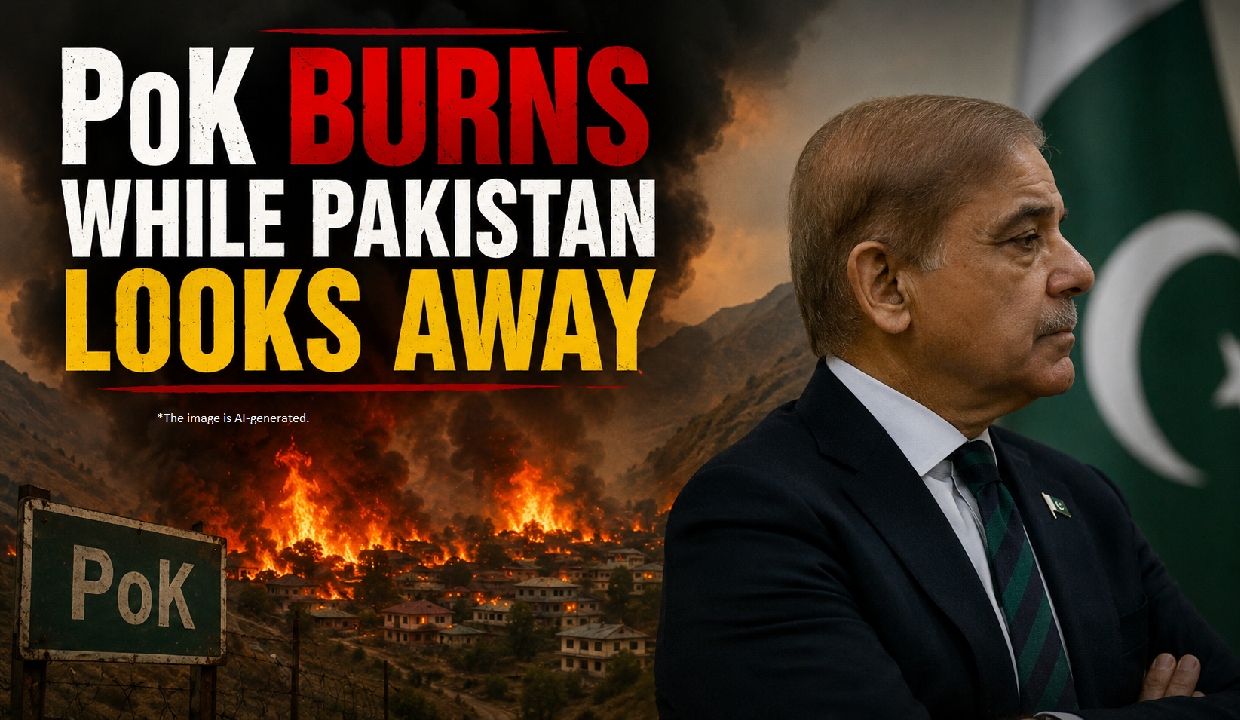
Economic despair, democratic deficits and a heavy-handed crackdown on the JAAC movement have pushed it to its brink in years
The streets of Muzaffarabad, Rawalakot, and Mirpur do not burn without reason. What began as a campaign for subsidised flour and affordable electricity by the Joint Awami Action Committee (JAAC) has morphed into a full-blown political rebellion against Islamabad’s grip on Pakistan-administered Kashmir. Markets are shuttered, paramilitary boots are on the ground, and at least eleven protesters have been killed in clashes with security forces. Islamabad’s response — banning the JAAC, placing bounties on its leaders, and flooding the region with federal forces — has only poured fuel on the fire. The unrest is rooted in decades of structural grievance. The JAAC’s central demand - abolishing the twelve legislative seats reserved for 1947 Jammu and Kashmir refugees settled in mainland Pakistan - strikes at the heart of PoK’s political dysfunction. These seats have long allowed Islamabad’s favoured parties to engineer governments in Muzaffarabad, bypassing the will of local voters. Combine this with punishing electricity tariffs, a cost-of-living crisis, and persistent constitutional ambiguity about the region’s status, and the tinder was always there. The JAAC simply lit the match.
Faisal Mumtaz Rathore’s appeals for dialogue ring hollow when made alongside mass arrests, communication clampdowns, and a Rs 10 million bounty on protest leaders. The Human Rights Commission of Pakistan has warned that suppressing popular movements erodes democratic legitimacy — advice Islamabad appears unwilling to heed.
British MPs, diaspora Kashmiris outside the Pakistani Consulate in Bradford, and international observers are all watching. The crackdown is becoming a reputational liability for Pakistan far beyond the region itself. New Delhi must watch this situation with clear eyes and a steady hand.
The temptation to exploit the crisis with triumphalist commentary should be firmly resisted — it would only hand Islamabad a nationalist distraction. Instead, India should pursue a multi-pronged approach. First, it must amplify the voices of PoK’s people in international forums — not as a propaganda exercise, but as a principled defence of democratic rights and self-determination, values India espouses globally.
Second, New Delhi should engage the Kashmiri diaspora in the UK and elsewhere, whose protests against Pakistani conduct now align with India’s long-standing legal position that PoK is illegally occupied territory.
Third, and most critically, India must ensure that its own conduct in Jammu and Kashmir remains beyond reproach. The moral authority to speak on PoK’s democratic deficit is strongest when the Indian side of the Line of Control is seen as a genuine model of governance, economic development, and political participation. Besides, New Delhi must ensure that the Kashmir Valley remains peaceful, even if Pakistan tries to foment trouble to deflect the attention of the international community. Every hospital built in Ladakh and every elected panchayat functioning freely in the Valley is a more powerful statement than any diplomatic demarche.