Hypertension: India’s biggest public health emergency
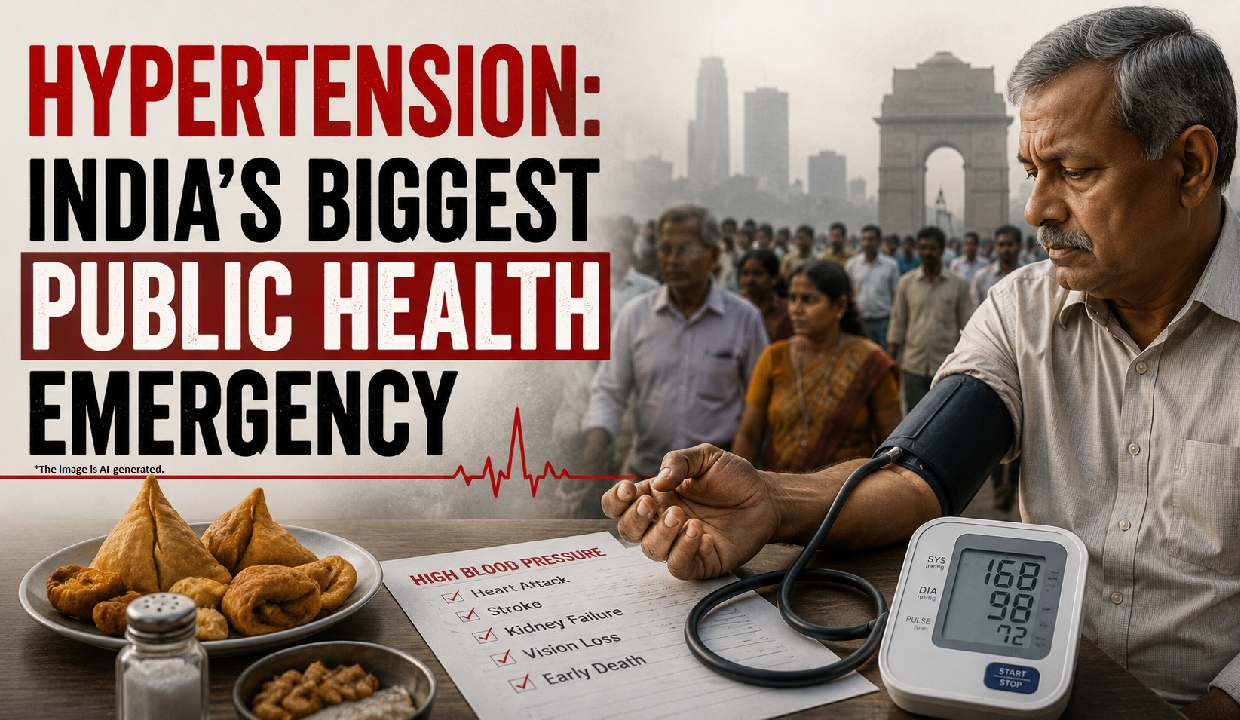
We have the drugs. We have the programme. We have the proof. What India lacks is the political will to measure hypertension properly, manage it consistently, and make control of blood pressure a public health priority. Imagine a disease that kills more Indians every year than tuberculosis, HIV and malaria combined. A disease whose treatment can cost less than a cup of chai each month. A disease for which medicines are already available free in government hospitals. Yet only a fraction of those living with it have it under control.
That disease is hypertension.
India is home to nearly 220 million people with high blood pressure. Cardiovascular diseases - heart attacks, strokes, and related conditions - already claim more than 2.5 million Indian lives every year, and hypertension is their single biggest driver. The tragedy is not that we do not know how to prevent these deaths. It is that we are failing to do what is already proven to work.
Unlike cancer or many chronic illnesses, hypertension is neither complicated nor expensive to manage. A simple, off-patent medicine such as amlodipine, available for as little as one rupee a day, can control blood pressure in the majority of patients. Studies show that improving hypertension treatment and adherence rates would not only save lives but also reduce long-term healthcare costs by preventing expensive hospitalisations for heart attacks, strokes, and kidney disease. Globally, improving blood pressure control is considered one of the most powerful adult health interventions available today. Reaching even 50% population-level control could prevent millions of deaths and cardiovascular events over the coming decades. For India, the gains could be transformative.
The India Hypertension Control Initiative (IHCI), launched in 2018, has already demonstrated that large-scale blood pressure control is possible through public health systems. Expanding from 26 districts to more than 150 districts across 26 states, the programme has shown that decentralised, protocol-driven care can significantly improve outcomes. The most important lesson from IHCI is simple: hypertension control works best when care is taken closer to people’s homes. Health and Wellness Centres, or Ayushman Arogya Mandirs, improved blood pressure control rates while reducing missed follow-up visits. What India needs now is not another pilot project but a national commitment built around a few non-negotiable principles. First, every state must adopt a simple, standardised treatment protocol. Clear protocols help health workers escalate treatment quickly and consistently. Second, uninterrupted drug supply is essential. Drug stockouts break trust, interrupt adherence, and directly increase the risk of heart attacks and strokes.
Third, every health facility must have validated blood pressure machines and properly trained staff. Fourth, India must embrace task-sharing. Doctors alone cannot manage 220 million patients. Nurses, pharmacists, health workers, and frontline staff must all share responsibility for screening, follow-up, counselling, and medicine refills. Finally, India needs a simple digital monitoring system that measures what matters: blood pressure control rates. Every preventable death from uncontrolled blood pressure is ultimately a failure not of medicine, but of governance.
Dr Manoj Vasant Murhekar is Director and Dr. P. Ganeshkumar is Scientist & Head, Division of Noncommunicable Diseases ICMR National Institute of Epidemiology; Views presented are personal.