What India and Nepal debate often misses
Civilisational ties and territorial sovereignty are not contradictory but complementary
This civilisational context does not eliminate the need for boundary demarcation or protecting national interests. It provides the trust necessary to address difficult questions through dialogue rather than confrontation
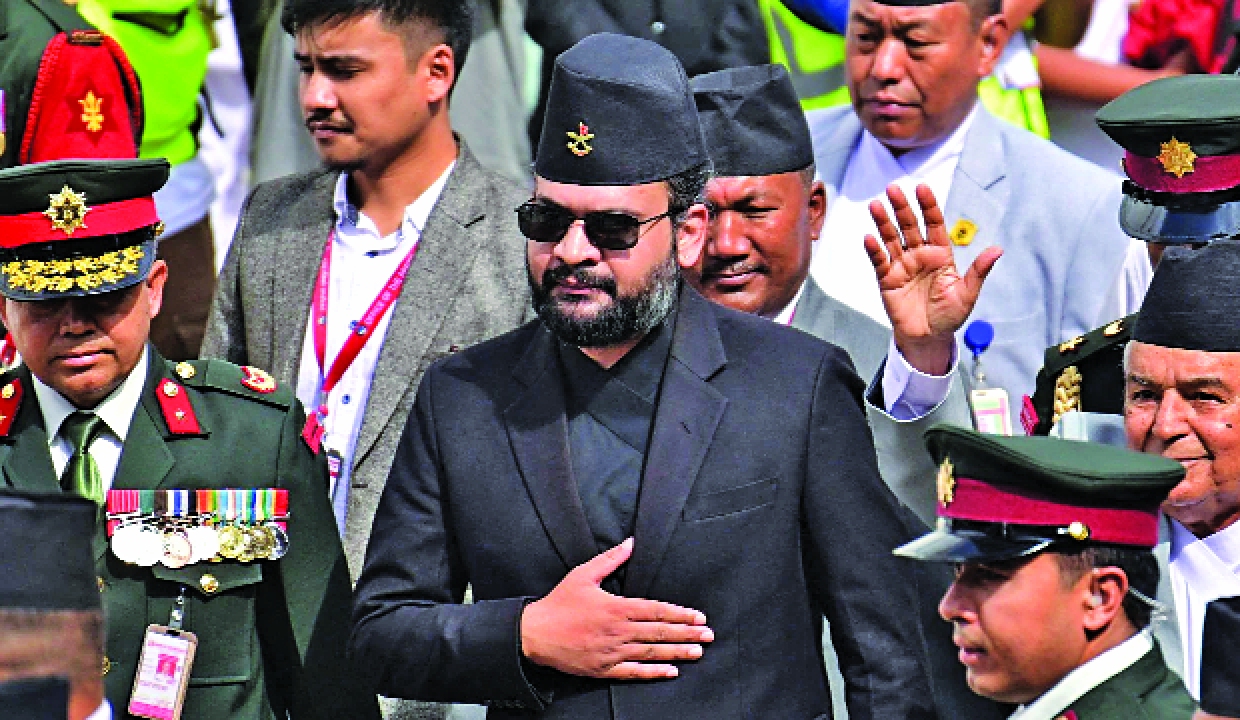
Prime Minister Balendra Shah’s recent remarks in Nepal’s Parliament on the India-Nepal boundary issue have generated considerable debate. Yet much of the discussion has focused on individual words rather than the larger significance of what was said.
At its core, the Prime Minister’s message reflected an important reality: territorial concerns and civilisational ties are not competing ideas. A mature state is capable of safeguarding both.
By asserting Nepal’s concerns regarding the Kalapani area while acknowledging the deep cultural and familial ties that bind Nepal and India, he highlighted a truth often lost in contemporary discourse-that sovereignty and coexistence can advance together. Recognizing shared lives and livelihoods across the border is not a denial of national interest; it is an acknowledgment of reality.
India-Nepal relations cannot be viewed solely through the prism of maps and boundaries. Unlike many international borders, the India-Nepal border has evolved within a landscape of shared communities. It is shaped not only by treaties and political agreements but also by rivers, forests, mountains, and settlements whose lives have been intertwined for generations.
The relationship is rooted in centuries of shared civilizational ties, roti-beti sambandh, pilgrimage routes, and philosophical traditions that have been preserved and nurtured across generations.
Families exist across the border. In the Terai, communities share language, culture, and kinship through Maithili, Bhojpuri, and Awadhi traditions. In eastern Nepal, longstanding connections link communities with Sikkim, Assam, and West Bengal. In the Far West, these ties with Uttarakhand remain intertwined. Literature, folklore, and everyday life remain testimony to a relationship that has never been confined by geography alone.
In many parts of the frontier, an Indian child may attend a Nepali school because it is closer than the one on the Indian side. A Nepali youth may cross the border daily for work and return home each evening. Communities trade together, celebrate together, and often share family ties through generations of cross-border marriages.
These realities do not weaken sovereignty. They explain why Nepal-India relations require a degree of sensitivity and understanding that goes beyond conventional border politics.
The challenge today is that issues requiring patient dialogue, technical expertise, and sustained groundwork are often overshadowed by narratives designed for temporary political gain. Across South Asia, it is easier to manufacture outrage than to undertake the difficult work of negotiation. It is easier to amplify differences than to acknowledge interdependence. Differences between neighbours are natural, particularly where geography, history, and human settlement have evolved together over centuries. What should concern us is not the existence of differences, but the growing tendency to interpret every disagreement through the lens of mistrust.
No boundary issue between neighbours has ever been resolved through social media campaigns, emotional slogans, or competing nationalist narratives. Durable solutions emerge through dialogue, trust, political courage, and institutional mechanisms.
Prime Minister Shah’s remarks are significant precisely because they suggest that national interest and constructive engagement can coexist. A leader can firmly assert a country’s position while simultaneously recognizing the human realities that shape bilateral relations.
Personal Reflections
During my time working at Singha Durbar, I often spent mornings at Pashupatinath Temple reflecting on the civilizational ties that bind Nepal and India. Conversations with scholars on Pashupatinath, Kedarnath, and Kailash Mansarovar reinforced a simple realization: the Himalayas have long connected peoples, traditions, and pilgrimages across present-day political boundaries.
The same realization emerged while travelling through Mithila Parikrama and the Ramayana Circuit, the Mithila Parikrama, one encounters a living cultural landscape that predates modern borders. Sita Maa or Prince Siddharth’s journey cannot be reduced to a territorial claim. These remain shared inheritances of a civilization.
This civilisational context does not eliminate the need for boundary demarcation or protecting national interests. It provides the trust necessary to address difficult questions through dialogue rather than confrontation.
Rabi Lamichhane in Delhi
The recent visit to India by the Nepali delegation led by Shri Rabi Lamichhane, former Deputy Prime Minister and President of the Rastriya Swatantra Party, reflected the continued importance both countries attach to engagement at the highest levels. Meetings with Prime Minister Shri Narendra Modi, National Security Advisor Shri Ajit Doval, External Affairs Minister Dr S. Jaishankar, Home Minister Shri Amit Shah, senior officials and political leadership underscored a simple truth: sustained dialogue remains the most credible pathway for advancing holistic cooperation.
The significance of such engagement lies not merely in protocol but in its purpose. The real test of leadership is not whether differences exist; it is whether leaders possess the confidence and statesmanship to ensure that those differences do not define the relationship.
Conclusion
The India-Nepal border is shaped by both history and geography. Rivers alter their course, settlements evolve, and patterns of cultivation change. Boundary management therefore requires continuous cooperation, political commitment, and mutual trust. In a region where borders have often reflected the legacies of external historical forces, India and Nepal have an opportunity to demonstrate that enduring neighbourly relations are built through sovereign dialogue, shared interests, and an unwavering commitment to each other’s stability, prosperity, and dignity.
Today, social media appears more interested in winning arguments than understanding the essence of Prime Minister Shah’s statement or India’s engagement with Shri Rabi Lamichhane. People on both sides are dissecting words and optics while overlooking a larger truth: two countries sharing centuries of civilisational, cultural, and familial ties possess a unique reservoir of trust. Shared civilization does not eliminate the need for boundary management; it provides the foundation for dialogue and lasting solutions. As someone who has lived, worked, travelled, prayed, and learned across Nepal, I cannot accept that a relationship shaped by the Himalayas, Darshan Shastra, and countless human connections should be reduced to competing narratives.
No matter how many provocative statements emerge, or how much facts are twisted into conjecture, the ship must sail through.
Shared civilisational ethos gives leaders what treaties alone cannot — Trust, the most valuable currency of diplomacy.
The Himalayas may define our geography, but it is trust that will define our future.
The author is a financial, geopolitical, security analyst and an India-Nepal Relations Observer; Views presented are personal.