Madan Lall Manchanda: A bridge between cultures and eras
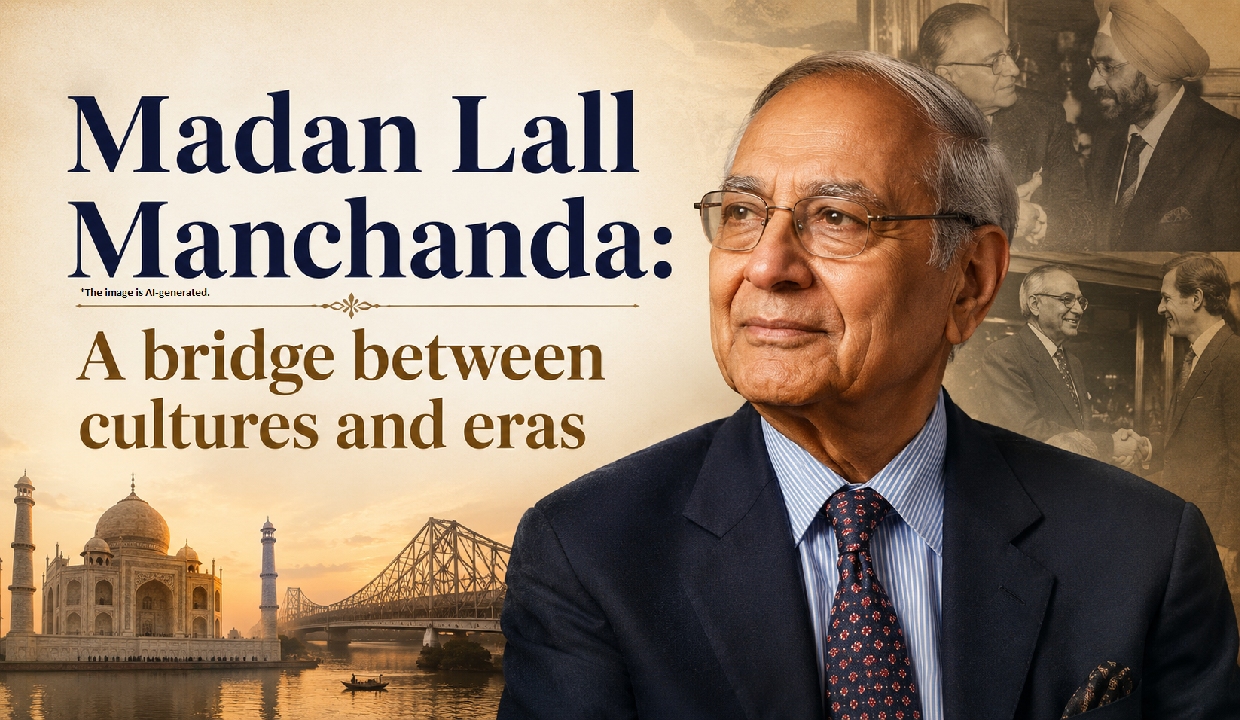
The world of literature remembers Madan Lall Manchanda not merely as a writer, but as a rare visionary who used his pen to weave a tapestry of communal harmony. On the occasion of his 102nd birth anniversary on May 15, we celebrate a life dedicated to the ‘Ganga-Jamuni Tehzeeb’ — the syncretic culture of India — nurtured through nine decades of profound experience. His scholarship was unique in its ability to transcend linguistic barriers; through prestigious dailies like The Pioneer, The Hindustan Times and The Hindu, he introduced the nuances of Urdu literature to a global English-speaking audience. From the mystical contributions of Amir Khusro to the intricate layers of Mirza Ghalib’s poetry, his essays served as a vital link between traditional heritage and modern sensibilities. His seminal work, Glimpses of Modern Urdu Literature, remains a definitive resource offering an analytical history of Urdu drama and the evolution of the Ghazal, reflecting his belief that languages are never walls of separation but bridges of connection.
Manchanda’s creative prowess reached its zenith in Reality Delights, a collection of stories exploring the extraordinary hidden within the mundane. He famously noted that truth is often more wonderful than fiction, a philosophy that so deeply impressed the former President of India, APJ Abdul Kalam, that he agreed to release the book only after a meticulous reading. Captivated by the depth of the prose, Dr Kalam’s query to the author — “How do you manage to write so beautifully?” — remains a tribute of the highest order. This sensitivity is equally evident in stories like A Conscience Keeper, which captures the loneliness of the elderly, and Caste Crossed, which confronts social prejudices. Whether emphasising the purity of faith over ritual or documenting his vast experiences in Precious Memories, his writing remained a mirror to the human soul.
In his later essays, such as Saving the Mahatma and Need for Communal Harmony, Manchanda underlined the timeless relevance of Gandhian values and the innate humanity that transcends religious boundaries. His global concerns were equally sharp; in Spectre of Nuclear Holocaust, he echoed the warnings of poets like Sahir Ludhianvi against the perils of war. Even after crossing the age of ninety, and having been honoured with the Delhi Urdu Academy Award in 2010, he continued to offer a positive vision for a changing world. In an era often marked by polarisation, Madan Lall Manchanda’s legacy stands as a lighthouse, ensuring that the fragrance of literature, love and shared humanity continues to inspire future generations.
The writer is a Professor; Views presented are personal.