India’s Trincomalee gambit
Nearly four decades after the Indo-Sri Lanka Accord first envisioned Trincomalee as a strategic pillar of regional cooperation, India and Sri Lanka now appear closer than ever to transforming the historic harbour into a major energy hub in the Indian Ocean
Forty years after the Indo-Sri Lanka Accord, which provided for the Indian Peace Keeping Force (IPKF) to assist Sri Lanka in dealing with its twin insurgencies — JVP and LTTE — and gave first right to India to develop Trincomalee Port, the visit of Vice President CP Radhakrishnan last month appeared to have finally sanctified the inter-governmental treaty, making Trinco the energy hub for the region. This could not have come a day too soon, with oil and gas prices rocketing due to the on/off Gulf War. Radhakrishnan was accompanied by Foreign Secretary Vikram Misri, who has been chargé d’affaires in Colombo. Focus was on two issues: the Trinco energy project and the Tamil question, languishing due to lack of interest by successive governments in Colombo.
The political upheaval in Sri Lanka, like the Gen Z movement in Nepal, ushered in a brand-new Marxist political outfit. JVP, in its new avatar as the National People’s Power alliance, had been involved in two insurrections in 1971 and 1988, and in both instances New Delhi was the first responder.
President Anura Kumara Dissanayake, in his discussions with Mr Radhakrishnan, highlighted India’s Neighbourhood First policy and its three critical interventions: the economic crisis of 2022, the financial lifeline during the debt crisis, and Cyclone Ditwa. Radhakrishnan noted: “We stand with your successes and struggles like an affectionate elder brother”. The term ‘elder brother’ (Daju in Nepali) did not please all Nepalese, as it is patronising. New Delhi’s $4 billion assistance package consisted of a USD 1 billion credit line for food and medicines, a currency swap of USD 400 million, USD 500 million for fuel, help in the IMF bailout, loan deferment, and foreign exchange support. India’s help during the dire crisis has, to a large extent, transformed its image from that of an interventionist during the three-decade Eelam war to that of a friend, as noted by President Dissanayake. The anti-India sentiment has almost evaporated, though New Delhi has diluted its stand on the Tamil question.
Part of the blame for this lies with Sri Lankan Tamils for creating divisions within Tamil political parties. The Tamil question over the years has been relegated to ‘Tamil aspirations’, especially after the political mauling of the fractured Tamil parties in the Northern Province. NPP won three of nine seats in Jaffna district, topping for the first time the vote share of a Sinhalese-led national alliance, with NPP winning seats in Jaffna. The Tamil National Alliance, which at one time had 16 seats and, with other Tamil parties, 25 seats, is today reduced to 12 seats, including Muslim seats. In 1977, the Tamil United Front was the main opposition party in the Sri Lankan Parliament with 18 seats. Dissanayake has been telling Tamils that the new constitution, which has no timeline, will address the Tamil question. Radhakrishnan informed Tamil leaders that he had discussed the issue with his Sri Lankan interlocutors. Provincial Council elections have not been held in seven years, and there is no indication they will be held anytime soon.
Tamils have genuine grievances. They say the spirit of the ISLA has not been realised and the 13th Amendment to the Constitution, which opened the door to a federal model of power sharing and devolution within a ‘united, undivided and indivisible Sri Lanka’, has not been implemented because of the unitary system. The late Tamil leader R Sambanthan had said: “India has a special duty in ensuring resolution of the Tamil question”. India’s fading interest was reflected in 2015 by Prime Minister Narendra Modi merely mentioning ‘cooperative federalism’. No longer do Indian leaders mention implementation of 13A or reconciliation following the military excesses during the Eelam war. But Colombo has done well to build a memorial recognising the sacrifices of 1,257 IPKF soldiers who facilitated the LTTE defeat in 2009.
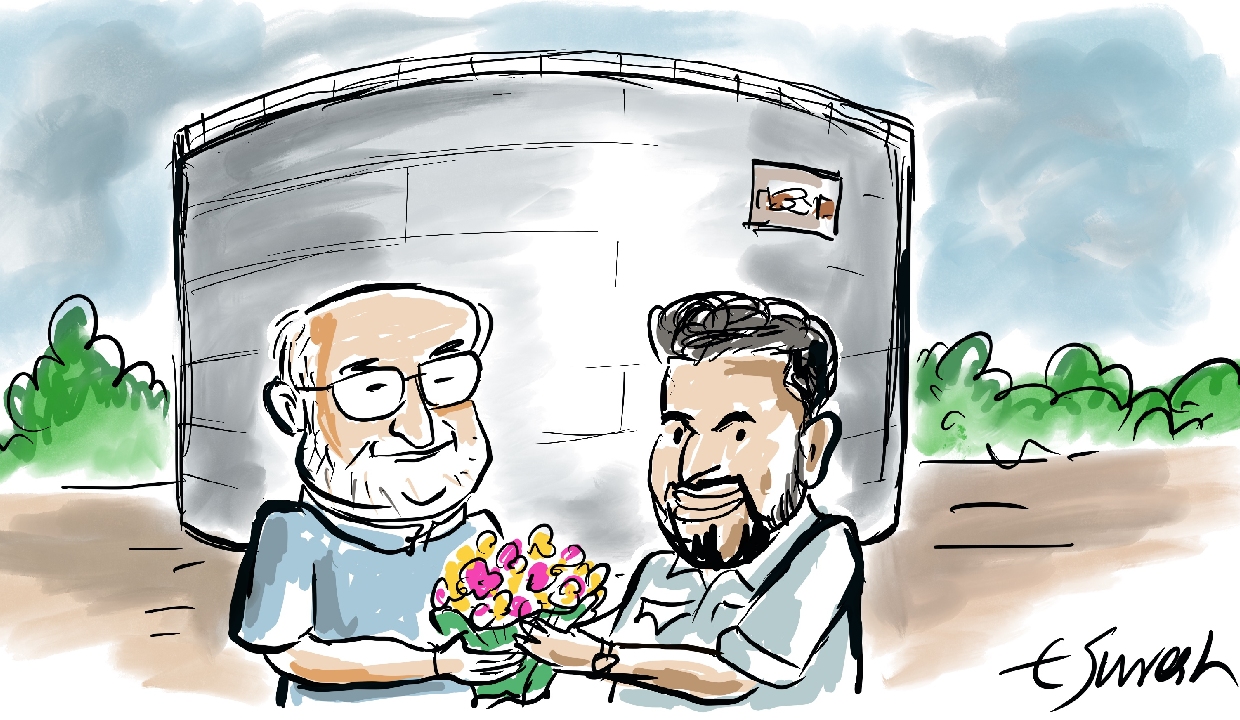
The most critical contemporary issue is the Trinco energy hub project, which Misri described at length in his briefing to the Colombo media last month. Sri Lanka’s Foreign Minister Vijitha Herath encapsulated the significance of the Trinco project, calling it a “permanent solution to the energy crisis in India’s neighbourhood”. As GoC IPKF South, which included the Trinco region during the de-induction of the IPKF, we studied in detail the strategic salience of Trinco in the Indian subcontinent and the Indian Ocean region. The history of the harbour was marked by contests for its possession among the Dutch, French, and British. Adm Horatio Nelson called Trinco the world’s deepest and finest harbour and the gateway to the Bay of Bengal, which Britain secured but had to abandon after 162 years. It built, in 1935 with impregnable Manchester steel, 100 oil tanks, of which Tank No. 91 was destroyed by Japanese bombers during World War II. There was no oil tank with the number 99, considered ominous. Instead, there were oil tanks numbered 101 and 102. These oil tanks had the capacity to store 1 million tonnes of petroleum.
The British abandoned Trincomalee Harbour only in 1956, even after Sri Lanka’s independence in 1948, similar to their strategy of retaining the Chagos group of islands in Mauritius. A number of agreements and MoUs were signed with India over the renovation of the upper and lower oil tank farms, but due to the three-decade-long Eelam war, none could fructify until January 2022, when an MoU for a joint venture for the renovation of 61 upper oil tank farms was signed. However, it never took off, as Sri Lanka considers it a vital national asset and politically a very sensitive issue to hand over to a foreign power.
Earlier, in 2003, IOC had signed a 35-year lease to develop 15 oil tanks, paying an annual fee of USD 100,000. While IOC is operating 15 oil tanks, Sri Lanka Oil Corporation is utilising its 16 oil tanks for fuel storage and offshore bunkering, and Prime Flour Mill Singapore has three for water storage. Following Radhakrishnan’s visit, conversation on the renovation of oil tanks has been revived, and a multipurpose oil transfer pipeline between Karaikal/Chennai and Trincomalee is on the cards. In its election manifesto, NPP said: “Trinco oil farm will be renovated with the support of a friendly foreign country”. Fingers crossed.
Earlier, in 2003, IOC had signed a 35-year lease to develop 15 oil tanks, paying an annual fee of USD 100,000. While IOC is operating 15 oil tanks, Sri Lanka Oil Corporation is utilising its 16 oil tanks for fuel storage and offshore bunkering, and Prime Flour Mill Singapore has three for water storage
The writer, a retired Major General, served as Commander, IPKF (South), Sri Lanka, and was a founder member of the Defence Planning Staff, now the Integrated Defence Staff; Views presented are personal.