Catastrophic heatwaves are killing thousands
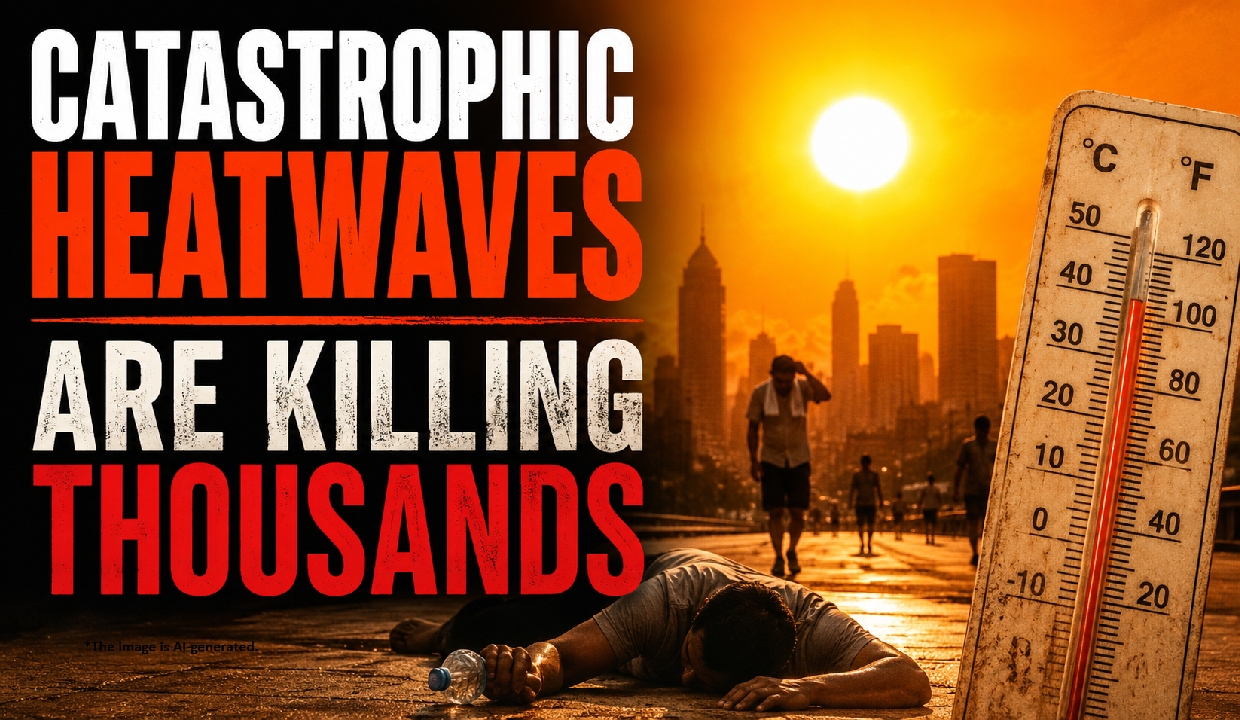
Heatwaves are no longer a seasonal extreme. They are a recurring public health emergency, killing tens of thousands
As we are about to celebrate World Environment Day, there is a revelation that is both shocking and unfortunate. Heatwaves in India kill at least 3,000 people every year, and this number can rise to 30,000. It is shocking because the number is so high, and unfortunate because no one takes it seriously, even though these deaths can be avoided if the right steps are taken by the government.
For years, the Indian government has reported roughly 800 heat-related deaths annually. But a reputed research paper has challenged this figure. A peer-reviewed study published last week in Frontiers in Environmental Health suggests the real number may be forty times higher. A single intense heat day, the researchers found, can cause approximately 3,400 excess deaths across India. A prolonged five-day heatwave can cause around 30,000 deaths. Even these figures, the authors caution, are likely an undercount.
The gap between 800 and 30,000 is not a rounding error. It is a policy failure of the first order. What is not counted does not demand a response - and India has, for decades, chosen not to count. The burden falls hardest on those least able to bear it. Five states - Uttar Pradesh, Bihar, Madhya Pradesh, Rajasthan, and Gujarat - account for over 60 per cent of projected heatwave mortality while contributing only 29 per cent of national GDP. These are states of outdoor workers, subsistence farmers, construction labourers, and the urban poor, with no air conditioning and no option to stay indoors. This is not bad luck. It is environmental injustice written into policy and inaction.
Heatwave deaths are directly proportional to the economic condition of people and the work they do for a living. Farmers, labourers, and service providers are most at risk, though climate change is the accelerant. South Asia is among the world’s most heat-vulnerable regions, and India is leading the pack. Heatwaves that were once rare extremes are becoming routine. Delhi and large parts of north-west India were under a continuous heatwave for over two weeks this May. As global temperatures rise further, events of this severity will occur not once a decade but multiple times a year.
The path forward is clear, even if the political will remains elusive. India must first declare heatwaves a notified national disaster, unlocking emergency finance for the states that need it most. It must overhaul its mortality surveillance so that excess deaths are actually measured, not concealed behind the narrow “heatstroke” category. It must build cooling infrastructure - shaded public spaces, cool roofs, and green cover - in the dense urban wards where the poor have nowhere to retreat. And it must enforce restrictions on outdoor work during extreme heat alerts, protecting the crores of workers for whom stopping work means going hungry. India can definitely take up this challenge. After the Super Cyclone of 1999, which killed thousands of people in Odisha, the state prepared itself for large-scale evacuations. This same urgency and preparedness must guide heatwave management; otherwise, it is going to become an even bigger killer, albeit a silent one.