India cannot afford ambiguity in West Asia
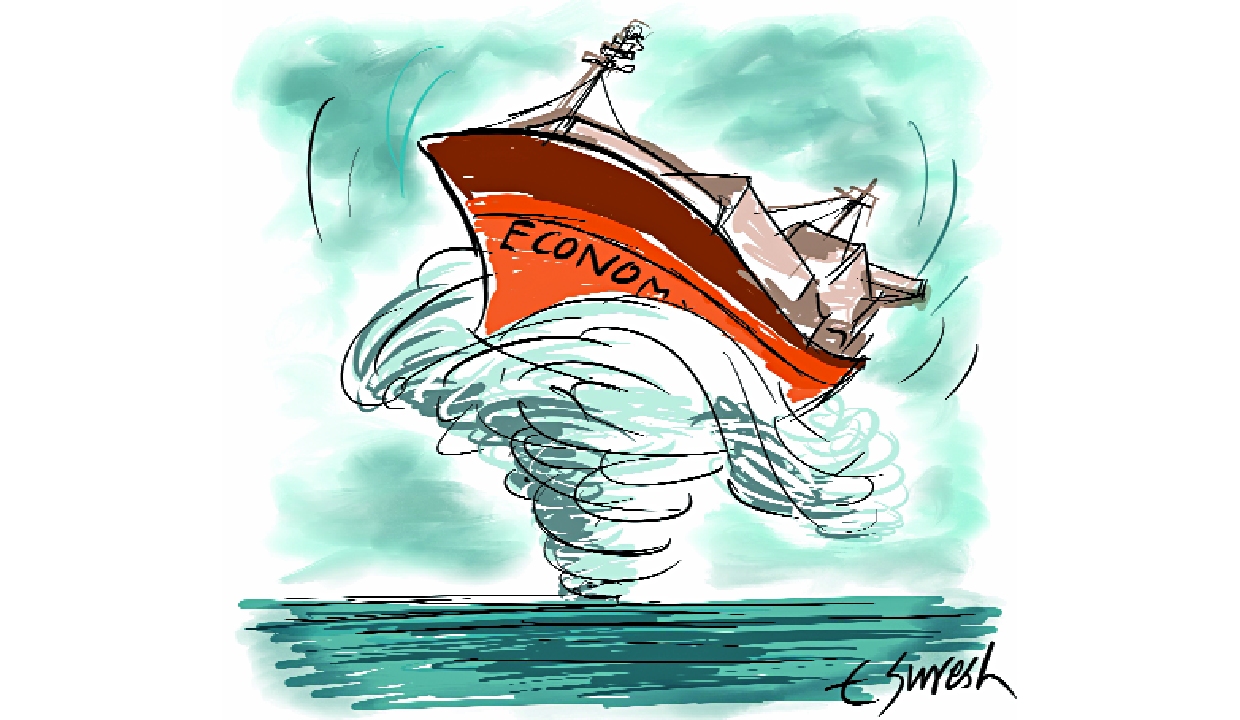
West Asia’s instability now directly threatens India’s energy security, maritime trade routes, economic interests, and the safety of millions of Indians living across the Gulf
West Asia has ceased to be a distant crisis zone that India can manage with cautious rhetoric and calibrated ambiguity. The Iran-Israel-US war has made the region’s instability immediate, structural, and deeply relevant to India’s energy security, maritime access, trade routes, and the safety of millions of Indians across the Gulf. That reality leaves New Delhi with a choice: adapt strategically or keep reacting to shocks it should have anticipated.
For too long, India’s West Asia policy has relied on a familiar formula: engage everyone, offend no one, and let the region’s storms pass around us. That formula worked when the region was volatile but still relatively containable. It is far less convincing now, because the conflict has exposed a more dangerous landscape: weakened states, competing external powers, new forms of warfare, and a regional order moving beyond old assumptions. India can no longer afford to think of West Asia as a background problem.
The old playbook is breaking
The first lesson of the war is that maximum pressure did not produce maximum results. The assumption that coercion, regime-change logic, and “shock and awe” could force Iran into political submission has not held up. Instead, the conflict has deepened instability and made the region less predictable. India should draw a hard conclusion from that failure: imported strategic theories do not guarantee regional order, and wishful thinking is not policy.That matters because India’s own interests are tied to the region’s stability in the most direct way possible. Energy corridors, shipping lanes, and trade routes are all exposed when West Asia convulses. So is the security of India’s 10-million-strong diaspora. In a country that depends on imported energy and uninterrupted maritime access, these are not side issues. They sit at the core of national interest. The traditional “Look West” and “Link West” frameworks now face a genuine stress test. They were built for an era in which India could pursue steady ties across the region without being forced into sharper strategic choices. That era is over.
The region is more multipolar, more militarised, and more vulnerable to spillover than it was before. A serious power cannot keep using a lower-intensity foreign policy vocabulary in a higher-intensity environment.
This is where India must move beyond the comfort of balancing. Balance is useful; drift is not. India should certainly continue engaging all major regional actors, but it also needs to speak and act more clearly when its interests are at stake. A rising power cannot be content to look neutral while others shape the regional order around it. That means thinking harder about diplomacy, maritime security, and energy resilience at the same time. The war has become a laboratory for asymmetrical tactics and new military technologies, and those developments are redefining maritime and security risks in the wider region. India’s free access to international waters cannot be treated as an abstract principle; it is a practical requirement that needs investment, planning, and deterrence.
India also needs to see itself, and be seen, as a stabilising force. As its economic and military weight grows, its diplomatic posture must grow with it. That does not mean seeking confrontation. It means being prepared to make principled, proactive interventions on issues that affect global supply chains, regional security, and the safety of Indian citizens. If India wants strategic respect, it must demonstrate strategic seriousness.
China, Pakistan and the real contest
The emerging landscape also requires a clearer reading of external actors. China has not been a passive observer; its background support to Iran and the benefits it draws from instability should be taken seriously. That does not mean India should overstate every move as part of a grand confrontation, but it does mean that Beijing’s role should be understood as part of the wider contest over influence in West Asia.
Pakistan, by contrast, should not be allowed to distort the larger picture. Its role as a facilitator matters far less than whether diplomacy produces a workable peace. That is the right standard for India too. Diplomacy is not a zero-sum game. If a settlement reduces pressure and lowers the risk of escalation, India has an interest in that outcome regardless of who claims credit.
It is also important not to reduce West Asia to sectarian shorthand. The Shia-Sunni divide is often overplayed by Western commentators. The more important dynamic is competition for leadership, legitimacy, and strategic influence across the region. India’s policy will be stronger if it is built on that reality rather than on simplistic labels that obscure more than they explain.
A better Indian line
There are signs that New Delhi has already begun to adjust. Prime Minister Narendra Modi’s visits to Israel and the UAE suggested a subtle recalibration in India’s regional posture. Recent visits by India’s National Security Adviser and External Affairs Minister to Saudi Arabia, the UAE, and Qatar point in the same direction. So does India’s support at the BRICS foreign ministers’ meeting in Delhi for a two-state solution on Palestine, including a reference to East Jerusalem. These are not trivial gestures. They indicate that India is trying to regain strategic credibility after a period in which its position looked less settled than before.
That effort is welcome, but it must not stop at symbolism. India has done well, so far, to secure its energy position better than many others. But short-term insulation is different from long-term strategy. New Delhi needs a more durable framework for crisis response, maritime protection, energy diversification, and regional engagement. It should plan for instability instead of assuming that instability will always remain manageable.
West Asia is now a test of whether India wants to act like a consequential power or merely a cautious one. The region touches India’s economy, its diaspora, its sea lanes, and its diplomatic standing. That makes it central, not secondary. If India wants to shape the world around it, it must first show that it can read this region with clarity and respond with confidence. In West Asia, hesitation is also a choice, but it is becoming a costly one.
West Asia is now a test of whether India wants to act like a consequential power or merely a cautious one. The region touches India’s economy, its diaspora, its sea lanes, and its diplomatic standing. That makes it central, not secondary
The writer is President of the Chintan Research Foundation and former Director of WTO; Views presented are personal.