The human side of AI in the classroom
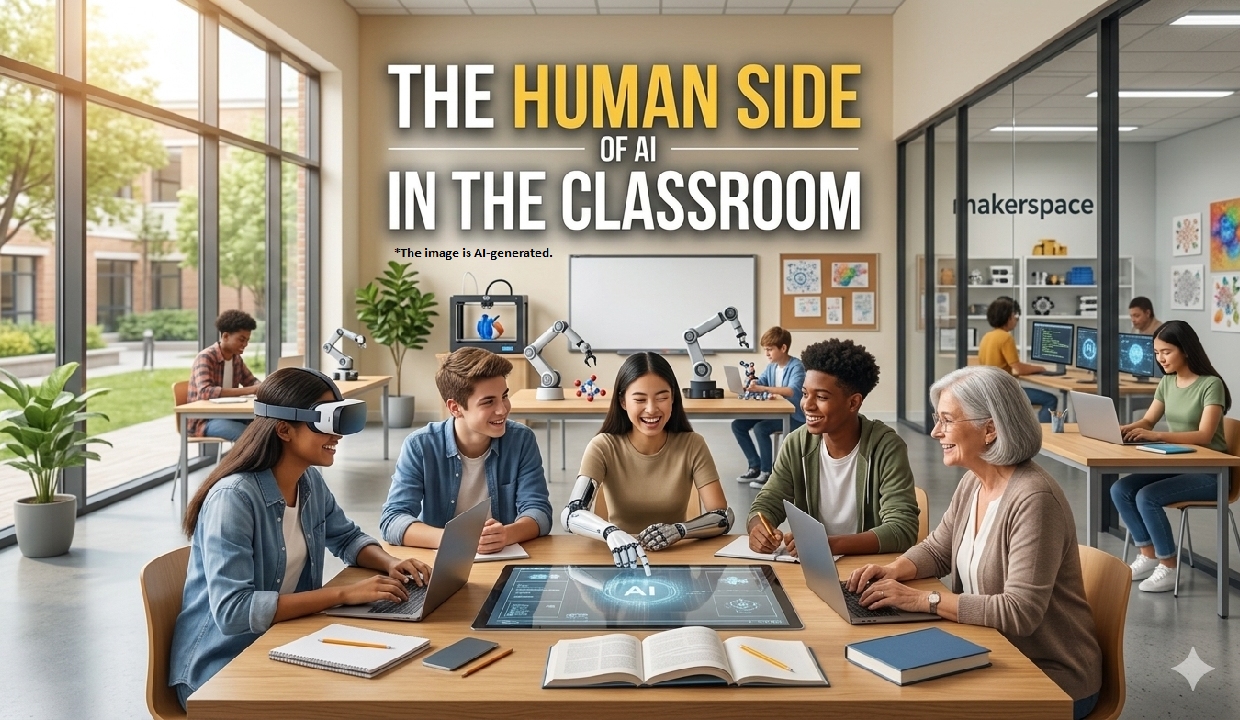
Artificial intelligence is no longer confined to the edges of innovation; it is steadily becoming part of the everyday rhythm of education. Its presence in school curricula is not loud or disruptive, but quietly influential, shaping how students engage with learning and how educators respond to their needs.
Not only are we seeing new tools; we are also seeing an entirely different learning experience emerging through this evolution. The advent of AI has opened up ways to support not only students’ academic growth, but also the confidence and well-being that sit at the heart of meaningful learning.
For years, the classroom has been built on a straightforward approach - one teacher, one lesson, one pace. But all learners are different; some move ahead quickly, while others need more time.
AI is starting to close this gap by identifying when a student is struggling or is ready to move on, allowing learning to adapt to each individual’s needs. It also changes the role of teachers by taking over tasks such as grading and tracking progress.
As classrooms evolve, teachers are becoming guides and mentors who help students interpret material rather than simply instruct them. At the same time, learning remains deeply tied to confidence, motivation, and self-worth. In this context, AI can contribute positively to the system. If implemented correctly, it can support learning through timely feedback, personalised instruction, and early detection of disengagement, among other methods. It can support both performance and well-being.
Nonetheless, the story has another side.
The fear is that students will turn to AI and thoughtlessly use it as a shortcut — skipping the thinking and questioning that lead to genuine learning. Therefore, schools should teach students how to use AI responsibly rather than simply how to access it, with the goal of developing critical thinkers rather than merely efficient problem-solvers.
Then there are ethical questions, which are becoming increasingly important.
How is student data being used?
Are these systems fair to all learners?
Are we teaching children how to use technology responsibly?
These are not technical questions alone; they are deeply human ones. And they must be part of the conversation in every school that chooses to embrace AI.
The real impact lies in how thoughtfully schools integrate AI. The priority should be on building AI literacy rather than simply teaching its usage, while ensuring that teachers are equipped and trained alongside students.
Education has never been just about facts. At its heart, education is an experience rooted in relationships and mentorship. AI cannot replace that, and it should not try to. What it can do is strengthen it.
When AI is used thoughtfully in the classroom, it can make learning spaces more flexible and welcoming for all students, recognising and embracing the different experiences of each learner. It gives teachers more time to help students become more curious, confident, and expressive. Perhaps this is the real power of AI in the classroom: making education truly inclusive for everyone.
The writer is the Principal of Dharav High School, Gurugram; Views presented are personal.