Cleaning up India’s sacred and scenic spaces
The Supreme Court has brought long-overdue urgency to cleaning up India, but lasting change will require commitment from both governments and citizens
Mahatma Gandhi once said, “Cleanliness is next to godliness.” This statement did not come from his conviction alone, but out of the observations that he saw around him. Let us face it, cleanliness is secondary to us; we litter at will, spit wherever we want to and clean our homes and throw the trash on the street, caring little about throwing wrappers and bottles when visiting a tourist place or a monument. Perhaps this is the reason that the cleanliness drive undertaken by the Modi Government has met with limited success; despite years of implementation, it is yet to become a habit, and till that happens, cleanliness will always elude us. The Supreme Court’s recent directive mandating strict implementation of the Solid Waste Management (SWM) Rules, 2026, at tourist destinations and pilgrim centres is well-intentioned and timely, as it is a reminder that cleanliness, environmental responsibility and civic discipline are inseparable and must be taken care of. By asking states to create dedicated mechanisms for waste management at beaches, tourist hotspots and religious sites, the court has addressed one of India’s most visible and persistent failures: cleaning up our public places. The ruling is timely, yet its success will ultimately depend on political will, administrative efficiency and public participation. Public awareness in this regard is paramount.
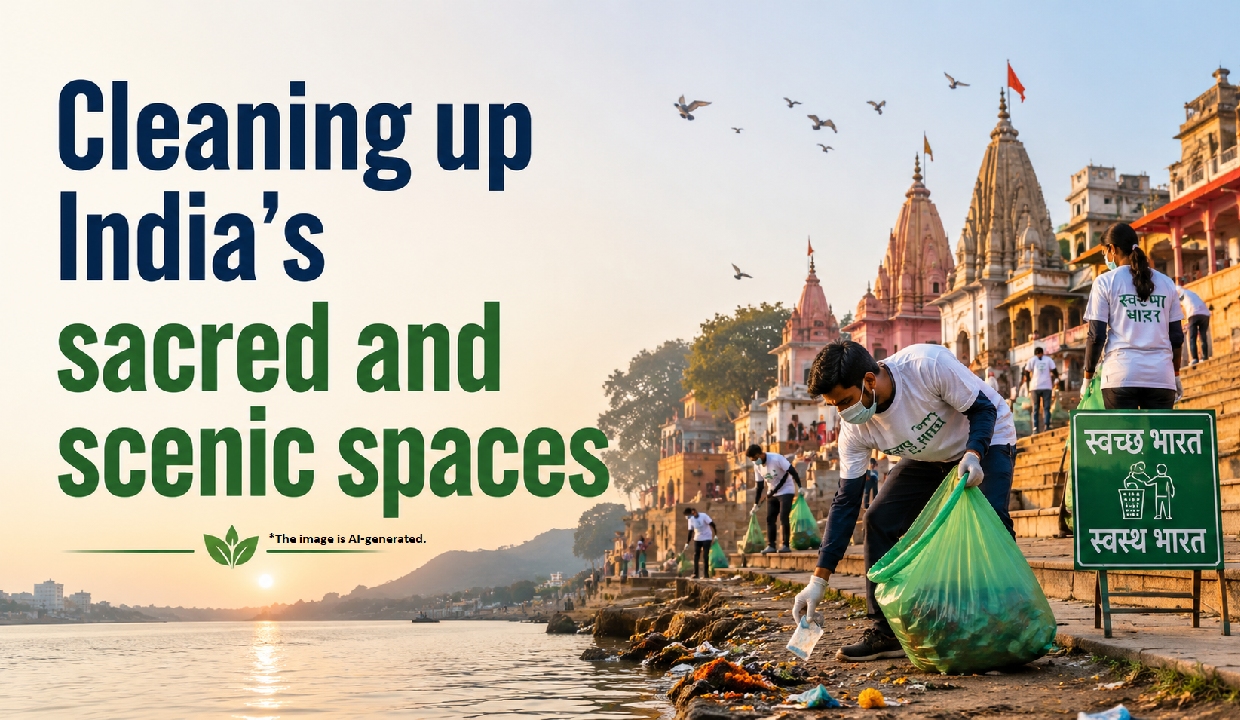
From the ghats of Varanasi and the hills of Vaishno Devi to Goa’s beaches, these places are littered with plastic waste, filthy and unclean. Such scenes not only damage fragile ecosystems but also tarnish the country’s global image. The Supreme Court rightly noted that keeping these places “spick and span” is essential both for preserving nature and enhancing India’s international standing. The significance of the order lies in its practical and decentralised approach. By empowering district collectors and directing them to create special monitoring cells, the court has moved accountability closer to the ground. The requirement for fortnightly inspections and reports introduces an element of regular oversight.
Another notable aspect is the recognition that waste management is an administrative and financial challenge as well. The court acknowledged the constraints of budget and manpower faced by states and urban bodies. Its suggestion to involve Corporate Social Responsibility (CSR) funds in establishing compressed biogas and waste-to-energy plants could help bridge the financial gap. In India, rivers, mountains and forests are deeply tied to spiritual and cultural identity, yet are often subjected to neglect and pollution. The court order puts the onus on governments to address the issue. However, the challenges remain formidable. India’s waste management system continues to suffer from poor segregation at source, inadequate recycling infrastructure and weak enforcement.
Many municipalities lack scientific landfills, modern processing plants and trained sanitation staff. Rural pilgrimage centres face severe infrastructural deficits. The Supreme Court’s intervention has provided direction and urgency to an issue long ignored. But judicial orders alone cannot clean India. Collective action can.