Pope Leo’s AI warning is a wake-up call
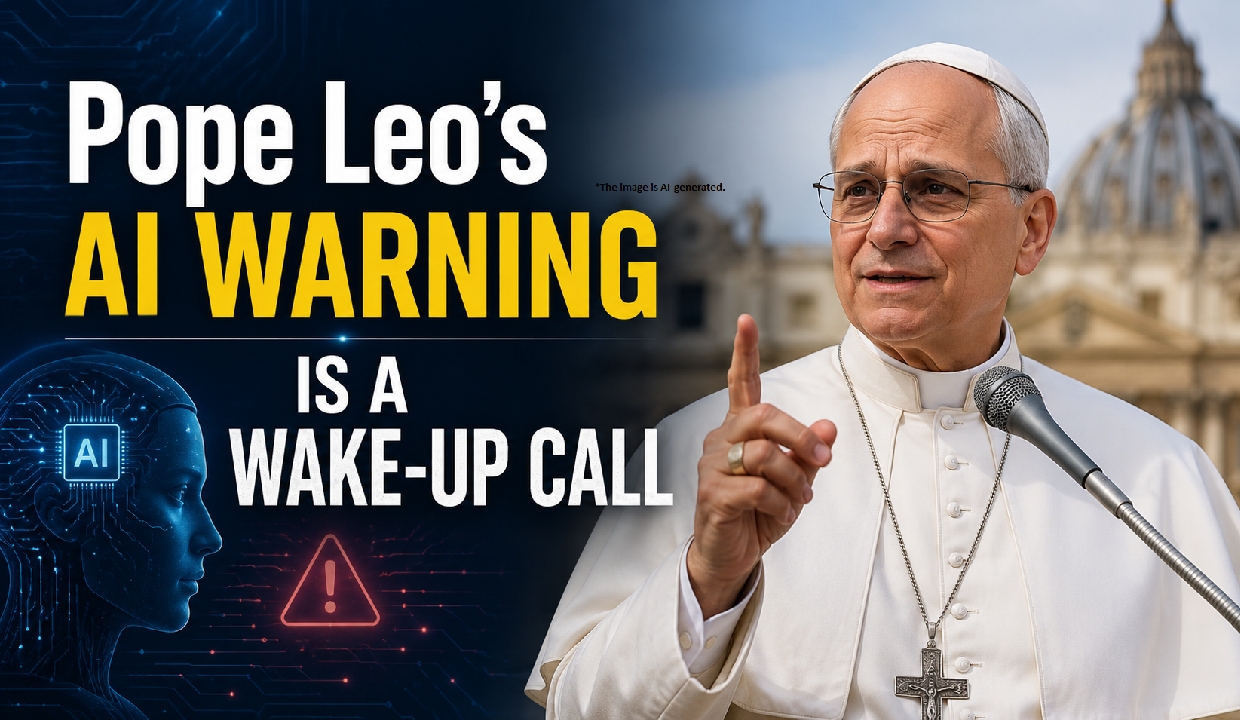
Pope Leo XIV has issued his starkest warning yet: artificial intelligence, left unchecked in the hands of a powerful few, risks fragmenting humanity itself
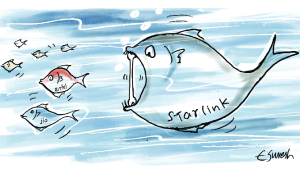
There is something arresting about the world’s most influential spiritual leader reaching back four millennia to a myth about bricks and hubris to make sense of the age of algorithms. Yet Pope Leo XIV’s instinct is sound. In his encyclical Magnifica Humanitas, released on May 25, he warned humanity of a pivotal choice — “either to construct a new Tower of Babel or to build the city in which God and humanity dwell together.” Strip away the theology, and what remains is a political and moral argument of urgent force. The Pope’s central warning is that control of artificial intelligence must not remain in the hands “of a few”. This is not a niche religious concern; it is a diagnosis of a crisis already unfolding. A small constellation of American technology corporations — armed with vast capital, proprietary data, and lobbying influence — is effectively writing the rules of the most transformative technology in human history. Pope Leo criticised the immense power concentrated within a handful of private technology companies, and rightly so.
When the architects of a technology are also its regulators, something has gone badly wrong. The Babel metaphor is apt precisely because it captures the paradox of AI power. In the biblical narrative, Babel represents human hubris — humanity’s attempt to reach the heavens through its own power, resulting ultimately in confusion and fragmentation. Today’s AI ecosystem mirrors this dynamic: a dominant technological culture, monolithic in values and driven by profit, building upwards at immense speed while treating the human cost as an afterthought. Pope Leo warned that a singular, totalising technological culture risks becoming a new form of oppression.
For the United States, the encyclical arrives at an awkward moment. Last week, President Donald Trump delayed an executive order that would have created a voluntary process for testing AI models — retreating even from the mildest gesture towards oversight. Washington remains consumed by geopolitical competition: deploy AI faster than China, weaponise it sooner, regulate it later — if at all. Pope Leo’s emphasis on human dignity and his opposition to autonomous weapons place him in direct contrast with techno-optimists who argue that the United States must militarise AI advances before its rivals do. The Pope does not oppose technological progress. Rather, he argues that calling for prudence — even for a slower pace in adopting AI — is not resistance to progress but an act of responsible care for humanity. That is a distinction that Washington, Brussels, and Beijing alike seem increasingly reluctant to acknowledge. Pope Leo has called for robust legal frameworks, independent oversight, informed users, and political systems that do not abdicate responsibility. These are not radical demands. They are the essential architecture of democratic accountability applied to a domain where accountability has been dangerously absent.
The Tower of Babel collapsed not because its builders lacked intelligence, but because they lacked wisdom. That is Pope Leo’s warning. Whether world governments will heed it remains uncertain. History, as he reminds us, has seen this before — and it did not end well.