The AI gold rush and the jobs paradox
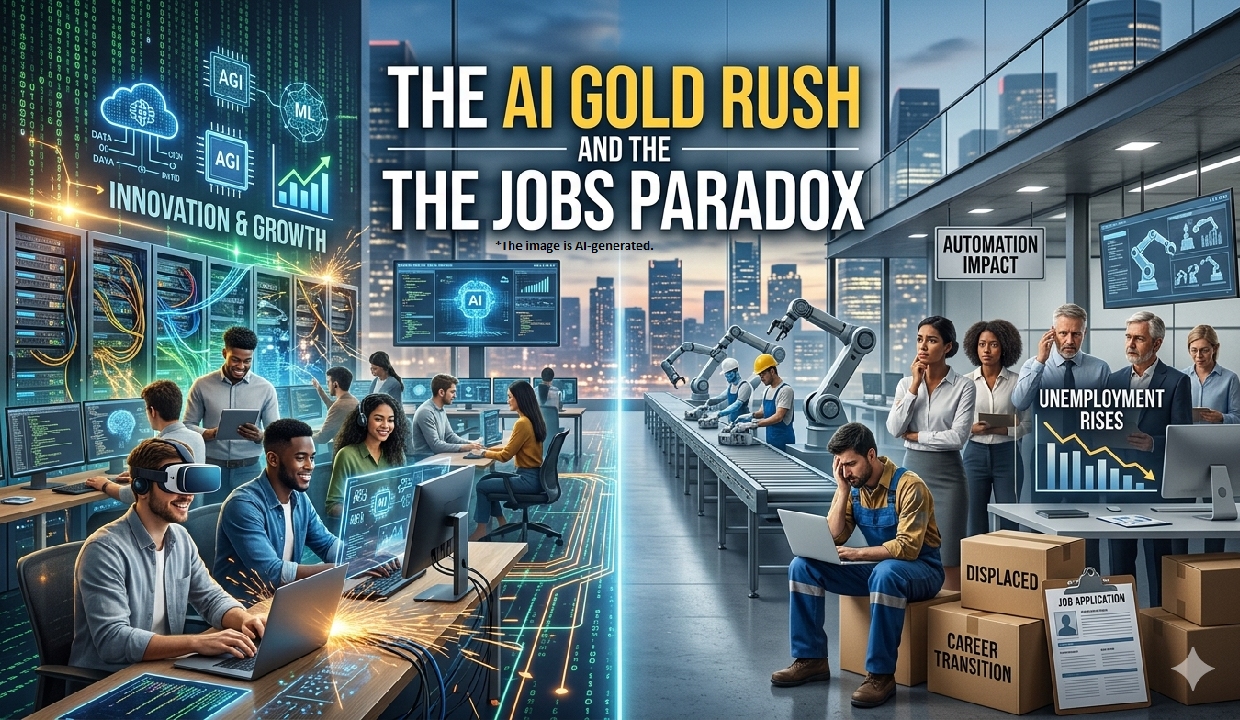
There is a mad rush towards AI learning, but will this craze actually create jobs or is the society prepared for disruptions AI may bring, is the big question
No technology in recent times has created a frenzy like AI. When AI exploded into the mainstream, it was welcomed with open arms because the promise it holds is immense. From healthcare to industry, from space exploration to defence — AI is a game-changer. But it has its downside too. Many professions are going to undergo an overhaul, and many people will lose their jobs. Estimates suggest AI could displace 92 million jobs globally by 2030, with up to 300 million jobs worldwide affected by automation. However, the situation may not be as grim as the figures suggest, as AI may also create jobs. People with AI skill sets will not only find employment but may also be better off. And that is the paradox of our times.
The very technology that is going to consume jobs is also going to create new opportunities. This contradiction is stark in our country, where unemployment is already high. Thanks to confusion and aggressive marketing, there is a great frenzy to learn AI skills — students, professionals, and even schoolchildren are rushing to enrol in AI courses in the hope of securing their future. AI has become the new career mantra. Platforms offering AI certifications, prompt engineering lessons, boot camps, and Generative AI modules are witnessing unprecedented demand. The fear of being left behind has created this mad rush to learn AI. The anxiety is understandable. Routine jobs are especially vulnerable. Entry-level white-collar roles may shrink significantly in the coming decade. It is like history repeating itself, when industrial innovations left workers jobless or when the introduction of computers led to job losses.
Yet, AI is not merely destroying jobs; it is reshaping them. Companies are increasingly looking for workers who can manage AI tools. The future may belong to professionals who combine domain expertise with AI literacy — finance plus AI, law plus AI, healthcare plus AI, and so on. This explains the extraordinary rush towards AI learning.
But there is also a danger of illusion. The booming AI education market has created thousands of courses promising instant expertise and guaranteed jobs. Many are superficial, outdated, or designed more for commercial profit than genuine skill-building. A certificate alone will not ensure employability. The real gap lies between learning AI theoretically and applying it meaningfully in real-world situations. There are other speed breakers as well. India still faces serious digital inequality. Educational institutions often struggle to update curricula quickly enough for a technology evolving almost every day. Moreover, ethical and regulatory concerns around privacy, misinformation, and bias remain unresolved. Governments, too, are yet to fully prepare for the social disruptions caused by AI. The market will eventually separate serious learning from certificate chasing. Employers will reward adaptability, creativity, and problem-solving, not merely familiarity with AI. AI literacy is not the same as job preparedness. AI can improve productivity and create opportunities, but it may also widen inequality. The real challenge is building a workforce that can think critically, adapt continuously, and combine human intelligence with artificial intelligence.