DK Shivakumar: Crowning of the Kingmaker
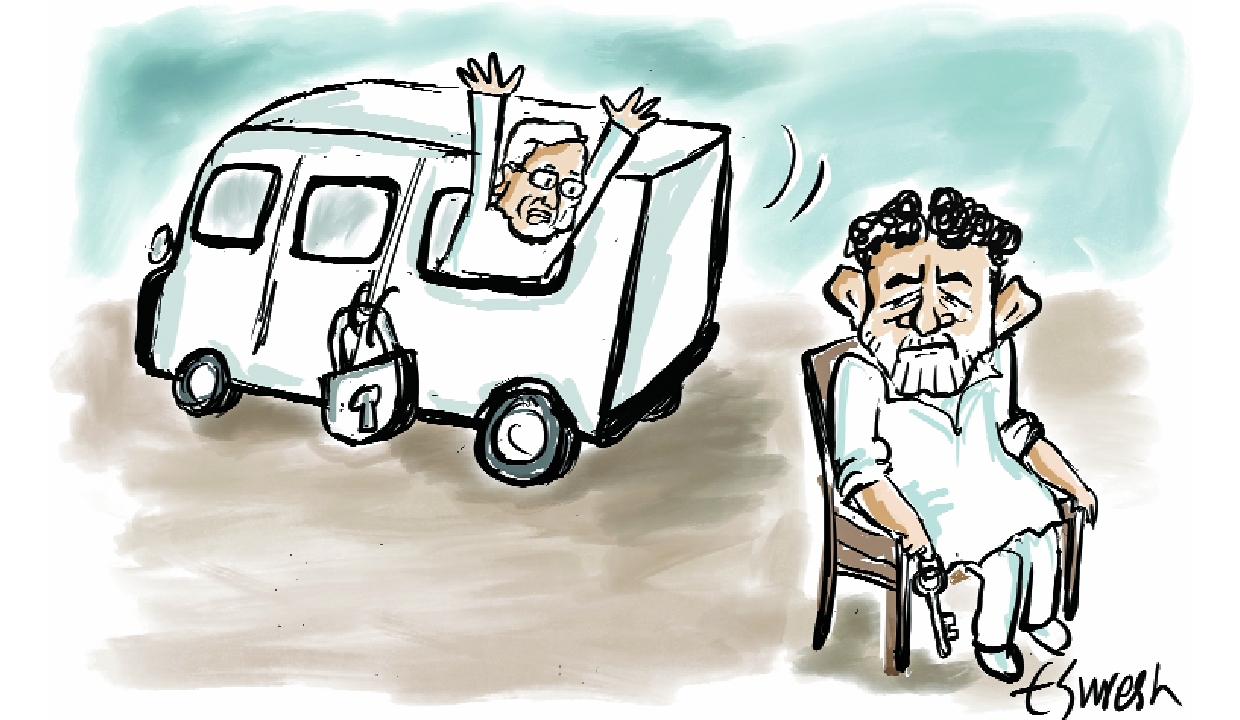
The leadership change, following months of speculation and negotiations, reflects the Congress High Command’s attempt to balance competing factions, address emerging political challenges, and prepare the party for future electoral battles
Karnataka is witnessing a significant political and generational transition with D.K. Shivakumar assuming the office of Chief Minister after the resignation of Siddaramaiah. The change comes after the Congress leadership successfully navigated a prolonged period of internal uncertainty and factional pressure. More than a routine change of guard, the transition signals a strategic recalibration by the party as it seeks to strengthen its position ahead of future electoral contests.
Shivakumar’s rise is a remarkable political story. Born into a farming family, he has built a reputation as one of the Congress party’s most effective organisers and crisis managers. Having won eight consecutive Assembly elections, he has emerged as a formidable political force in Karnataka. Over the years, his ability to negotiate, build alliances and manage political crises earned him the label of the Congress party’s “troubleshooter.”
His reputation was cemented in 2002 when the Congress-NCP government in Maharashtra faced the threat of defections. Around 40 Congress legislators were flown to Bengaluru and accommodated at a resort to shield them from poaching attempts ahead of a crucial floor test. Then Karnataka Urban Development Minister Shivakumar was entrusted with overseeing the operation. He personally coordinated the legislators’ stay and ensured their safe return for the trust vote, helping the government led by Vilasrao Deshmukh survive.
Since then, Shivakumar has repeatedly demonstrated his ability to manage complex political situations. Whether safeguarding legislators, forging consensus among rival factions, or handling delicate negotiations during Rajya Sabha elections and trust votes, he has become the party’s go-to strategist during moments of crisis. His extensive political network and organisational skills have often enabled the Congress to weather difficult challenges. Now, the man who helped install governments finds himself at the helm of one.
The Congress High Command’s decision followed months of speculation and bargaining. Shivakumar’s supporters had argued that a power-sharing understanding reached in 2023 entitled him to the chief ministership midway through the government’s term.
As pressure mounted, party leaders from different factions travelled to Delhi to press their case. The High Command repeatedly intervened to maintain unity and prevent public discord before finally settling on a leadership transition.
Three major factors appear to have influenced the decision. The first was Siddaramaiah’s advancing age; at 80, questions about succession had become increasingly relevant. The second was the growing challenge posed by the BJP, which has been working to regain political ground in the state. The third was the need to honour internal commitments and maintain organisational cohesion within the Congress.
Siddaramaiah leaves office with a substantial political legacy. Known for his commitment to social justice and welfare policies, he played a key role in strengthening the Congress’ support among backward classes, minorities and other marginalised communities. Reflecting on his journey after stepping down, he noted that he never imagined a village boy like himself would one day become an MLA, minister and Chief Minister. His story continues to resonate with many supporters across Karnataka.
However, Siddaramaiah’s continued influence may also present challenges for the new administration. His loyalists remain a significant force within the Congress legislature party and are expected to seek a meaningful role in governance. As part of the transition, discussions have reportedly centred on accommodating several of his supporters in the cabinet and ensuring adequate representation for his political camp.
So far, the transfer of power has been remarkably smooth. Siddaramaiah himself proposed Shivakumar’s name, which was seconded by senior Congress leader Parameshwara. Although the legislature party formally left the decision to the High Command, the observers eventually announced Shivakumar as the consensus choice, paving the way for his election as Congress Legislature Party leader.
Yet the real test begins now. Shivakumar must not only run the government but also manage competing interests within the party. Preventing the emergence of rival power centres while maintaining cordial relations with Siddaramaiah and his supporters will require political skill and patience. The Congress also faces the challenge of synchronising government performance with organisational strategy.
The road ahead is demanding. Karnataka Assembly elections are scheduled for 2028, followed by the Lok Sabha elections in 2029. Shivakumar’s success will be measured not only by his administrative performance but also by his ability to keep the Congress united and electorally competitive. For a leader long known for solving other people’s political problems, the challenge now is to govern effectively while shaping the future of both the party and the state.
Shivakumar’s success will be measured not only by his administrative performance but also by his ability to keep the Congress united and electorally competitive
The writer is a popular columnist; Views presented are personal.