A beautiful journey into the inner world
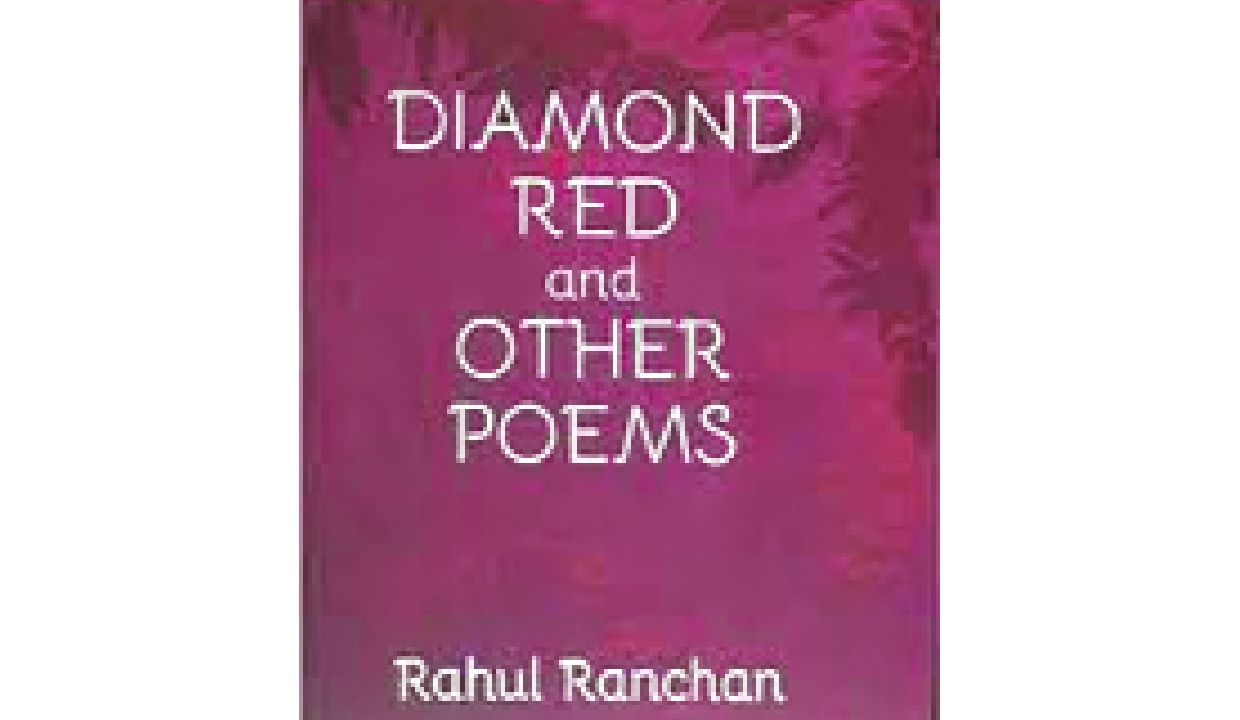
Rahul Ranchan's book of verse, “Diamond Red and Other Poems,” calls for a deep understanding of its rich content and for an appreciation of the poet's unique style. The collection is not merely a compilation of poems; it is an inward journey into the poet's psyche, reflecting the emotional, intellectual and spiritual dimensions of his life.
Many of the poems may be regarded as a search for a lost identity, arising from the absence of connectivity, experienced while living between two worlds — the West and the East, namely America and India. As the years rolled by, Ranchan's experience of alienation and of the absence of relational warmth becomes increasingly pronounced. The trauma of deception and rejection by some trusted friends finds poignant expression in poems such as “Flip Side”. Yet, despite confusion and ambivalence, the sense of being emotionally shipwrecked, as reflected in “Trap Struggle’', the poet continues to look ahead with hope, determined to regain lost ground.
Even in his loneliness, Ranchan writes with restraint and dignity. In “A Bowl of Porridge”, the unusual image of the poet's artificial eye, unseen by the visitor, becomes a subtle symbol of an inner reality concealed beneath an ordinary exterior. Hope, however, remains a persistent current throughout the collection. In “Planting”, the poet looks forward to the birth of his child with the wish that the newcomer must not inherit the fractured experiences of the poet. The image of the son eating the fruit of the father's planting, becomes a powerful affirmation of renewal, continuity and faith.
Ranchan also revisits the memories of youth, where images of the soccer field, his first fight, and the dust a girl threw in his eyes, return with remarkable vividness. Such recollections appear almost as living experiences unfolding in the present.
He laments narrow-mindedness, the distortion of truth, and the refusal to acknowledge it, while repeatedly affirming the enduring significance of compassion and human feeling.
As expressed in several poems, intrigue, planning and deception by certain trusted friends, during a particularly difficult period in the poet's life, left deep emotional scars. These experiences recur in poems such as “Mindscape”.
Nature occupies a significant place throughout the collection. Trees, leaves, wind, breeze, storms, fog, firs, pines and bushes become more than natural imagery; they serve as extensions of the poet's emotional and spiritual landscape.
The intimate relationship between the creator and the creative act receives memorable treatment in “Pottering”. Here, handcrafted pottery stands in contrast to the mass production of plastic, suggesting the loss of authenticity in modern life. Ranchan's admiration for the potters remains unwavering. They representing joy, hope and renewal, inspires him to become, in spirit, a potter himself, continually shaping life through creative endeavour.
Stylistically, the poems move beyond conventional metrical patterns. Their freshness of imagery, originality of expression and symbolic richness make this collection worthy of a careful literary study. “Diamond Red and Other Poems” therefore is a collection that requires slow and reflective reading. Beneath its quiet voice lies a profound exploration of identity, memory, suffering, hope and renewal.
The reviewer is Associate Professor (Retired), School of Open Learning, University of Delhi; Views presented are personal.