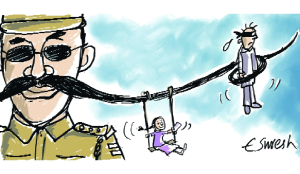
Sino-Indian transactions of territory and trade
Scepticism surrounding Chinese diplomatic agreements is highly justified given the historical pattern of unilateral actions along the LAC
A day after the September 12-13, 2026, BRICS Summit attended by Chinese President Xi Jinping and preceded by the August 25, 2026, Special Representative Talks on the India-China Boundary Question in Beijing, India’s Ministry of Defence (MoD) publicly released its 2025-26 Annual Report, stating that the PLA had scaled down its deployments opposite India’s northern borders. The timing of this report led to viral social media claims and news summaries inadvertently implying that the troop pullback was an immediate, direct result of the 2026 summit. Soon afterwards, the MoD clarified that this troop reduction took place in 2024 and 2025.
While the India-China eight-point agreement offers mutual security and economic mechanisms, critics are apprehensive about the “early harvest” approach as it primarily suits Beijing’s strategic pacing. They argue that it favours China because: (a) it is a shift from a comprehensive package to piecemeal delimitation; (b) it focuses on easier middle/Sikkim sectors first; (c) it leaves the basic western/eastern disputes unresolved; (d) it normalises ties before full 2020 status quo restoration; and (e) it allows China to project a peaceful diplomatic image globally.
The mutual benefits for India are: (a) reduction of immediate military friction along the Line of Actual Control (LAC); (b) adds hotlines to prevent accidental tactical escalation; (c) resumes traditional Kailash-Manasarovar Yatra pilgrimage batches; (d) reopens designated local border trading points; and (e) restores routine diplomatic communication channels. While experts believed that all previous special representative talks have been used by China primarily as a tool for crisis management and narrative diplomacy rather than a medium for a final, permanent border resolution, it remains to be seen if New Delhi can leverage these talks to secure a fair, permanent boundary framework.
Scepticism surrounding Chinese diplomatic agreements is highly justified, given the historical pattern of unilateral actions along the Line of Actual Control (LAC). However, looking closely at the tangible outcomes of the diplomatic process culminating in the 2024 LAC Patrolling Agreement and subsequent bilateral talks in 2025 and 2026, India did secure several specific, measurable operational advantages. Following the 2020 Galwan standoff, the Chinese military blocked Indian troops from reaching long-held Patrolling Points (specifically PPs 10 through 13 in Depsang). The diplomatic breakthrough made a return to the pre-2020 status quo in these sectors, legally and physically reinstating India’s access to contested patrolling grounds.
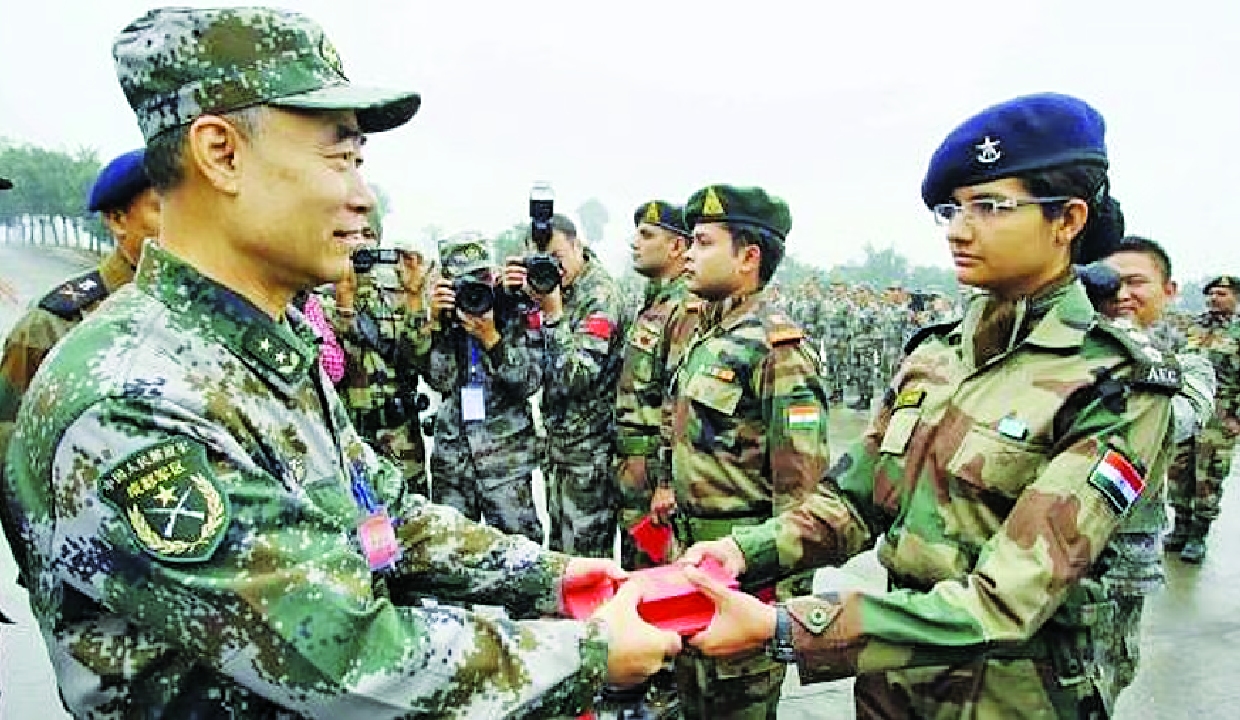
China significantly reduced its frontline military deployment opposite India’s northern borders in 2025, cutting troop levels in eastern Ladakh by about half compared with peak crisis numbers, primarily due to high logistical and operational strains. The nature of disengagement in eastern Ladakh vs. Arunachal Pradesh reveals distinct, considered priorities for Beijing. Hence, there has been no reduction in the deployment in Arunachal Pradesh, which China continuously keeps claiming as its own.
In eastern Ladakh, the PLA’s reduction of frontline troops from specific friction points (such as Galwan, Pangong Tso, Depsang and Demchok) was not a full retreat. Instead, it was an optimised force reconfiguration driven by geography: the high-altitude desert of Ladakh, with extreme sub-zero temperatures, often dipping below -20°C to -40°C, and scarce oxygen levels, takes a heavy physical toll on operating tank units and infantry and rapidly degrades advanced military hardware. The Indian Army generally displays better operational endurance in extreme high-altitude regions compared with Chinese People’s Liberation Army (PLA) troops, largely due to decades of continuous deployment and specialised training.
The key elements of the discussion between Prime Minister Narendra Modi and Chinese President Xi Jinping on the sidelines of the BRICS Summit in New Delhi were reportedly bilateral cooperation, border stability and mutual sensitivities.
On bilateral cooperation, PM Modi welcomed President Xi to India and thanked China for its support during India’s BRICS chairmanship, noting that the engagement provided a constructive opportunity to discuss economic and cultural ties.
PM Modi emphasised that future relations should be guided by “mutual respect, mutual interest and mutual sensitivity”.
Both leaders acknowledged that maintaining peace along the border areas serves as an essential foundation for normalising and developing broader bilateral ties. They committed to working towards a fair, reasonable and mutually acceptable resolution of the boundary question while observing existing agreements.
The leaders addressed economic and structural trade imbalances, supply chain challenges and the need for predictable market access to foster cooperative growth.
For years, China’s official position was that the border dispute should be “set in its proper place” while resuming normal business and trade. India rigidly maintained that normal relations are impossible without border peace. By compelling Xi Jinping to engage in direct bilateral border management reviews at the SCO and BRICS summits, India appears to have, at long last, made China accept border peace and the “three mutuals” — mutual respect, sensitivity and interest — as the fundamental prerequisite for broader ties.
It is critical to distinguish between tactical advantages and strategic trust. Security analysts emphasise that China did not act out of selflessness; Xi’s compromises were driven by practical necessities, including a slowing domestic economy, escalating technology trade wars with the US and a desire to stabilise its regional periphery. The current operational reality between India and China is a tactical supply-chain and border stabilisation truce rather than a full strategic reset. On the economic front, India has reportedly made Beijing lift critical trade blockades. Recent diplomatic rounds made China ease export restrictions on vital industrial resources, including rare earths, fertilisers and heavy infrastructure equipment (like tunnel boring machines), which Beijing had previously been holding up as strategic leverage.
On the ground, India must not lower its guard. While physical troop presence has thinned, China continues to build permanent military infrastructure and deploy surveillance technology along the border. India’s response has been maintaining a robust, heavily mirrored deployment across all sectors, while using the diplomatic agreements strictly as a mechanism to prevent active conflict while matching China’s capabilities on the ground.
New Delhi must maintain a stance of cautious pragmatism towards Beijing and distinguish that, while certain critical trade blockades and export curbs have been lifted, severe structural vulnerabilities and strategic mistrust remain.
Col Anil Bhat, VSM (Retd), is a strategic affairs analyst and former Defence Ministry and Indian Army spokesperson; views presented are personal; Views presented are personal.