Dancing with Dad: Who will be there after me?
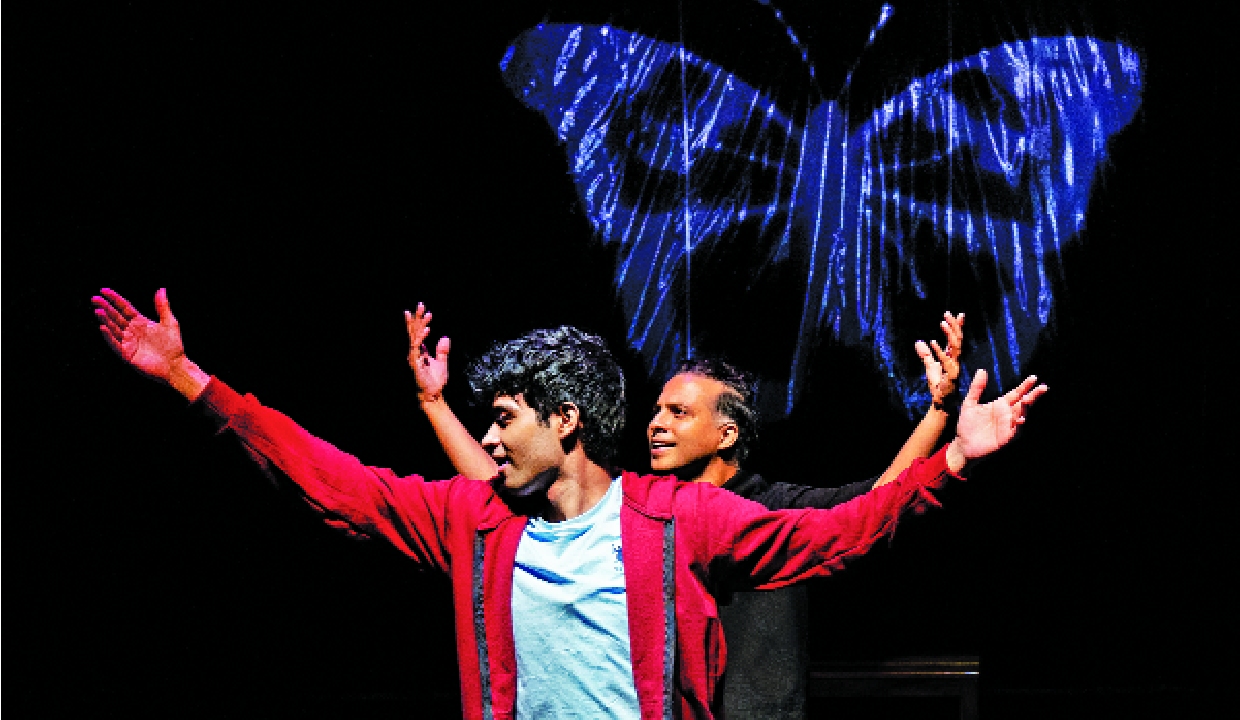
Watching Dancing with Dad at Stein Auditorium, the performance raises a question that shadows many parents’ lives: who will care for a child when the parent is no longer here? For the father of an autistic son, that anxiety acquires a particular urgency. It concerns care and security, but also understanding. Who will recognise the person his son is, and make room for the way he experiences the world?
Presented by Maneesh Verma and Collective Madness, the play brings this uncertainty into an intimate encounter between a dancer father, played by Sumeet Nagdev, and his autistic son, portrayed by Arjun Kachroo. The father tries to help his son imagine a life beyond his presence. Yet their exchanges also reveal how much the father himself must learn: about his son’s feelings, his responses, and the possibilities of a relationship in which both can speak and be heard.
The performance conveys the sense of a father and son meeting as equals. They inhabit different worlds, but the performance allows us to glimpse the connections between them. The father’s apprehension encounters the son’s apparent ease; a tremble meets a giggle; fear gives way, briefly, to surprise. These shifts carry the emotional weight of the production. They make the relationship recognisable without pretending that its difficulties can be easily resolved.
Nagdev and Kachroo give these exchanges an affecting immediacy. Their performances draw attention to the effort involved in reaching another person-and to the unexpected moments when that effort becomes mutual. The father seeks to prepare his son for the future, while the son opens up ways of feeling and communicating that the father cannot entirely anticipate.
The production also brings a wider social failure into view. Autistic people continue to encounter misunderstanding, exclusion and the assumption that difference means incapacity. In schools and everyday life, the pressure to conform can leave little room for an individual’s own rhythms of learning and expression. Too often, the difficulty others have in understanding someone becomes a judgement about that person’s abilities.
Dancing with Dad invites audiences to question that judgement. The son has an emotional life that asks to be recognised on its own terms. He can respond, surprise, learn and teach. The relationship becomes richer when the father allows himself to receive as well as guide.
This gives the father’s central anxiety a larger significance. “What will happen after me?” is a question addressed to society as much as to the family. A parent’s love cannot, by itself, secure a child’s future. That requires schools willing to include, communities willing to understand, and support that does not disappear with the caregiver. The play leaves these questions open, and they follow the audience out of the auditorium.
The performance raises questions about theatre’s place in a screen-dominated world. At Stein Auditorium, a private parental fear became a shared experience, reminding audiences of the power of live performance.
Digital media could carry such work to a much wider public. Whether it gives space to this patient engagement, amid the pursuit of clicks and attention, remains an open question.
Dancing with Dad begins a conversation that continues beyond the performance. It deserves an audience, especially among those whose understanding of autism remains distant or uncertain. Its most affecting invitation is also its simplest: to look more closely, listen more patiently, and recognise a person where audiences may previously have seen only a disability.
The writers are observers of the performing arts and cultural life; Views presented are personal.