Navi Pillay: A voice for justice in a world at war
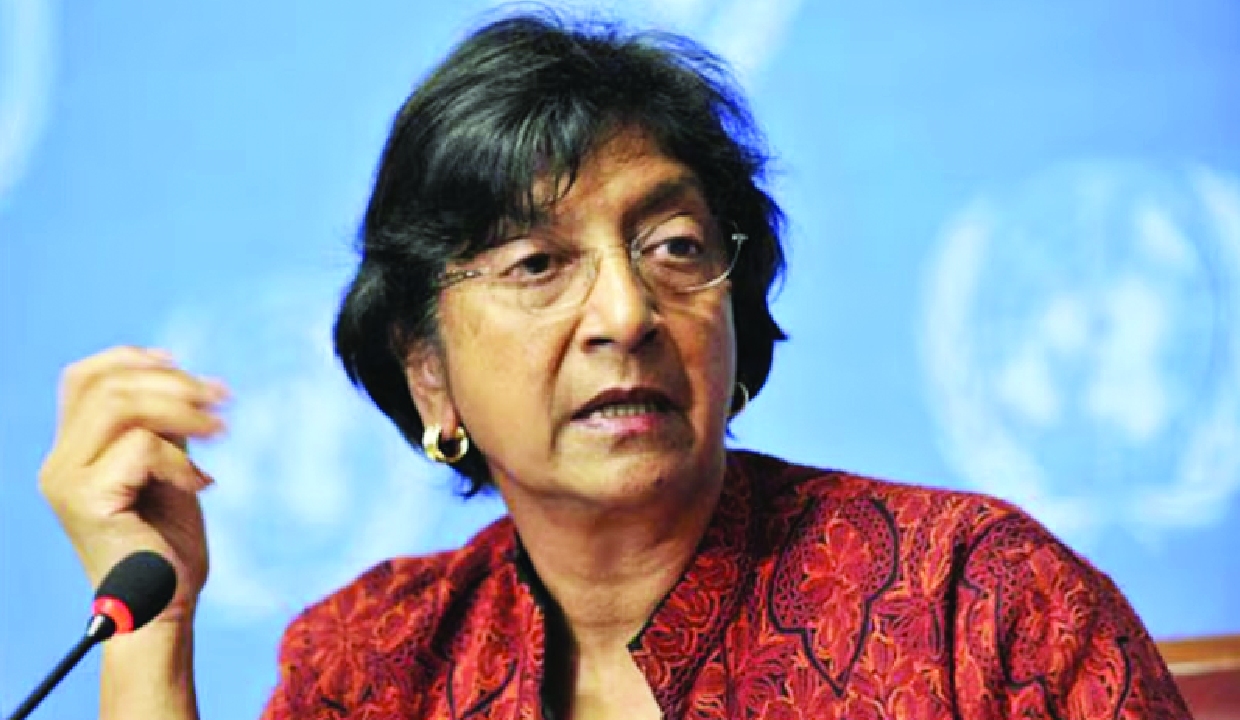
From apartheid-era South Africa to the highest institutions of international justice, Navi Pillay has spent her life defending the vulnerable and challenging impunity. The 2026 Nobel Peace Prize recognises her contribution to human rights and international law, and her enduring belief that peace is impossible without dignity, equality and justice for all.
“Civilians in Israel, civilians in Gaza, children on both sides have a right to live.” These words from Navi Pillay, former United Nations High Commissioner for Human Rights, capture the spirit of her lifelong struggle for human dignity.
In a world torn apart by wars and violence, her message is simple: every human life matters, and no one should be denied justice because of their identity or nationality.
Navanethem “Navi” Pillay, a South African jurist of Indian origin, has won the 2026 Nobel Peace Prize for her efforts to promote peace and international law.
Her recognition brings global attention to a woman who has spent decades fighting racial discrimination, defending political prisoners and helping strengthen international justice.
Her life shows that the fight for peace begins with the protection of human rights.
Born in Durban, South Africa, on September 23, 1941, Pillay grew up in a modest family. Her father was a bus driver, while her mother looked after their eight children. Her grandfather had migrated from Tamil Nadu to South Africa as an indentured labourer. The family faced financial difficulties, and the racial discrimination of the apartheid era made life harder for people of Indian origin and Black South Africans.
Pillay refused to let these barriers determine her future. She studied law at the University of Natal and, in 1967, opened her own legal practice. At a time when racial discrimination shaped almost every aspect of life in South Africa, she stood beside those who challenged the system.
She defended anti-apartheid activists and political prisoners and spoke out against the ill-treatment of people in custody.
For Pillay, the law was not simply a profession. It was a way to protect people who had little power to defend themselves. Her work taught her an important lesson: justice must be available to everyone, not just the rich and powerful.
She later pursued higher studies at Harvard Law School, earning a master’s degree in law and a doctorate in 1988. In 1995, she became a judge of the South African High Court, marking another milestone in her remarkable career. Her contribution to international justice became especially important during her service at the International Criminal Tribunal for Rwanda.
She served as its president from 1999 to 2003. The tribunal was established to prosecute those responsible for the 1994 Rwandan genocide, in which hundreds of thousands of people were killed.
One of the most important legal developments associated with the tribunal was the recognition that rape and sexual violence could form part of genocide.
The landmark Akayesu judgment helped establish this principle. It was a major step towards recognising the suffering of women during wars and ensuring that sexual violence could not be ignored in the pursuit of justice. Pillay went on to serve as a judge at the International Criminal Court from 2003 to 2008.
She then became the United Nations High Commissioner for Human Rights, holding the position from 2008 to 2014. In this role, she raised concerns about human rights violations in conflict zones and called for greater protection for vulnerable communities.
Her message was clear: governments must respect human rights, and those responsible for serious crimes must be held accountable. Peace cannot last when victims are forgotten and perpetrators escape justice. Pillay also supported women’s rights through her association with Equality Now, an international organisation working to end discrimination against women and girls.
She contributed to efforts against the death penalty and took part in international initiatives promoting freedom of information and democracy.
Her career reminds us that peace is much more than the absence of war. A ceasefire may stop the guns for a while, but lasting peace requires justice, dignity and trust. When innocent people suffer and serious crimes go unpunished, the wounds of conflict remain open. Independent courts and international institutions can help victims seek justice and make it harder for powerful individuals to act without fear of accountability.
Pillay’s Indian roots make her story particularly meaningful to readers in India. From a family whose history began in Tamil Nadu to the highest levels of international justice, her journey reflects the power of education, determination and public service. She has shown that a person from a modest background can make a difference far beyond national borders.
The 2026 Nobel Peace Prize recognises not only Pillay’s achievements but also the importance of defending human rights in an increasingly troubled world. Her life carries a message that is relevant to every nation: peace cannot be built on fear, discrimination or silence.
As wars continue to displace families and claim innocent lives, the world needs voices that remind leaders of their responsibilities.
Navi Pillay has spent much of her life being such a voice. Her journey offers a simple but powerful lesson: lasting peace begins when every human being is treated with dignity and justice is denied to no one.
Her life shows that the fight for peace begins with the protection of human rights. Born in Durban, South Africa, on September 23, 1941, Pillay grew up in a modest family. Her father was a bus driver, while her mother looked after their eight children. Her grandfather had migrated from Tamil Nadu to South Africa as an indentured laboure
The writer is Professor at Centre for South Asian Studies, School of International Studies & Social Sciences Pondicherry Central University; Views presented are personal.