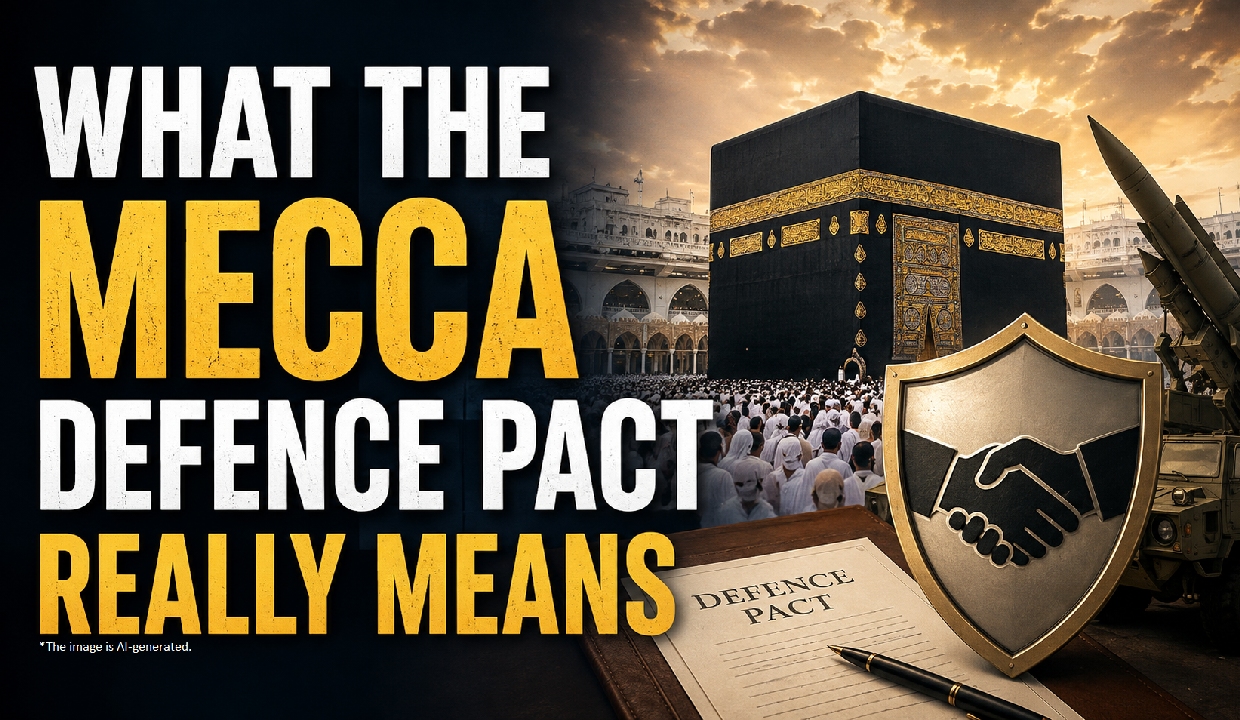
What the Mecca defence pact really means
While the agreement offers no NATO-style collective defence, the military capabilities of its members — especially Turkey — warrant close attention
On August 7, Saudi Crown Prince Mohammed bin Salman, Turkish President Recep Tayyip Erdogan and Pakistani Prime Minister Shehbaz Sharif signed the Mecca Joint Defence Agreement, declaring that an attack on any one of the three would be treated as an attack on all. Coming after nearly a year of negotiation, and building on the bilateral Saudi-Pakistan defence pact signed in Riyadh last September, the accord instantly drew comparisons to NATO’s Article 5. Predictable label — “Islamic NATO” — followed within hours.
The comparison is tempting but loose. Unlike NATO, the Mecca pact creates no integrated command, no standing joint forces, no automatic deployment mechanism. Riyadh itself has publicly denied this is a military alliance or a religious bloc. Pakistan has downplayed any suggestion of extending its nuclear umbrella to its new partners, and tellingly, Islamabad did not act militarily when Iran struck Saudi Arabia even after the bilateral pact was already in place.
What exists today is closer to a political signal of intent than a binding war-fighting compact. Yet the signal matters. The pact’s timing — amid a widening US-Israel-Iran war, missile and drone strikes on Saudi oil infrastructure, and Gulf doubts about Washington’s staying power — makes clear this is about hedging, not theology. Each partner brings something real: Saudi capital and geography astride two vital chokepoints, Turkey’s NATO-standard military-industrial base, and Pakistan’s battle-tested, nuclear-backed forces. Turkey has already said the door is open to more members; Egypt was courted but has stayed out, wary of binding commitments. The pact’s chief strength, complementary capability, is also its weakness, since ambiguity over who must do what, and for whom, will only deepen as membership widens.
For India, the calculus is more complicated than the headlines suggest. The Ministry of External Affairs has responded with calibrated caution, saying only that it is “examining implications” for national security and regional stability. That restraint is sensible: no clause here extends Pakistan’s nuclear deterrent, and Riyadh has too much invested in its India partnership, from energy to expatriate remittances, to want the pact read as anti-India. Still, two concerns are real. Turkey’s role as a steady supplier of drones and defence hardware to Pakistan gives Islamabad a deeper-pocketed partner in modernising its arsenal. And a closer Ankara-Riyadh axis could complicate the India-Middle East-Europe Economic Corridor, a project Turkey was pointedly excluded from and has actively worked to counter with a rival route. Both push New Delhi toward tightening its own hedges — with Israel, the UAE and Qatar, all now watching Riyadh’s new company closely. The Mecca pact is not NATO, and treating it as an existential threat would be an overreaction. But it is a marker of a post-American security order taking shape on India’s western flank, assembled by a nuclear-armed neighbour with newly diversified backers. That deserves sober, sustained attention — not alarm, but not complacency either.