Beyond austerity: The need for Economic Strategy
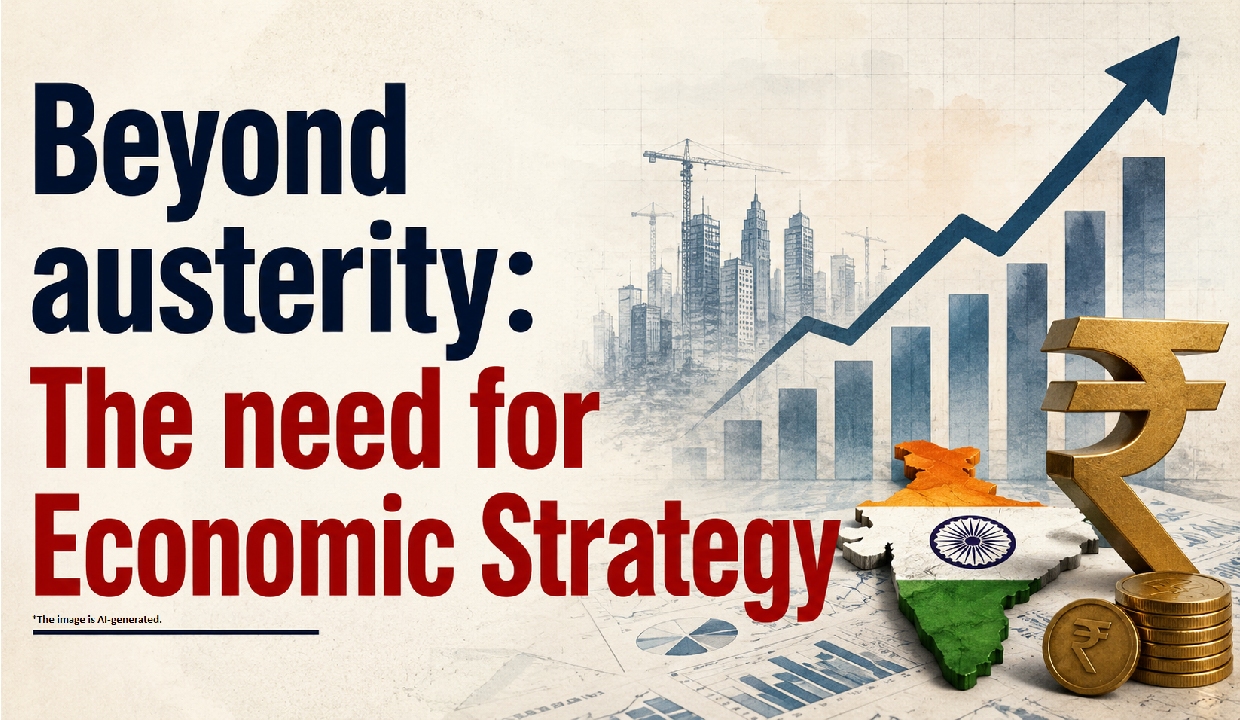
PM Modi calls for austerity measures as global instability, rising energy costs and pressure on foreign exchange reserves test India’s resilience
First came the Trump tariffs, which negatively affected the Indian economy. As the country was coming to terms with the reciprocal tariffs, the West Asia crisis began, leading to global uncertainty and a surge in crude oil prices. Indeed, these are tough times, and the country is going through an economic lean patch which, if not checked, could snowball into a much bigger crisis in no time. The West Asia crisis has thrown the world’s economies into disarray, and emerging countries, including India, are feeling the impact. The impact is not the same for every country, but those countries that substantially rely on imported crude, like ours, are particularly vulnerable.
It is a situation which has seriously hampered the growth of the country, and economic disruptions are now affecting the common man. The Prime Minister’s recent appeal to reduce petrol and diesel consumption, postpone foreign travel, avoid buying gold, cut cooking oil use, and embrace “self-reliant” habits reflects the gravity of the situation. This is an appeal that must be adhered to, as in the short term, austerity is a sane approach which can provide relief from economic stress. Yet the deeper question is whether this crisis is due to external factors or a consequence of our structural vulnerabilities and policy choices. And the bigger concern is whether we saw this coming, and if yes, what did we do about it?
There is no denying that global conditions are in flux. Rising freight costs, volatile commodity prices, and currency pressures have together strained the economy. Foreign exchange reserves, though still substantial, have fallen from their earlier peaks, raising concerns about the sustainability of imports. However, external factors alone cannot explain the present economic hardships. India’s dependence on imported crude oil, edible oils, fertilisers, gold, and electronic goods has existed for years. Successive governments have spoken about self-reliance, but structural reforms in manufacturing, energy diversification, and agricultural productivity have moved too slowly. Even after years of the “Atmanirbhar Bharat” campaign, India continues to remain heavily import-dependent in several critical sectors.
Some of the suggestions made by the Prime Minister are reasonable. Greater use of public transport, carpooling, work-from-home arrangements, and energy efficiency can make a difference. Reducing excessive edible oil consumption could benefit both health and import bills. But asking people to avoid buying gold may not work, as it is both culturally and financially important for households. Similarly, asking farmers to drastically reduce fertiliser use risks harming agricultural productivity. Moreover, the government’s handling of the crisis has been mixed. The government deserves credit for avoiding panic and continuing infrastructure investment. Yet the government has also struggled to create durable energy security. Fuel taxes remained high for long periods, even when global prices softened earlier. Manufacturing growth has not expanded to the desired level. Nor has the government adequately addressed concerns over unemployment and stagnant household incomes. People’s austerity is necessary, but so is policy clarity. The government must provide confidence, direction, and accountability.