Pokhran II: When India claimed Its strategic voice
The defining technologies of the twenty-first century such as artificial intelligence, semiconductors, quantum computing, cybersecurity, and space systems may seem far removed from nuclear weapons, but the underlying logic remains unchanged
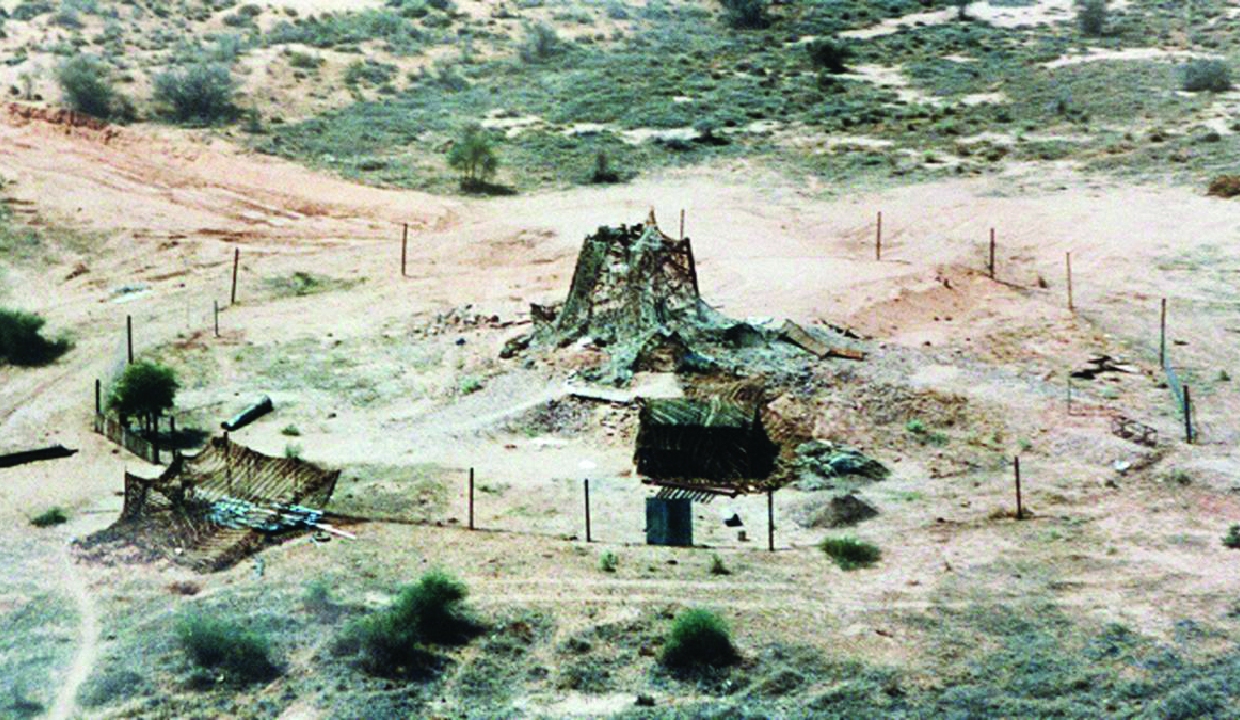
Every year on May 11, National Technology Day commemorates India’s 1998 nuclear tests at Pokhran (Operation Shakti). However, viewing this day as simply a scientific and technological milestone overlooks its deeper significance. The tests conducted on May 11 and 13 were also an expression of political will, strategic clarity, and a decisive assertion of national identity within a hierarchical global nuclear order that had long privileged a few and constrained many.
When Prime Minister Atal Bihari Vajpayee addressed the nation that afternoon in 1998, his words were measured, almost clinical, “At fifteen forty-five hours, India conducted three underground nuclear tests…” It was a declaration not just of capability, but of intent.
India’s strategic community had long grappled with the implications of a nuclearised world. Following China’s nuclear test in 1964, Indian thinkers confronted a difficult question. Could India afford to remain outside the nuclear order? As early as 1966, Major General Som Dutt, the first director of the Institute for Defence Studies, warned that if China possessed strategic options India lacked, “India could be blackmailed into paralysis.” His stark conclusion was that India might have little choice but to develop its own nuclear capability.
This line of thinking was later refined and forcefully articulated by K Subrahmanyam, one of India’s foremost strategic thinkers. For him, nuclear weapons were more than just instruments of war. They were political legitimacy. “India wants to be a player and not an object of this global nuclear order,” he often stated. In Amitav Ghosh’s 1998 essay Countdown in The New Yorker, Subrahmanyam offered a vivid analogy drawn from the Gregory Peck film The Million Pound Note. A nuclear weapon, he suggested, functions like a million-pound note. It buys credit, and that credit translates into influence and deterrent power. It was a candid formulation of deterrence, not merely as military capability, but as political psychology.
This intellectual foundation is crucial because Pokhran-II was not an impulsive decision. Rather, they represented the culmination of decades of debate over sovereignty, status, and India’s place in the international system. India had consistently rejected the Nuclear Non-Proliferation Treaty on the grounds that it institutionalised inequality between nuclear “haves” and “have-nots.” The issue, therefore, was never solely about weapons. It was whether India would accept a structurally unequal order or seek to challenge it.
The decision of 1998, however, was as much political as strategic. The BJP government, which had returned to power in March that year, had explicitly committed in its manifesto to exercising India’s nuclear option. Despite heading a fragile coalition of 41 parties, the Vajpayee government authorised one of independent India’s boldest decisions within weeks.
The risks were considerable. India was fully aware that the tests would trigger international sanctions, diplomatic censure, and economic pressure. The US quickly imposed sanctions under the Glenn Amendment and the UNSC condemned the tests. Predictions of prolonged isolation and economic disruption were widespread, and not without basis.
Domestically, too the decision provoked sharp debate. Congress leader Sonia Gandhi remarked that “true power lies in restraint and not in showing-off.” P Chidambaram argued the tests went against India’s moral commitment to a nuclear-free world. The Left dismissed them as “nuclear jingoism”, and critics labelled the tests a “BJP bomb,” suggesting political opportunism rather than strategic necessity. These criticisms reflected genuine concerns about escalation, global standing, and the moral implications of nuclearisation.
Such criticism tended to underestimate the deeper strategic logic behind the decision. The tests were not simply reactive measures driven by immediate threats from China or Pakistan. They were about long-term positioning, ensuring that India possessed the technological and strategic capability to act autonomously in a system structured by power asymmetries.
Indeed, subsequent events only reinforced this logic. Within weeks Pakistan responded by conducting its own tests at Chagai, formally ushering South Asia into the nuclear age. The US had made determined efforts to prevent this outcome. President Bill Clinton had personally urged Prime Minister Nawaz Sharif not to proceed. Domestic pressure in Pakistan proved overwhelming, as one stark warning reportedly put it: “If you don’t explode, we’re going to explode you.”
This rapid escalation revealed an uncomfortable truth. Nuclear decisions are rarely shaped by strategic calculation alone. Domestic politics, national prestige, and perceptions of status often exert equal, if not greater, influence.
What is striking in retrospect is not only that India conducted the tests, but that it successfully absorbed their consequences. In fact, India succeeded in preserving complete operational secrecy around the tests. Senior scientists such as K Santhanam, who later served as Director of the IDSA, ensured that the preparations remained undetected until the detonations themselves. Despite sanctions and widespread criticism, the economy remained resilient, and diplomatic engagement gradually resumed. Within a decade, nations that had condemned India began engaging it as a responsible nuclear power.
This is perhaps the most enduring lesson of May 11. Technological capability, when coupled with political resolve and strategic clarity, can alter international outcomes. States willing to bear short-term costs in pursuit of long-term autonomy can, over time, reshape the very structures that constrain them.
That lesson is even more relevant today. The defining technologies of the twenty-first century, such as artificial intelligence, semiconductors, quantum computing, cybersecurity, and space systems, may seem far removed from nuclear weapons, but the underlying logic remains unchanged. While technological dependence constrains; technological capability empowers. Nations that fail to invest in critical technologies risk strategic marginalisation, regardless of their economic or demographic weight.
At the same time, the legacy of Pokhran-II encompasses a crucial moral dimension. Nuclear weapons remain among humanity’s most destructive inventions. India has consistently emphasised restraint and supported the goal of universal, non-discriminatory disarmament. Strategic capability, in this sense, is not about warfighting but about deterrence and prevention. In 1998, an editorial in the Pioneer by its editor Chandan Mitra famously described the tests as an “explosion of self-esteem.” The phrase captured a deeper transformation. It reflected a shift in India’s self-perception; from a state constrained by history to one capable of shaping its own destiny.
As we mark National Technology Day, that spirit remains vital to recall. It marked India’s resolve to engage the world on its own terms.
In 1998, an editorial in the Pioneer by its editor Chandan Mitra famously described the tests as an “explosion of self-esteem.” The phrase captured a deeper transformation. It reflected a shift in India’s self-perception; from a state constrained by history to one capable of shaping its own destiny
The author is Senior Fellow at the Manohar Parrikar Institute for Defence Studies and Analyses, New Delhi; Views presented are personal.