The global failure to protect women
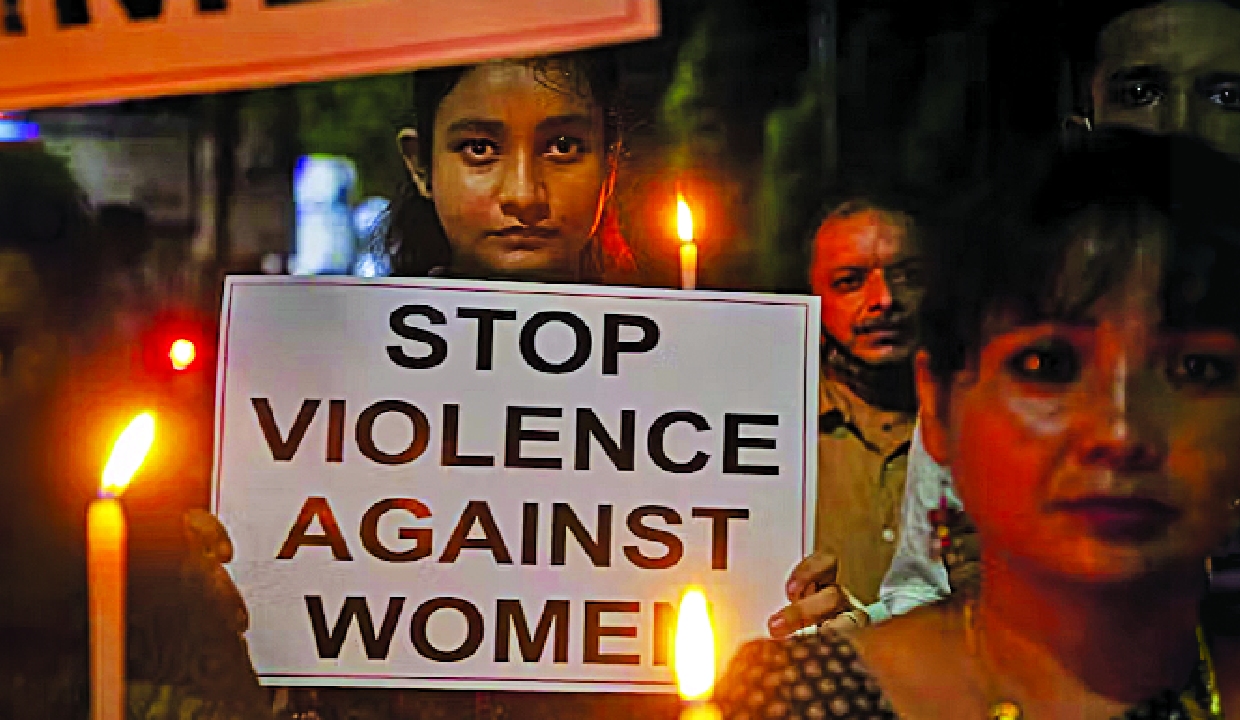
Weak enforcement and the absence of a binding global framework against violence towards women continue to shatter lives, weaken economies, erode public trust and stall social progress across the world
The latest World Bank report, Women, Business and the Law, after reviewing 190 world economies, revealed that only 4 per cent of women worldwide enjoy full legal equality. The countries in which women have such equal legal rights, scoring 100/100, are Belgium, Canada, Denmark, France, Greece, Iceland, Ireland, Latvia, Luxembourg, Portugal, Spain and Sweden, and more recently, Germany and the Netherlands (WEF). Women in India have only 60 per cent of the legal rights granted to men, lower than the global average of 64.2 per cent. Nevertheless, Indian women fared better than their South Asian counterparts, where there is only 45.9 per cent of legal protection comparable to men.
The World Bank’s 2026 report showed a considerable dip in the overall global percentage of women enjoying equal rights from 77 per cent in 2024 to 64 per cent in 2025, which the report attributed to the inclusion of ‘safety for women’ as one of the critical indicators in the overall assessment. While the UN Women and UN System reports in 2026 highlighted that justice systems have been failing women in protecting them from violence and discrimination. In over 54 per cent of countries, rape is still not defined based on consent, and in nearly 3 out of 4 countries (74 per cent), laws still permit child marriage, often through exceptions regarding consent. In 112 countries, marital rape is still not criminalised. Around 1.8 billion women live in countries which do not specifically protect them from online abuse. While in 44 per cent of countries, the law does not mandate equal pay for work of equal value.
Nevertheless, the number of countries having laws against violence against women (VAW) has grown significantly. However, legal experts and researchers contend that many of them are not ‘comprehensive legislations’, lacking clear conceptualisation of different forms of VAW - physical, sexual, psychological or economic - covering private and public spheres, and often falling short of adopting a holistic and multi-sectoral approach with measures for prevention, protection, prosecution, and reparations. As of 2026, at least 162 countries have laws against domestic violence, but only about 55 per cent of them have all-encompassing provisions. In 151 countries, there are laws prohibiting sexual harassment in the workplace, but only 39 countries have specific laws addressing it in public spaces. According to Women, Business and the Law 2024, countries have established less than 40 per cent of the frameworks necessary to effectively implement laws against child marriage, sexual harassment, domestic violence, and femicide, creating an ‘enforcement deficit’.
In India, women’s safety laws have definitely undergone changes with new Acts and amendments to the existing ones in the aftermath of the 2012 Nirbhaya episode and through the recent Bharatiya Naya Sanhita updates. However, the latest ground reports reveal a dual reality, indicating that the legal protections for women’s safety remain confined largely ‘on paper’, with a stark ‘on-ground’ disconnect, driven by systemic failures such as pervasive underreporting, an abysmally poor conviction rate, tardy judicial processes, inefficiency in resource utilisation and absence of women’s representation in law enforcement and justice dispensation mechanisms. While a 2025 multi-state field analysis suggested that legal and policy frameworks must move beyond reactive and scheme-based interventions towards a coordinated and survivor-centred institutional ecosystem, strengthening accountability mechanisms, inter-departmental coordination, and investing in long-term rehabilitation and reintegration. Some social scientists also contend that the issues of gender and labour force participation should be seriously addressed, as law-and-order and safety concerns intersect with each other, limiting women’s economic empowerment and mobility (Saha, 2014).
While national laws are often handicapped by ‘implementation gaps’, at the global level there is a significant ‘normative gap’ with no single, legally binding global treaty dedicated specifically to ending VAW, and no uniform definition of violence or a specific international monitoring body with the power to hold erring states legally accountable. The world is run more on a patchwork of broad anti-discrimination treaties and non-binding ‘soft law’ declarations, mostly emanating from the Convention on the Elimination of All Forms of Discrimination against Women (CEDAW). The Convention also has several limitations, and its original 1979 text does not explicitly define or even mention any form of VAW, such as serious offences like ‘rape’ or ‘domestic abuse’. The CEDAW Committee only interpreted violence against women as a form of discrimination. However, the subsequent Declaration on the Elimination of Violence against Women (DEVAW) addressed the issue, but it is only a resolution, not even a treaty, and is not legally binding on states. Global legal frameworks also failed to keep pace with new forms of violence committed in digital spaces such as AI-generated deepfakes or non-consensual pornographic images, 90-95 per cent of which depict women.
Now, when justice is denied to women and girls, the damage goes far beyond any single case…. it creates all-pervasive impacts, eroding public trust, weakening the rule of law and denying institutions their legitimacy (UN Women). It also has repercussions for the economy, as it has been estimated that elimination of discriminatory laws and practices could increase the global GDP by more than 20 per cent, almost doubling the global growth rate over the next decade (World Bank). Moreover, the economic costs of VAW not only affect the victims or survivors but also the state and communities, both tangibly and intangibly. While nations must further strengthen their legislative, supportive and enforcement frameworks against VAW, they must also come together for a legally binding global treaty to standardise protections and eliminate legal impunity worldwide for a just, prosperous and equitable world.
In over 54 per cent of countries, rape is still not defined based on consent, and in nearly 3 out of 4 countries (74 per cent), laws still permit child marriage, often through exceptions regarding consent. In 112 countries, marital rape is still not criminalized
The writer is a former Director General of All India Radio, a retired Indian Information Service officer, and a media educator; Views presented are personal.