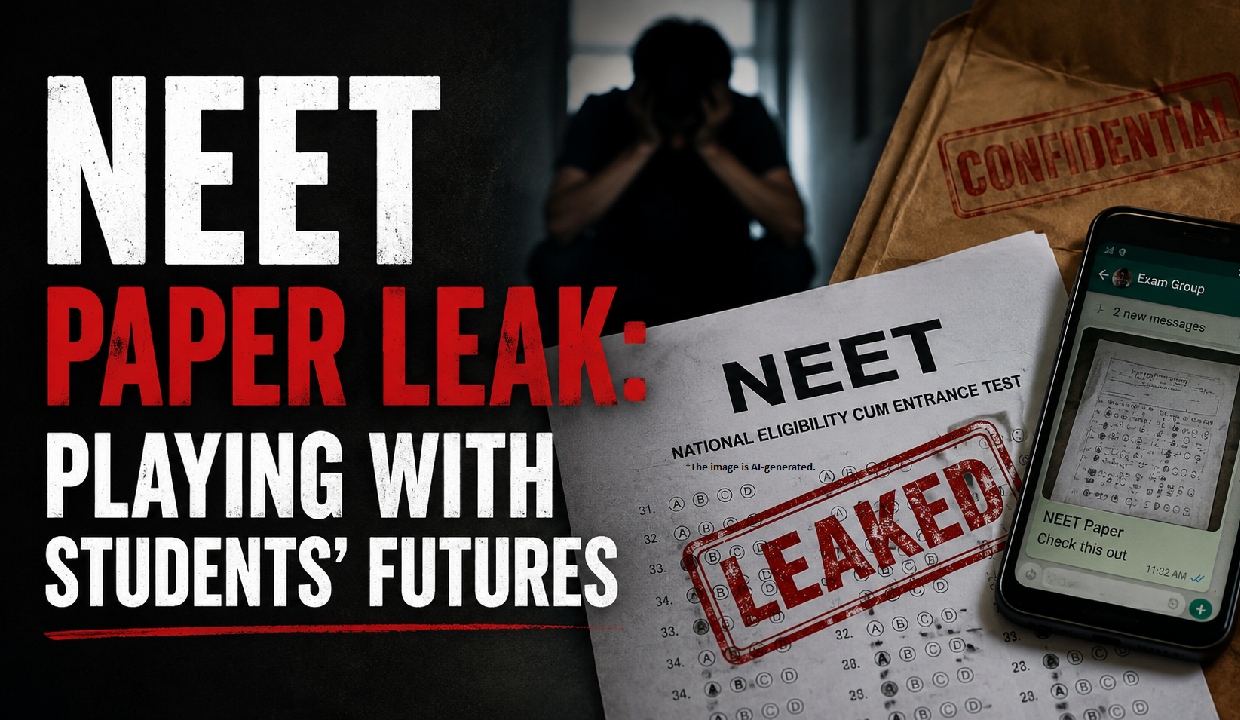
NEET paper leak: Playing with students’ futures
The anger among Gen Z aspirants is not just about a leaked paper; it is about a betrayal by institutions that promised fairness, merit and equal opportunity
The country’s Gen Z is outraged. The NEET paper leak has once again shocked the nation. This is not the first time that an examination promising admission to medical colleges has been compromised. A similar incident occurred in 2024 and now again in 2026, which speaks volumes about the audacity of those involved in the leak. The government took the right decision to scrap NEET UG 2026, but that does not redeem the situation, as it has erased the hard work of millions of students who sacrificed everything for this examination.
It is merely damage control for a situation that should never have arisen in the first place. NEET is an important examination that carries the hopes and aspirations of the middle class and also provides the nation with the qualified pool of doctors it urgently needs. Parents spend lakhs on coaching and even relocate to help their children prepare for the exam. When a leak destroys those hopes, lives are shattered, leaving families in uncertainty and despair. The emotional trauma is enormous, with students burdened by the prospect of preparing all over again and potentially losing an entire year. Witnessing the same scandal repeat itself has deepened frustration and cynicism. The larger question is unavoidable: why does this keep happening? India has witnessed paper leaks in recruitment tests, state board examinations, police recruitment exams and now repeatedly in national-level entrance examinations. The problem is systemic.
Examination mafias have evolved into organised criminal networks with political links, local protectors and insiders within institutions. Using sophisticated digital techniques, they earn crores of rupees. Yet investigations often end with the arrest of minor intermediaries while the masterminds remain untouched. This culture of impunity is even more worrying. While governments routinely promise “zero tolerance”, public confidence is steadily declining because accountability is rarely fixed. Merely making arrests is no solution; the entire ecosystem enabling such leaks must be dismantled. That means identifying officials who failed in supervision, exposing coaching-centre nexuses, tracking money trails and ensuring swift convictions of the real culprits. Unless the kingpins are punished, paper leaks will continue to reappear in new forms.
The outrage among Gen Z is therefore understandable. Today’s students are digitally connected, politically aware and far less willing to quietly accept institutional incompetence. Social media has amplified their anger because many believe the system is rigged against sincere candidates. India cannot aspire to become a ‘Vishwa Guru’ and a global knowledge powerhouse while its examination system repeatedly collapses.
Competitive examinations are meant to be the great equaliser in a deeply unequal society. When they lose credibility, social trust itself begins to erode. India urgently needs a complete overhaul of examination security — stronger digital safeguards, encrypted paper distribution, tighter monitoring and a phased transition towards secure computer-based testing. More importantly, the government must instil confidence among young people that it is committed to protecting their interests.