Regional titans fall as BJP rises
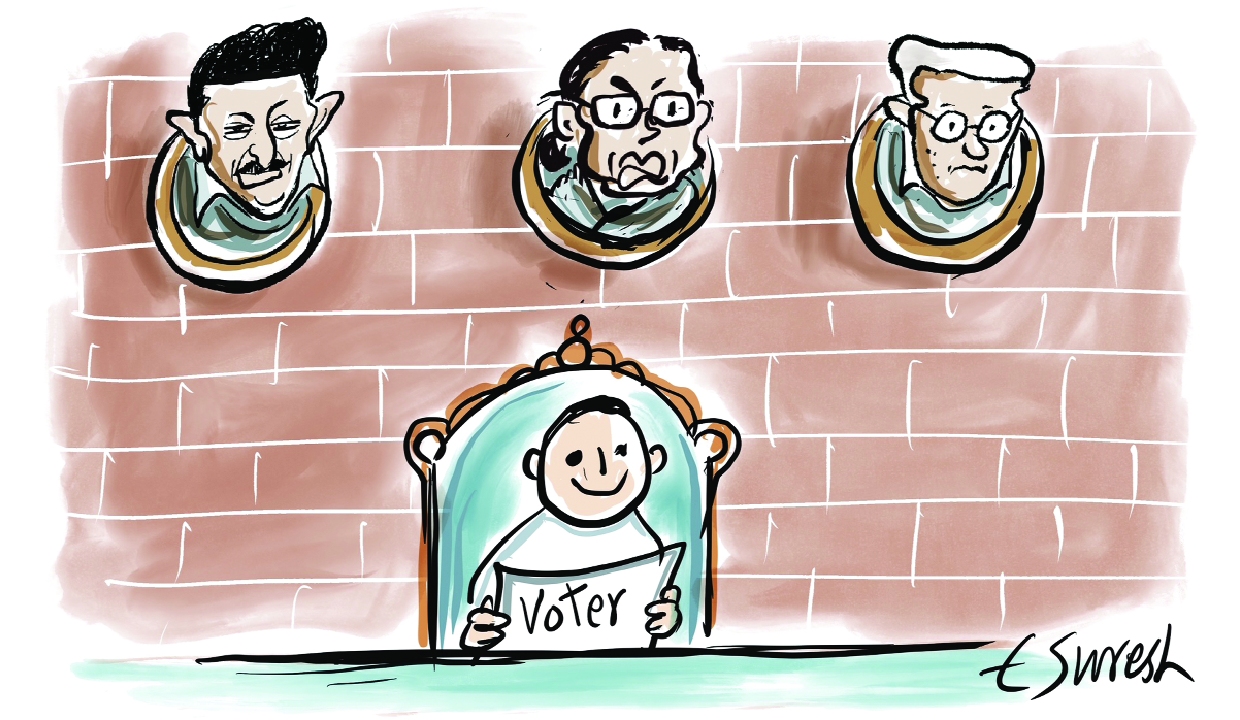
The 2026 Assembly elections have triggered one of the most dramatic political realignments in recent Indian history, toppling powerful regional leaders and reshaping the balance of power across the country
In the recently concluded 2026 Assembly elections, three prominent chief ministers faced unexpected defeats, a situation that many in the political arena recognise as a challenging part of the process. The chief ministers of West Bengal, Tamil Nadu, and Kerala lost their elections.
In the recent 2026 Assembly elections, three well-known chief ministers lost unexpectedly. This includes the chief ministers of West Bengal, Tamil Nadu, and Kerala. Winning and losing elections are common in politics. Still, recent results-like the defeats of Arvind Kejriwal and Uddhav Thackeray- highlight significant political shifts that impact regional and national power dynamics, helping readers understand the broader implications.
The BJP’s victories in West Bengal and Assam mark a major expansion, signalling a growing central influence that challenges regional parties and reshapes the overall power balance in Indian politics, which is crucial for understanding current trends. Changes can be tough for regional parties, which play an important role in our democracy. Recognising their supporters’ feelings fosters empathy and understanding during this transition.
The political situation in Tamil Nadu is getting more intense as parties work behind the scenes. The Tamil Valour Katchi (TVK) has won 108 seats but needs 118 to secure a majority. They have the support of Congress, CPI, CPI(M), and VCK, suggesting that Vijay should lead the government. However, the TVK still lacks enough seats to govern on its own. After four days of meeting the governor, Vijay was sworn in on Sunday, While some regional parties are declining, the rise of Vijay’s TVK brings a new perspective to politics. Established parties like the DMK, TMC, and CPI(M) may face challenges ahead.
The Shiv Sena is struggling with internal divisions, and the Akali Dal is facing difficulties as well. Other parties, such as the NCP and JD(S), are losing influence, and the JD(U) seems to be in decline. Additionally, the BRS and BSP are facing their own challenges, which can be frustrating for their supporters.
Mamata Banerjee’s loss to BJP’s Suvendu Adhikari in the 2026 election marks a pivotal moment in West Bengal politics, ending her 2011 victory and raising questions about her political future and regional leadership dynamics, both of which are vital for understanding the current political landscape.
What comes next for Mamata Banerjee? She will likely continue her p ‘stests and work hard to mobilise the TMC, remaining a vital part of the INDIA coalition. Still, many supporters and analysts are concerned about her political future amid the BJP’s growing influence in West Bengal, which could reshape regional leadership dynamics. There was a strong rumour that DMK and AIADMK would come together to form a government, as Vjay was struggling to get the majority.
On the same night, AIADMK General Secretary EV Palaniswamy, unaware of these developments, began discussions with Udhayanidhi. Political manoeuvring in Tamil Nadu began on May 4, after actor Vijay’s party, TVK, won 108 seats, just 10 short of a majority. Reports revealed that AIADMK leaders S. P. Velumani and C. V. Shanmugam aimed to rally 33 of the party’s 47 MLAs to align with TVK while circumventing the anti-defection law.
India’s political landscape has undergone a significant change, as a communist party currently governs no state for the first time since 1977. Kerala’s loss of Left control marks this shift, following a story where figures like Jyoti Basu nearly became prime minister. The Left’s 34 years in power in West Bengal and its recent defeats in Tripura and Kerala highlight its decline, prompting reflections on its acts and on how the BJP.
Marking the first time since 1977 that the state is ruled by a communist government, following Kerala’s shift from Left control. From Jyoti Basu’s near-prime ministerial bid to the Left Front’s historical influence and its presence in Bengal, the decline of this powerful ideological force prompts reflection on its achievements, failures, and on how the BJP outmaKerala’s it. The CPI(M) will need to regroup and energise to maintain relevance in the public sphere. The Congress party has not yet named its new chief minister, but many are watching K.C. Venugopal, a close aide to Rahul Gandhi, as a potential candidate.
Established parties like TMC, DMK, and the Left must introspect on their recent electoral failures. If they do not correct their mistakes, the BJP will solidify its position in Bengal, and both DMK and AIADMK may lose their voter base. The sooner they do this, the better for their parties.
Meanwhile, Vijay must focus on giving good administration.
Some states, such as Tamil Nadu, West Bengal, and Kerala, are undergoing significant change. The new chief ministers must lead effectively, inspiring confidence in their ability to adapt and guide their states through transition. Vijay is relatively unknown in the political arena, and his greatest challenge will be managing the government. He faces the risk that his allies could blackmail him at any time. Additionally, he must fulfil his campaign promises.
In contrast, the BJP is in a stronger position, having won West Bengal and retained control of Assam.
On the whole, the opposition has to sit down and chalk out a future. In contrast, the BJP is in a stronger position, having won West Bengal and retained control of Assam.
The BJP’s victories in West Bengal and Assam mark a major expansion, signalling a growing central influence that challenges regional parties and reshapes the overall power balance in Indian politics, which is crucial for understanding current trends
The writer is a popular columnist; Views presented are personal.