Trump in Beijing: A pragmatic pause
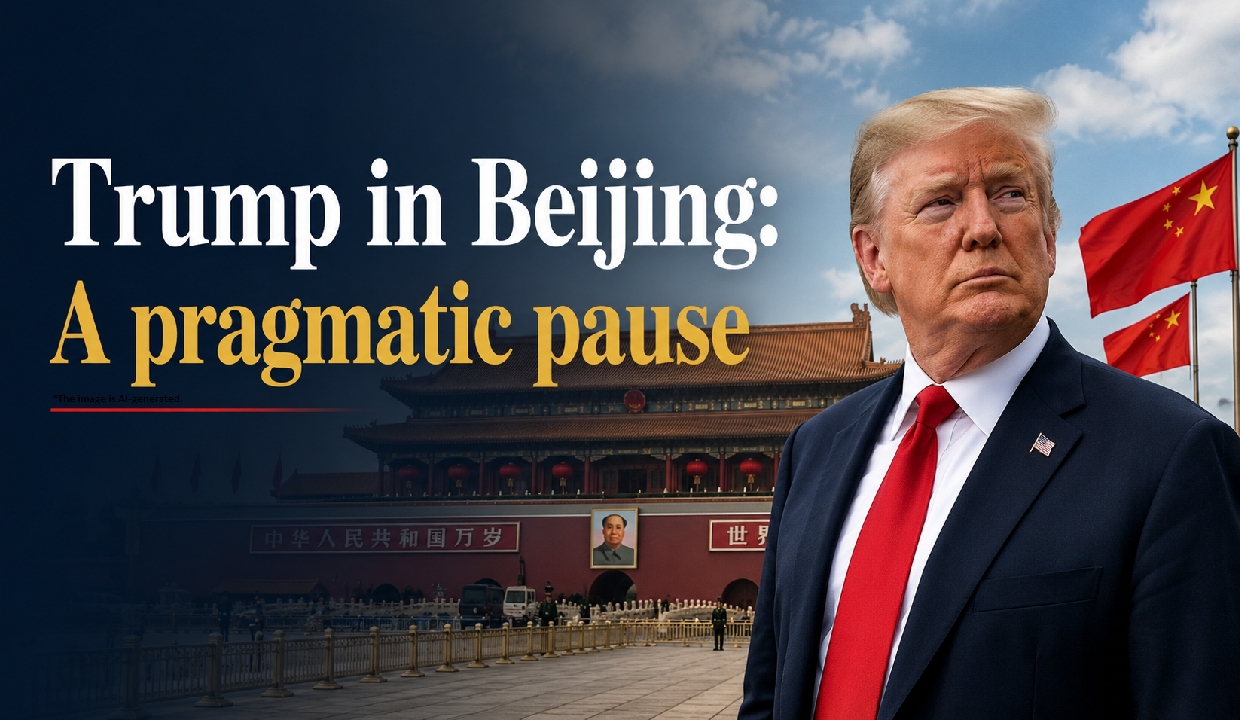
The Xi-Trump summit stabilised a fragile relation, revived channels of dialogue, and rekindled the hope that the two nations could manage tensions
The visit of US President Donald Trump to China was closely watched by the world. The three-day visit during which Trump met Xi Jinping was laden with symbolism and expectations but ended with piecemeal declarations and no breakthroughs in bilateral relations or convergence on the major geopolitical issues confronting the world. The Trump visit at least reassured the world that the dialogue was still possible and that both nations had shown diplomatic courtesy to hear each other’s viewpoint.
In recent times, the US-China relations have deteriorated sharply over trade disputes, Taiwan, and competing geopolitical ambitions. The Trump-Xi meeting was less about dramatic breakthroughs and more about restoring the diplomatic channels open at the highest level, should a need arise. The immediate outcome of the summit was the strengthening of the fragile trade truce reached earlier.
The agreement to maintain lower tariffs and continue easing restrictions on critical sectors such as rare earth exports suggests that both sides are interdependent. Yet another major takeaway from the meeting was Trump’s invitation to Xi for another summit in the United States later this year, which indicates that both countries value continuous dialogue. This is a good sign, as the flash points in the world are many, and the world sits on a nuclear pile. But beneath diplomacy was economic brinkmanship at work. Trump announced that China would purchase Boeing aircraft. This could be both an economic and a political glue. The presence of major American business leaders—including executives from Boeing, Nvidia, Apple, and Tesla—shows that despite political rivalry, economic interdependence between the two powers remains intact. Yet the summit’s significance extended beyond commerce. Xi Jinping’s warning that mishandling Taiwan could place bilateral relations in “great jeopardy” reaffirmed Beijing’s hegemony in the South China Sea. Trump avoided public escalation on the issue during the visit. This restraint itself was meaningful.
Both leaders appeared to realise that their tensions could destabilise not just Asia but the world order. The discussions on Iran were equally revealing. Trump claimed that China would assist diplomatic efforts and expand energy cooperation with the United States. In a world order that is volatile and fragmented, even limited cooperation between the two powers carries global importance. Perhaps the most important takeaway from the visit is the emergence of what Beijing described as a framework of “strategic stability.”
Trump’s visit is a recognition that there are limits to how much you can afford to ignore China, and complete disengagement with the dragon is neither realistic nor desirable. The message to the world is therefore both reassuring and cautionary. While the structural tensions over technology, military influence, trade dominance, and Taiwan remain unresolved, the diplomatic channels are still open. The Trump-Xi summit was not a breakthrough in the diplomatic sense but an assurance that there is hope after all and that both powerful nations are willing to manage their rivalries with dialogue.