Satheesan’s rise ends Congress rift in Kerala
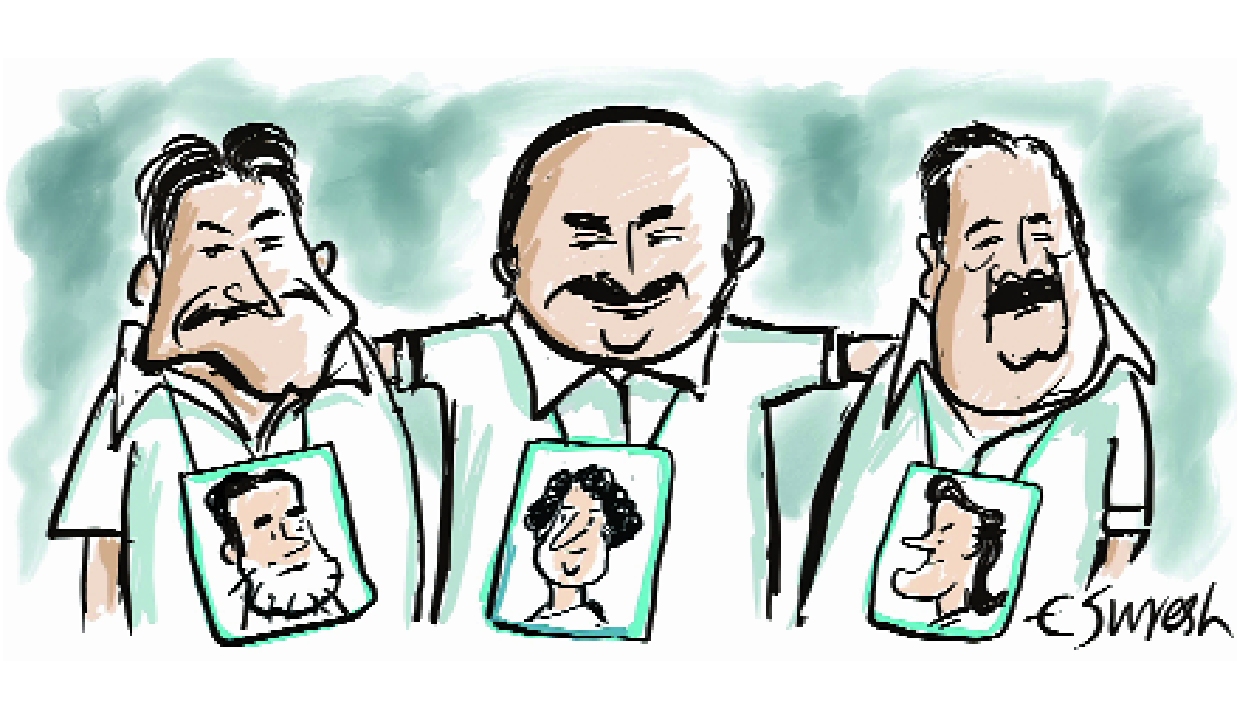
After days of intense lobbying, internal rivalry and public pressure, the Congress finally chose VD Satheesan, exposing deep factional cracks within Kerala’s leadership battle
The Congress party faced major challenges within its ranks while choosing Kerala’s Chief Minister. The process lasted 11 days and proved crucial in resolving disagreements among various party factions, underscoring the importance of internal consensus in maintaining party unity.
VD was ultimately chosen despite stiff competition from KC Venugopal and Ramesh Chennithala. Rahul Gandhi and Priyanka Gandhi reportedly took public sentiment into account while making their decision. Internal tensions surfaced throughout the selection process, but Venugopal eventually backed Satheesan’s appointment in what was seen as a move in the larger interests of the party. The Congress high command itself appeared divided. Sonia Gandhi reportedly supported Chennithala, Rahul Gandhi favoured Venugopal, while Priyanka Gandhi backed Satheesan. These differing preferences revealed internal conflicts within the party leadership. At the same time, the Congress also faced pressure from its ally, the Indian Union Muslim League (IUML), as well as from public opinion, both of which influenced the Gandhi family’s political calculations.
Disagreements between Rahul and Priyanka Gandhi became visible through posters displayed outside Congress offices and Priyanka Gandhi’s Wayanad office. One poster read: “Mr Rahul, KC may be your bag bearer, but the people of Kerala will never forgive you,” reflecting grassroots opposition to Venugopal’s possible elevation.
Rahul Gandhi played a key role in resolving the leadership deadlock by assessing public sentiment and coordinating discussions with Venugopal, Satheesan and Chennithala. He held extensive meetings in Delhi with Congress president Mallikarjun Kharge and Sonia Gandhi to break the post-election stalemate within the United Democratic Front (UDF).
The IUML strongly backed Satheesan because of his secular credentials. Venugopal, after meeting Rahul and Priyanka Gandhi for more than two hours, expressed his support for Satheesan’s appointment despite being a leading contender himself. He emphasised that the party’s interests should take precedence over personal ambition.
A six-term MLA and the face of the UDF campaign, Satheesan had pledged to resign if the alliance failed to win at least 100 of Kerala’s 140 Assembly seats. The UDF eventually secured 102 seats, with the Congress emerging as the single largest party, reinforcing confidence in Satheesan’s leadership.
Rahul Gandhi’s backing for Venugopal was complicated by the constitutional requirement that Venugopal resign from his MP post and contest an Assembly seat to become Chief Minister. Meanwhile, grassroots protests increasingly favoured Satheesan, who had emerged as a powerful opposition voice against the Pinarayi Vijayan-led government. He played a central role in bringing the UDF back to power after a decade in opposition.
The protests against the possible appointment of Venugopal highlighted the depth of internal divisions within the Congress. Satheesan himself acknowledged that these demonstrations shaped public opinion. The party now sees an opportunity to present itself as a strong national alternative to the BJP.
However, Satheesan’s ability to reshape Kerala’s political landscape will depend on several factors. While he enjoys broad public support, the Congress power structure and internal hierarchy remain significant considerations. During the 2021 Assembly elections, divisions between Christian and Muslim communities weakened the Congress and helped Pinarayi Vijayan secure a second consecutive term.
As Kerala’s newly sworn-in Chief Minister, Satheesan faces immediate administrative and economic challenges, including a severe financial crisis, mounting debt and a widening revenue deficit. His ability to tackle these issues will define public confidence in his leadership.
His first major political test will be cabinet formation, which requires balancing competing Congress factions, satisfying alliance partners such as the IUML and preventing resentment within the party. He has already announced ten Congress ministers and later inducted five IUML ministers.
Satheesan must also focus on economic revival, job creation and fiscal management while carefully navigating minority community politics. At the same time, he will have to counter BJP criticism regarding the Congress party’s ties with the IUML and Jamaat-e-Islami, while maintaining internal unity and preventing sabotage from rival factions.
Emphasising inclusiveness, Satheesan stated that dissent is an essential part of democracy. “Those who dislike me, those who opposed me, and those who criticised me all have the right to express their views,” he said.
Jamaat-e-Islami reportedly played a role in consolidating Muslim support for Satheesan. Maintaining his secular image while managing relationships with such allies will remain a delicate balancing act. He must also navigate the competing interests of Jamaat-e-Islami and Samastha, the influential Sunni organisation that quietly backed him.
Satheesan now leads a legislative party that still includes several members who did not support his elevation. At the same time, he risks alienating sections of Hindu voters concerned about the perceived growing influence of Muslim organisations in Kerala politics. This concern also extends to moderate and reformist Muslims uneasy about increasing communal polarisation.
Upon assuming office, Satheesan described the electoral mandate as a collective achievement. His success in building a cohesive administration and managing Kerala’s political and financial challenges will determine whether his journey from Cantonment House to Cliff House becomes a defining chapter in his political career.
Satheesan now leads a legislative party that still includes several members who did not support his elevation. At the same time, he risks alienating sections of Hindu voters concerned about the perceived growing influence of Muslim organisations in Kerala politics
The author is a popular columnist; Views presented are personal.