BRICS at Delhi: Voice of the Global South
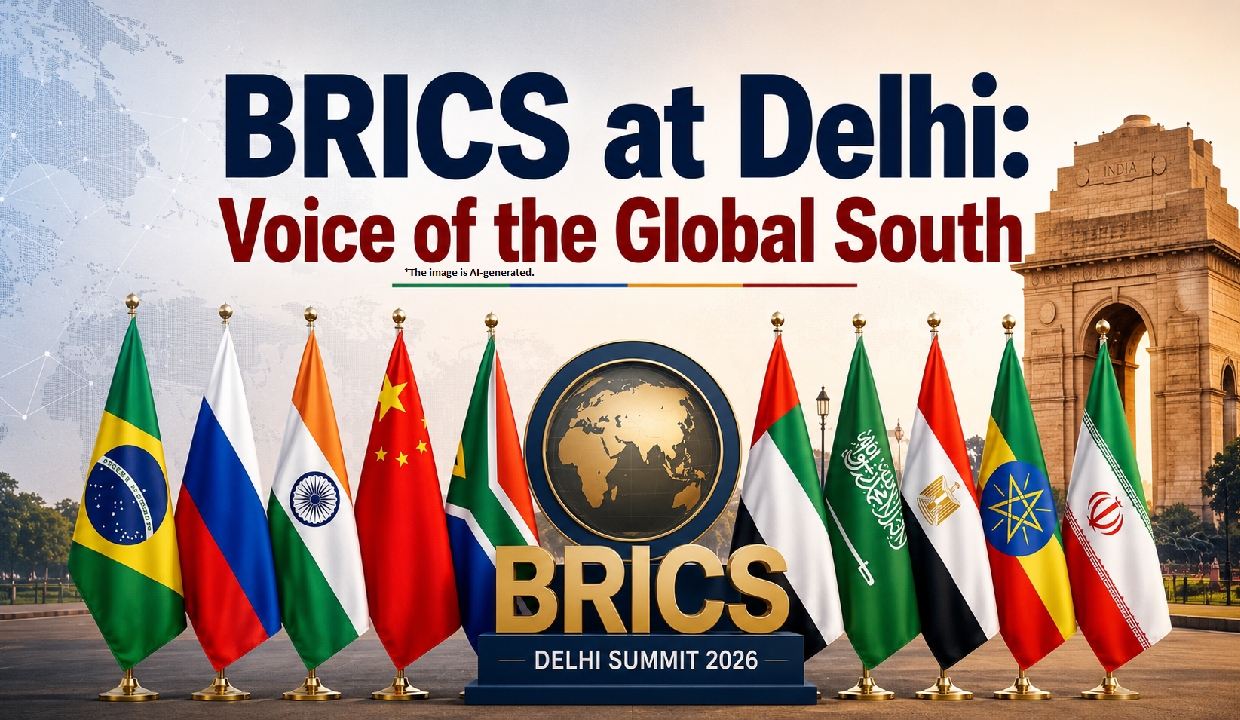
BRICS has emerged as a stronger political voice demanding strategic autonomy and fairer economic. But its real test lies in overcoming internal divisions
As the members of the BRICS nations meet in Delhi, the unease is visible. The founding members — Brazil, Russia, India, China and South Africa — represent over 40 per cent of the world’s population, while the newly expanded BRICS+ alliance represents approximately 55.6 per cent of the global population. Most of these nations are emerging economies with fragile and vulnerable financial systems. That is the story of the Global South continuously reeling under pressure and facing headwinds from the North, sometimes in the form of tariffs, environmental concerns, uncertainties in the energy market, or pressure to join one bloc or another.
The Delhi Summit is, therefore, not just a formal grouping but a cumulative effort to send a strong message to the West that it must consider the issues confronting these countries and not impose its agenda. BRICS is no longer merely an economic grouping. It was conceptualised in 2001 as an economic forum, and its first summit took place in 2009, but today it is a potent political force. Under India’s chairmanship, it has emerged strongly and has been vocal about the issues it wants addressed by the developed nations.
From wars in West Asia and Ukraine to sanctions, energy insecurity and fractured supply chains, BRICS nations are advocating a just global governance system that gives them strategic autonomy and economic equity. The challenge, however, lies in transforming shared grievances into a coherent and credible global agenda. The Delhi summit of the BRICS grouping comes at a moment of profound churn in international politics. The summit’s agenda reflects the anxieties of a rapidly fragmenting world. India’s External Affairs Minister, S Jaishankar, has sharply criticised unilateral sanctions and coercive measures, arguing that “pressure cannot replace diplomacy”. His remarks are significant because they underscore India’s attempt to maintain strategic autonomy while simultaneously positioning itself as a responsible voice for developing nations.
The BRICS nations are clamouring for reform of the UN Security Council, greater representation for emerging economies in global financial institutions, and protection of sovereign decision-making. Another major concern before the summit is the growing instability in West Asia. Tensions around the Strait of Hormuz have disrupted energy supplies. For developing economies heavily dependent on imported energy, these conflicts are direct economic threats. BRICS leaders are therefore advocating dialogue, ceasefires and diplomatic engagement in conflict zones. However, BRICS is not a cohesive force. The grouping faces several internal challenges. India-China tensions continue to cast a shadow over cooperation, while Russia’s direct confrontation with the West makes BRICS’s task more difficult. Yet, despite these contradictions, BRICS remains relevant because it reflects a changing global reality.
The old unipolar order is weakening, but a stable multipolar system has not yet emerged. BRICS’s credibility will depend on whether it can move beyond rhetoric and remain cohesive so that it can voice its concerns collectively. It must first demonstrate that its diversity is its strength, not its weakness.