Bengal’s verdict against the ‘Kabuliwala trap’
West Bengal’s verdict is more than an electoral transition; it is a correction. The people have not merely voted out a government, but rejected a political culture that romanticised disorder, normalised impunity, and mistook excessive empathy for moral virtue
West Bengal has voted: voted with determination, courage, clarity and finality. In that unmistakable vote lies not merely a political verdict, but a psychological one. The people of Bengal did not simply change a government; they actually repudiated a culture — a culture of decades-long accommodation of lawlessness dressed in the language of compassion, a governance model that protected the predator while rendering the victim invisible.
The new administration inherits both an opportunity and an obligation. What it does next will determine whether Bengal’s mandate becomes a turning point or merely an interlude.
Every society carries within it a set of assumptions about crime and punishment; assumptions so deeply embedded that they feel like common sense rather than ideology. In Bengal, that embedded assumption has been what evolutionary thinker Gad Saad might call “suicidal empathy”: the systematic prioritisation of empathy for the perpetrator of crime over security for the innocent.
It sounds compassionate, but in practice, it is catastrophic.
When empathy becomes reflexive rather than reasoned, when it flows automatically towards the offender and away from the victim, it ceases to be a virtue and becomes what Saad terms an “idea pathogen”: a belief system that corrodes a society’s rational defences from within and becomes a “psychological trap”. A society that mistakes tolerance for criminals as virtue does not grow more humane, but more vulnerable.
Bengal’s literary tradition is magnificent. Kabuliwala is a masterpiece of humanist writing — a story that finds paternal tenderness in an unlikely place and asks us to see the full human being behind the frightening exterior. As literature, it is irreplaceable, but as policy, it is lethal.
The Bhadralok tradition is one of the subcontinent’s finest civilisational achievements: cultivated, empathetic, and genuinely humane. It is precisely because of its nobility that it has proven so vulnerable to exploitation — where the stabbing of a neighbour becomes a tragic misunderstanding, where the recidivist becomes a victim of circumstance, and where the actual victim, who could be bleeding, frightened, or even silenced, becomes an afterthought in the moral drama centred on the perpetrator.
This is not compassion. This is “pathological altruism”, a concept studied seriously in behavioural psychology, where the very impulse to protect becomes the instrument of harm. The new government in Bengal needs to come out of this “Kabuliwala trap”.
The new government need not theorise because evidence prevails regarding what really works in day-to-day administration, and this applies to the international canvas as well.
In early 2026, the Philippines implemented its intensified Safer Cities initiative by prioritising high-visibility policing and swift accountability. This resulted in a marked decrease in serious crime.
Singapore implemented a civilisational model based on the same principle: the rule of law, applied consistently and without sentiment, is the most compassionate gift a government can give its people. Today, it is one of the world’s safest and most prosperous societies.
Then there is New York City. Within living memory, Times Square was not a destination; it was a no-go zone. Crime was not an occasional visitor; it was a permanent resident. When the administration prioritised safety, the murder rate fell, the streets returned to their people, and tourism soared. All in all, New York did not become cruel; instead, it became safe.
The upshot is that safety is not a cultural inheritance, but a policy choice.
Bengal has seen its own version of this paralysis. The new government must name it, reject it, and replace it. What Bengal needs is not harshness, but clarity, especially “rational realism”: the struggling background of a perpetrator explains his history, but it does not excuse his violence. Human rights protections exist to shield the innocent, not to provide legal sanctuary for the predator. Swift, certain and visible consequences for crime are not barbarism. They are the highest form of social compassion and a declaration that the law-abiding citizen’s right to live without fear matters more than the criminal’s right to exploit it.
The new government in Bengal needs, on the one hand, to de-romanticise crime and, on the other, to institutionalise victim-centric justice, thereby restoring the “social contract”.
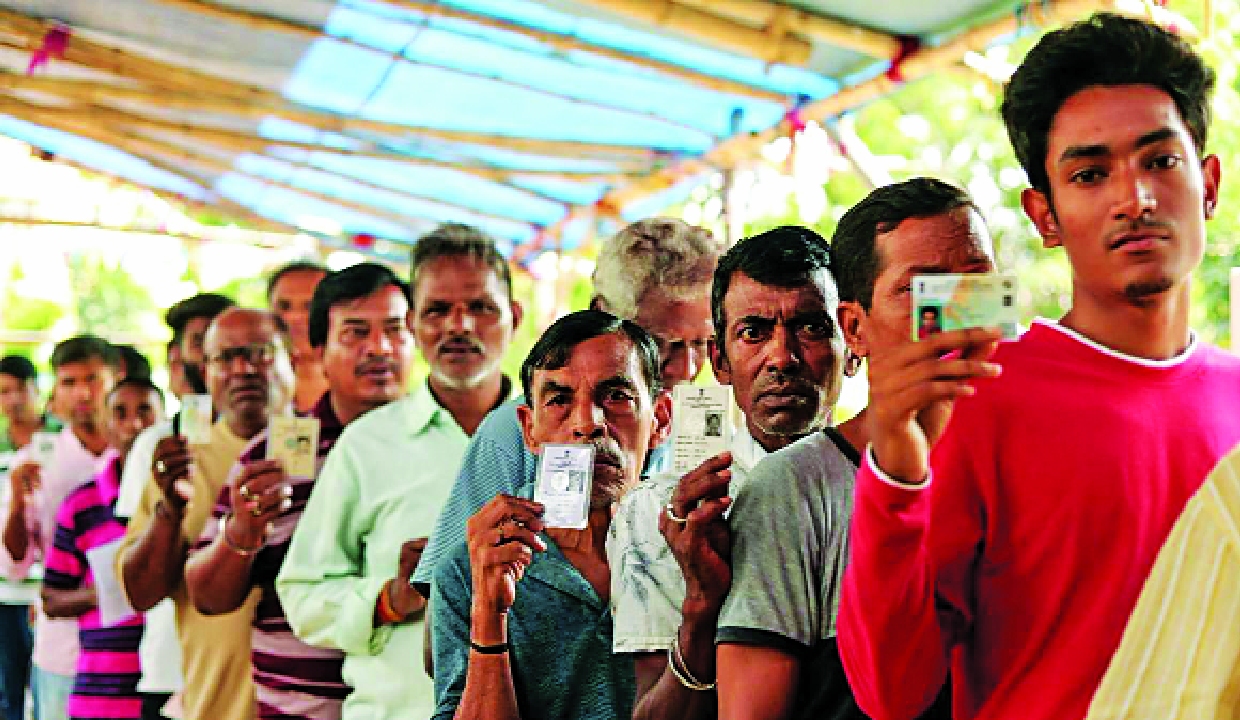
Bengal’s voters did not queue in the summer heat to be given more poetry. They came for something older, simpler and more urgent: the right to walk home safely, to sleep without fear, and to raise children in a state that protects rather than poeticises.
To govern is to choose, and the choice before this administration is not between compassion and cruelty; it is between empathy that protects the innocent and empathy that, through its own excess, destroys them.
Bengal’s populace has chosen, and governance should now become the echo of that choice.
Bengal’s voters did not queue in the summer heat to be given more poetry. They came for something older, simpler and more urgent: the right to walk home safely, to sleep without fear, and to raise children in a state that protects rather than poeticises
The writer is a former Additional Secretary, Ministry of Communications, Government of India; Views presented are personal.
Leave a Comment
Comments (1)
you just don't let anyone fool around with the enforcement of the rule of law. plain and simple. that's the way successful nations work. it is not complicated one iota.