Cannes 2026 and the Future of Cinema
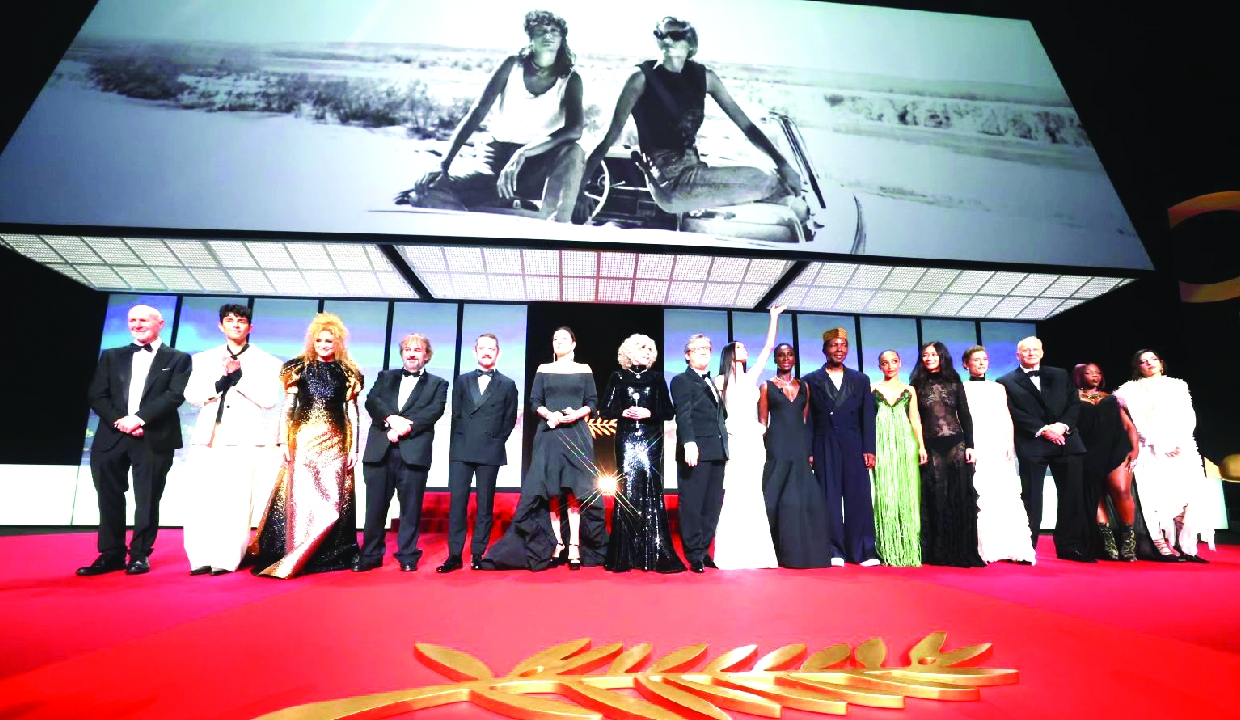
As AI and platform-driven storytelling reshape the moving image, Cannes 2026 stands at the crossroads between nostalgia and reinvention. The festival is no longer merely defending cinema’s past grandeur; it is negotiating cinema’s future
Every year, Cannes arrives dressed like a spectacle but behaves like a question. It has the red carpets, the cameras, the yachts, the gowns, the carefully practised indifference of people who know they are being watched. But beneath all that choreography, Cannes is rarely just about glamour. At its best, it is where cinema pauses, looks at itself in the mirror, and asks: What are we becoming?
In 2026, that question feels sharper than usual. This year’s Cannes does not feel like a festival trying to prove that cinema is still powerful. It feels like a festival trying to understand what power even means when the moving image has escaped the theatre, slipped into phones, fractured into reels, entered virtual worlds, and now stands face to face with artificial intelligence. The old grammar of cinema is still present: directors, juries, premieres, applause, but something in the air feels unsettled. Not broken. Just restless.
And that restlessness may be the most exciting thing about Cannes 2026. For a long time, Cannes has carried the aura of certainty. It knew what counted as cinema. It knew who the masters were. It knew what kind of film deserved silence, reverence and a ten-minute standing ovation. But this year feels less certain, and therefore more alive. The absence of obvious, overpowering studio giants has created a strange freedom. The festival seems less dominated by cinematic empires and more open to the stubborn, fragile, risky films that still believe in the intelligence of an audience. That matters.
Because cinema, especially now, is under pressure to become everything except cinema. It is expected to be content, campaign, franchise, algorithm, intellectual property, meme, marketable asset and global product. Cannes 2026 feels like a resistance to that flattening. Not a rejection of the future, but a refusal to let the future be decided only by platforms, data and speed. What is fresh this year is not merely the presence of new technology. It is the discomfort around it.
Artificial intelligence is no longer sitting politely outside the gates of cinema. It is here, close enough to provoke anxiety, curiosity and negotiation. The interesting thing is that Cannes is not treating this as a simple villain story. It is not saying technology will destroy art, nor is it blindly celebrating every innovation as progress. Instead, the festival seems to be staging a more difficult conversation: can cinema absorb new tools without surrendering its soul? That is the real drama of Cannes 2026.
The future of cinema may not be a clean battle between humans and machines. It may be messier, stranger and more intimate. AI may write, restore, enhance, simulate, predict, recreate and disturb. Immersive formats may alter the way we experience a story. Virtual production may change where films are made and who gets access to scale. But the heart of cinema will still depend on something that cannot be automated so easily: a human being trying to make sense of another human being.
For India, Cannes 2026 is interesting in a quieter but deeper way. India’s presence this year is not only about visibility. It is about memory. It is about returning to the world not merely with stars and spectacle, but with cinema that carries history, politics, language and regional truth. The restoration of the 1986 malayalam classic, Amma Ariyan, by John Abraham, is one of the most meaningful Indian moments at Cannes this year precisely because it does not chase the obvious idea of glamour.
It brings another India to the Croisette. It brings the India of people’s cinema, political cinema, regional cinema, cinema made with urgency rather than polish. Amma Ariyan returning in restored form is not just an archival achievement. It is a reminder that Indian cinema has always had underground rivers running beneath its mainstream ocean. And perhaps the world is only now learning how vast those rivers are. This is what India must understand about Cannes: participation cannot be measured only in how many famous faces walked the carpet. That is the least interesting metric. Indian cinema is not one thing. It is not Bollywood alone. It is Malayalam, Bengali, Tamil, Marathi, Assamese, Manipuri, Kannada, Telugu, Punjabi, Hindi, independent, commercial, documentary, experimental, devotional, angry, absurd, intimate and epic. It is a civilisation arguing with itself through images.
When India arrives at Cannes through a restored Malayalam classic, it sends a subtle but powerful message: our cinematic identity is not new, and it is not waiting for validation. It has depth. It has memories. It is a rebellion. It has forms that the world has not fully studied yet.
At the same time, Cannes 2026 should also make India uncomfortable in a productive way. A country that produces such an astonishing volume and variety of cinema should not be content with symbolic presence. We should be asking harder questions. Why are more Indian films not consistently breaking into the most competitive global festival spaces? Are we investing enough in script development, subtitling, restoration, festival strategy, international sales, co-production literacy and long-term nurturing of independent voices? Are we still treating global recognition as a miracle when it should be built as an ecosystem? India does not lack stories. India does not lack talent. India does not lack visual imagination. What it often lacks is the patient machinery that carries a film from local brilliance to global discovery.
That is why Cannes 2026 matters for India beyond the red carpet. It reminds us that cinema diplomacy is not only about showcasing national pride. It is about building pathways. The most exciting India-at-Cannes story of the future will not be that an Indian film looked international. It will be that a deeply Indian film made the international audience adjust its own gaze. That is the shift India should aim for. Cannes itself seems to be moving into a new phase. It is still elegant, still hierarchical, still slightly theatrical in its seriousness. But it is also being forced to become more porous. It must engage with new technologies, new markets, new geographies and new kinds of creators. It must continue to protect the sanctity of cinema while admitting that cinema’s borders are changing.
That contradiction is what makes Cannes 2026 fascinating. It is nostalgic and futuristic at the same time. It celebrates restored films while debating artificial intelligence. It honours auteurs while hosting conversations about immersive media. It clings to the theatre while acknowledging that the screen has multiplied beyond control. In that sense, Cannes 2026 is not a festival of certainty. It is a festival of transition. For India, the moment is ripe. Not because Cannes has suddenly discovered us, but because we are finally beginning to understand that our cinema does not need to arrive wearing borrowed language. It can arrive with its own weather. Its own chaos. Its own politics. Its own silences. Its own songs. Its own ghosts.
Maybe that is what Cannes 2026 is really telling us. The future of cinema will not belong only to those with the biggest budgets or the most advanced tools. It will belong to those who can still make images feel necessary. And India, if it learns to trust the full range of its own cinematic inheritance, has more than enough necessity to offer.
Cannes itself seems to be moving into a new phase. It is still elegant, still hierarchical, still slightly theatrical in its seriousness. But it is also being forced to become more porous.
The author is a Commentator and Writer on Cinema, Branding, Media Management and Geo-Strategic Communication. Inputs by Zoya Ahmad and Vaishnavie Srinivasan; Views presented are personal.