West Bengal votes: Ballot and boundaries
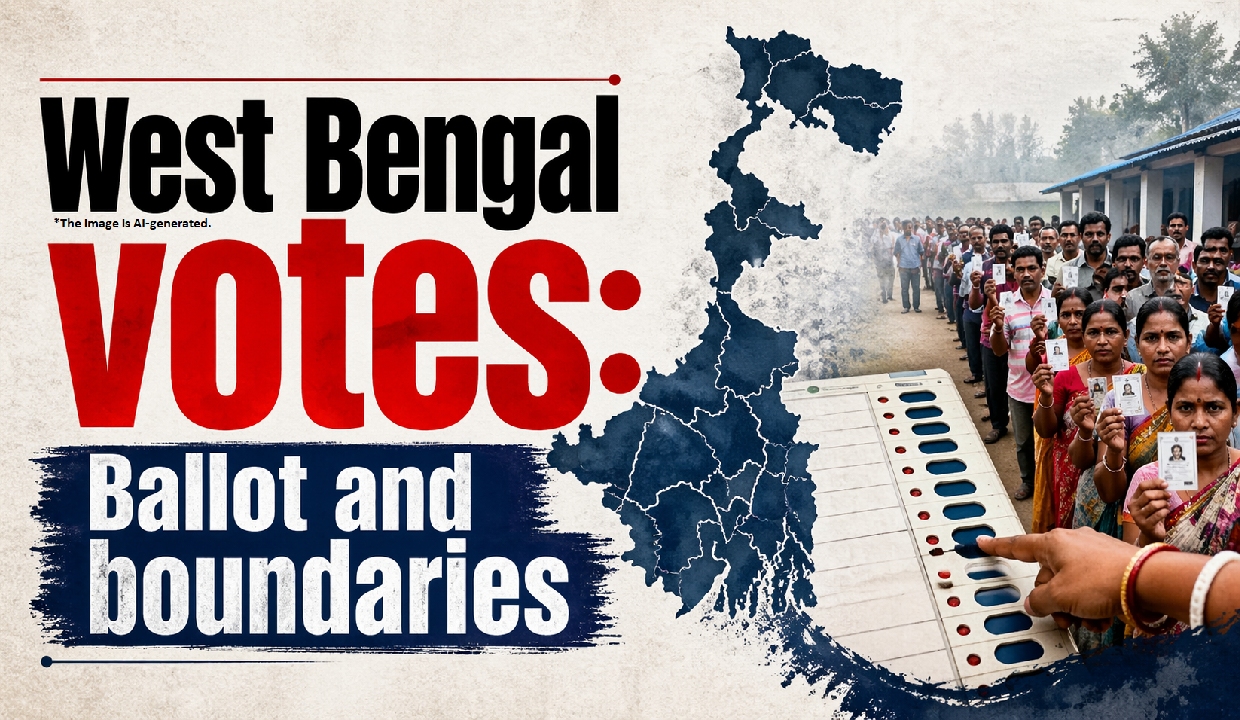
The fiercely contested West Bengal election began on April 23, but the central question is not who will be voted to power, but who will be allowed to vote
In West Bengal, the fiercest contest unfolded on April 23, 2026, when voting took place in 152 of 294 seats across 16 districts in the first phase, as the fate of 1,478 candidates in the fray was locked in EVMs. The day was marked by sporadic violence but largely went as per plan. The second phase of polling is scheduled for next week. The West Bengal contest is less a referendum on governance and more a test of identity, documents, and political mobilisation. There are two key things to observe in this election — who gets to vote, and how many votes and seats the BJP secures, as it has finally emerged as the main challenger to the entrenched TMC, relegating the Left and Congress to the sidelines.
Interestingly, the Election Commission of India has become an active player, taking up the SIR in haste despite numerous representations and even a court order stating that minor discrepancies in spelling, etc, must be overlooked. Moreover, this is one of the most heavily secured elections, with the ECI deploying 2,407 companies of Central forces for the first phase. Added to this to make the air thick is the “final warning” from Prime Minister Narendra Modi that no TMC goon, syndicate, or corrupt element would be spared. In a state that has seen three consecutive terms of the Trinamool Congress (TMC) under Mamata Banerjee, the natural expectation would have been a verdict on performance — jobs, industry, agrarian distress, and social welfare. Instead, the discourse has veered sharply towards the contentious Special Intensive Revision (SIR) of electoral rolls, reshaping both the narrative and the odds.
At the heart of this election lies the fallout of the SIR exercise conducted by the Election Commission of India. A staggering 91 lakh voters — roughly 12 per cent of the electorate — were dropped during the revision. Subsequent scrutiny flagged over 60 lakh names for “logical discrepancies,” and despite judicial intervention, nearly 27 lakh electors remain disenfranchised, with uncertain recourse through tribunals.
On the ground, especially in border and minority-heavy regions, this has led to anger, confusion, and a sense of exclusion. The TMC has capitalised on this, portraying the SIR as a politically motivated move by the Centre and an indifferent Election Commission. Its campaign has focused on welfare schemes while raising concerns over voter suppression. Mamata Banerjee harped upon protecting the Bengali identity and called for resisting external interference. The Bharatiya Janata Party (BJP) campaign, highly centralised and resource-intensive, has focused on consolidating Hindu votes, sharpening identity lines, and presenting itself as the agent of “clean governance” and national integration. The BJP’s organisational groundwork appears significantly strengthened compared to previous elections. The BJP has made inroads through aggressive campaigning and strategic alliances, particularly in northern and border constituencies. The TMC retains a formidable grassroots presence in rural Bengal. How the voters perceived the situation and the impact of the SIR on the election will be known only after the results are declared on May 4.