Managing simultaneous threats from the neighbours
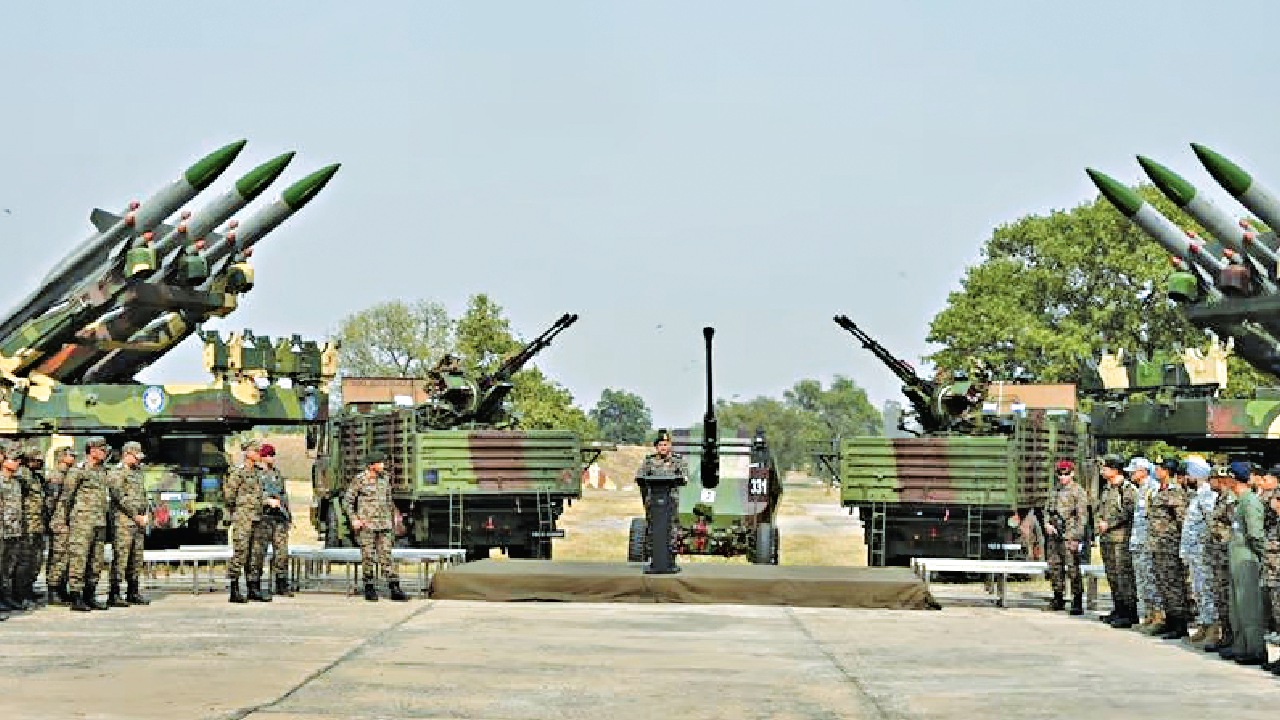
India today finds itself encircled by a volatile neighbourhood dominated by unelected or unstable regimes, many of which have historically posed challenges to its security and sovereignty. From persistent cross-border terrorism originating in Pakistan to the systematic marginalisation of minorities, especially Hindus, in Pakistan and Bangladesh, India’s external environment remains fraught with risk. Recent unrest along the Myanmar border, intensified by that country’s internal conflict, has further destabilised India’s northeastern frontier. Together, these developments underline a critical reality: safeguarding India’s security perimeter has been a continuous and evolving priority since independence, shaped by hostile borders, regional instability, and enduring threats to national integrity.
In a village near the Line of Control (LoC), daily routines have quietly adapted once again. Evening movement is cautious, conversations turn hushed at unfamiliar sounds, and drone sightings are discussed with the resignation of experience. Far to the east, exporters in West Bengal describe growing unpredictability in cross-border trade with Bangladesh, where political unrest and administrative disruptions now translate quickly into delayed shipments and cancelled orders. In the Northeast, border districts remain on alert as instability across the Indo-Myanmar frontier continues to affect security conditions. These local experiences reflect a broader regional pattern.
Across South Asia and India’s eastern periphery, political instability, economic stress, and armed conflict have intensified simultaneously. Pakistan is grappling with a renewed surge in militant violence, Bangladesh is navigating a difficult political transition, Sri Lanka remains economically fragile despite restructuring efforts, and Myanmar’s civil war continues without a clear end. For India, these developments converge at the border-through security risks, economic spillovers, and strategic pressure-reshaping the country’s neighbourhood environment as 2026 begins.
A neighbourhood under strain
Pakistan has seen a marked deterioration in internal security. Militant attacks have risen sharply, driven by groups operating from its western regions, including factions linked to the Tehreek-e-Taliban Pakistan and transnational extremist networks. Balochistan remains volatile, with separatist groups repeatedly targeting security forces and infrastructure projects, including assets associated with the China-Pakistan Economic Corridor. This pattern reinforces long-standing concerns in New Delhi that Pakistan’s internal instability continues to generate indirect pressure along India’s western frontier.
Bangladesh is undergoing political flux following leadership changes and sustained public mobilisation. While state institutions continue to function, the transition has coincided with episodes of unrest and a more visible role for Islamist political actors. These developments have had tangible consequences for India. Bangladesh is India’s largest trading partner in South Asia, and disruptions at land ports and transport corridors have affected exporters and logistics networks in West Bengal and the Northeast, highlighting the economic sensitivity of the eastern border.
Myanmar remains locked in a prolonged civil war involving the military junta and multiple resistance groups. Large areas of the country remain contested, and cross-border security challenges persist along India’s northeastern frontier. The conflict has complicated border management and heightened concerns over arms trafficking and organised crime networks operating in poorly governed spaces.
Sri Lanka has stabilised from the depths of its 2022 crisis but remains economically vulnerable. Debt restructuring agreements and multilateral support have improved liquidity conditions, yet growth remains modest and public finances constrained. Climate-related shocks-cyclones and flooding-continue to impose repeated fiscal and infrastructure costs. Sri Lanka’s dependence on external assistance has also sharpened strategic competition among its partners, with economic vulnerability translating into diplomatic leverage.
Converging risks for India
The impact of instability across India’s neighbourhood is cumulative rather than compartmentalised.
Security risks have expanded geographically. On the western front, Pakistan’s internal turmoil has coincided with increased militant activity, reinforcing the persistence of proxy threats. In the east, the continuation of conflict in Myanmar complicates border control and internal security in sensitive northeastern states. The strategic importance of the Siliguri Corridor-India’s narrow link to the Northeast-has grown as instability affects both Bangladesh and Myanmar simultaneously.
Economic exposure has become a frontline concern. India’s annual trade with Bangladesh exceeds $11 billion, with land routes playing a critical role. Political unrest, administrative delays, or informal restrictions across the border have immediate consequences for Indian exporters, particularly in sectors such as textiles, agriculture, and small-scale manufacturing. Unlike maritime disruptions, land-border interruptions disproportionately affect smaller firms and regional supply chains.
Strategic competition overlays these challenges. Economic stress in neighbouring states increases reliance on external financing, infrastructure development, and emergency assistance. In the Indian Ocean and the Bay of Bengal, ports, logistics hubs, and connectivity projects increasingly carry strategic significance alongside commercial value. As a result, neighbourhood instability often intersects with broader geopolitical rivalry rather than remaining a purely local issue.
India’s response
India’s engagement across its neighbourhood reflects differentiated conditions rather than a single policy template. In Sri Lanka, India has played a visible role in crisis response and recovery, extending emergency assistance after climate disasters and participating in stabilisation efforts during the debt crisis. These measures have helped sustain bilateral ties during a period of economic fragility and reinforced India’s role as a key regional partner.
With Bangladesh, India has maintained diplomatic engagement and trade continuity despite political uncertainty. Security cooperation and institutional dialogue have continued, even as businesses report heightened volatility linked to domestic developments across the border.
Along the Myanmar frontier, India has prioritised border security coordination and humanitarian support in cooperation with state governments. While these measures address immediate pressures, the protracted nature of the conflict means that security challenges remain persistent rather than episodic.
Regarding Pakistan, India has sustained a posture of deterrence and preparedness. Infrastructure upgrades, surveillance enhancements, and intelligence coordination along sensitive sectors reflect assessments that instability within Pakistan continues to pose indirect risks to India’s security environment.At the regional level, platforms such as BIMSTEC and Indian Ocean cooperation mechanisms provide frameworks for engagement, though their capacity to respond quickly to overlapping crises remains uneven.
Patterns shaping India’s neighbourhood
Several patterns emerge from developments across India’s neighbourhood.First, instability is increasingly multi-directional. Challenges arise simultaneously from the west and the east, reducing India’s ability to sequence or compartmentalise responses.
Second, economic and security dynamics are tightly linked. Trade disruption, internal unrest in neighbouring states, and security risks often stem from the same underlying political and economic shocks.
Third, state capacity in neighbouring countries matters as much as intent. Even where bilateral relations remain formally cooperative, weak institutions and domestic volatility generate spillover effects that India must manage regardless of diplomatic goodwill.
What the past year underlines is that India’s neighbourhood challenge is less about episodic crises and more about structural instability across adjoining states. Pakistan’s internal security trajectory, Bangladesh’s political flux, Sri Lanka’s fragile economic recovery, and Myanmar’s unresolved conflict are driven primarily by domestic factors beyond India’s direct control. These stresses interact with India’s geography, trade routes, and security calculus whether New Delhi intervenes or not. The result is a regional environment where disruption has become frequent rather than exceptional.
A limited but unavoidable inference follows. India’s strategic posture in 2026 is shaped not by its ability to resolve neighbours’ internal problems, but by how effectively it absorbs and buffers their spillover effects. The neighbourhood is no longer a zone of influence in the traditional sense; it is increasingly a zone of exposure. Managing that exposure-across security preparedness, economic resilience, and diplomatic bandwidth-has become a defining feature of India’s external environment as the decade unfolds.
As India navigates an increasingly unstable neighbourhood and persistent threats to its sovereignty, the imperative of vigilance and resilience remains unchanged. History reminds us that national security is not merely a matter of borders and military strength, but of collective resolve and the courage to act in defence of the motherland. As Tipu Sultan once declared, “It is better to live one day as a lion than a hundred years as a jackal.” In today’s strategic environment, that sentiment continues to resonate as a call for firmness, unity, and an unwavering commitment to protecting India’s national interests.
(The author, an Associate Editor with The Pioneer; has over a decade of experience covering foreign policy and conflict); views are personal