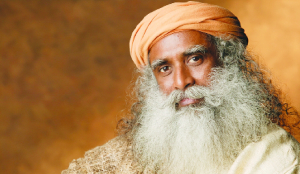
PM Modi’s Israel visit: A defining moment
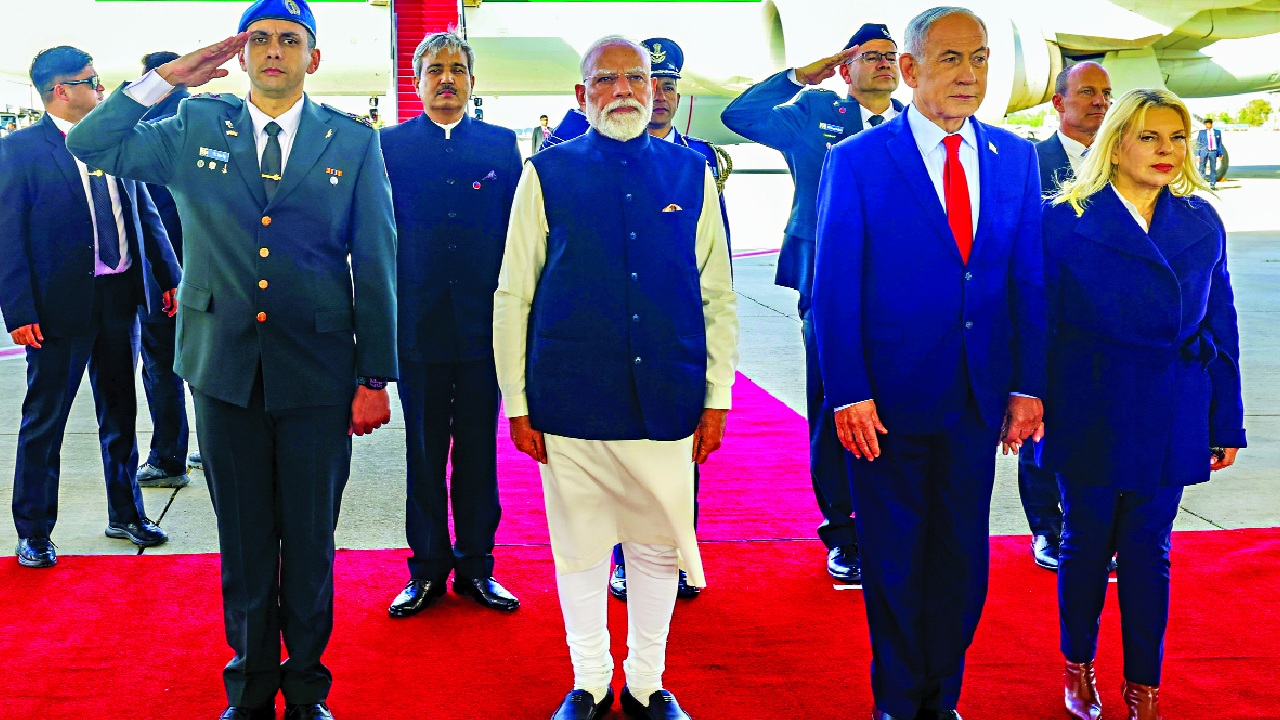
I begin this piece with a line that defines the moment. “A strong mandate at home often translates into bold decisions abroad.” For decades after Independence, Indian Prime Ministers approached Jerusalem with caution, balancing regional sensitivities and historical alignments. The delay was rooted in diplomacy shaped by the Cold War and the Non-Aligned Movement.
Prime Minister Narendra Modi’s outreach to Israel reflects a shift powered by political confidence. With a decisive majority, the government signaled that India can deepen ties with Israel while remaining equally close to the Arab world. The visit to Jerusalem is therefore more than symbolic - it represents a diplomacy driven by mandate, clarity, and national interest, redefining India’s strategic posture in a changing Middle East.
In a visit heavy with symbolism and strategic recalibration, Prime Minister Narendra Modi marked a defining moment in India’s foreign policy by undertaking a landmark trip to Jerusalem - a move that carries implications far beyond diplomacy. The visit reflects not only a deepening India-Israel partnership but also the assertive nationalist posture of a government operating with a parliamentary majority and political confidence unseen in decades.
For years after Independence in 1947, India maintained a cautious distance from Israel, guided by Cold War-era alignments and its leadership role in the Non-Aligned Movement. Successive governments upheld a largely pro-Palestinian stance, balancing relations quietly while avoiding overt public displays of closeness with Jerusalem.
That historical hesitation was decisively set aside as Modi stepped into Jerusalem, signalling a paradigm shift in policy. At the heart of the visit was a strong strategic message: India is redefining its global partnerships based on national interest, security, and economic opportunity rather than inherited ideological positions. Addressing the Knesset (Israeli Parliament), Modi emphasised shared democratic values and mutual security concerns, receiving the Speaker’s Medal - a gesture underscoring the warmth of the new phase in ties. Standing alongside Benjamin Netanyahu, Modi projected an unmistakable image of openness and solidarity. The personal rapport between the two leaders symbolized a broader transformation, from quiet engagement to public strategic partnership.
In a notable break from India’s long-held diplomatic neutrality in the region, Modi strongly condemned the October 7 attacks by Hamas, offering condolences to the victims and expressing unequivocal support for Israel’s fight against terrorism. The statement positioned India as a clear and vocal partner, rather than a distant observer balancing rhetoric.
Strategically, the visit places emphasis on defence cooperation, advanced technology, innovation ecosystems, water management, agriculture, and new economic corridors linking India more directly with the Mediterranean and beyond. As the Middle East undergoes rapid geopolitical shifts, India’s outreach reflects a calculation that long-term national interests lie in diversified, security-oriented partnerships.
Analysts view the Jerusalem visit as emblematic of a broader foreign policy doctrine - one that aligns diplomacy with domestic political strength. Backed by a decisive electoral mandate at home, the government appears more willing to take bold positions internationally, even when they depart from decades of precedent.
More than a bilateral engagement, the visit signals a new chapter in India’s post-independence trajectory: a confident nation recalibrating its global alignments, asserting its strategic autonomy, and prioritizing national interest over historical hesitations.
From non-alignment to strategic alignment, Jerusalem may well mark a turning point in India’s diplomatic evolution - one that reflects both geopolitical realism abroad and political consolidation at home.
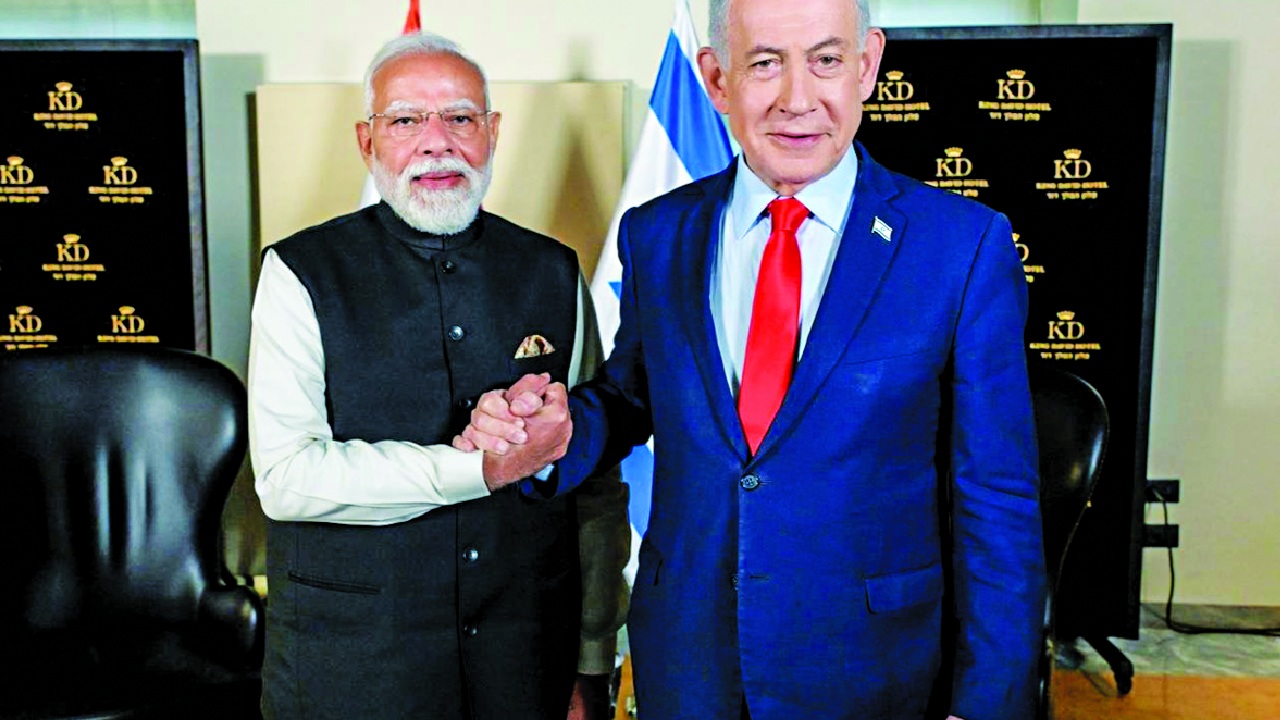
India and Israel today share a robust and multi-dimensional Strategic Partnership, reflecting a steady transformation in bilateral ties over the past decade. Prime Minister Narendra Modi’s forthcoming visit will be his second to Israel in nine years, reaffirming the momentum generated during his historic July 4-6, 2017, trip - the first-ever standalone visit by an Indian Prime Minister. During that visit, the relationship was elevated to a Strategic Partnership, marking a decisive new chapter in bilateral engagement.
Prime Minister Modi and Israeli Prime Minister Benjamin Netanyahu have maintained close and regular contact through reciprocal visits and frequent telephonic conversations, reflecting high-level political trust. Netanyahu visited India in January 2018, while subsequent interactions have included discussions on regional security, counter-terrorism, technological cooperation, and economic collaboration. Leaders have also exchanged calls following significant regional developments and major national milestones in both countries, underscoring the maturity of the partnership.
Defence and security cooperation remain a central pillar of ties, with Israel among India’s key defence partners. In November 2025, a MoU on Defence Cooperation further institutionalised collaboration. Trade and economic relations are expanding, with both sides signing the Terms of Reference for launching Free Trade Agreement negotiations in late 2025, alongside a Bilateral Investment Agreement to deepen cross-border investments.
Science, technology, and innovation form another vibrant area of engagement, including joint R&D initiatives and the India-Israel Industrial Innovation Fund (I4F). Agricultural cooperation has led to 35 fully operational Centres of Excellence across Indian states, promoting advanced farming and water technologies.
People-to-people links are strong, with over 41,000 Indians residing in Israel. In multilateral settings, India and Israel cooperate through frameworks such as the I2U2 Group, focusing on
food security, renewable energy, and infrastructure. Together, these pillars define a forward-looking partnership grounded in shared democratic values, innovation-driven growth, and strategic convergence.
From neighbourhood kirana stores to global financial hubs, India’s digital payments revolution is rapidly crossing borders. In a landmark development during Prime Minister Narendra Modi’s state visit to Israel, both nations announced the adoption of India’s Unified Payments Interface (UPI) within Israel’s payment ecosystem - a major boost to New Delhi’s expanding global fintech footprint.
The agreement will link UPI with Israel’s domestic payment infrastructure, enabling Indian travellers to make seamless, QR-based payments directly from their bank accounts while in Israel. The integration will be facilitated by cooperation between NPCI International Payments Limited and MASAV, Israel’s interbank payments operator. The initiative is expected to reduce transaction friction, enhance digital interoperability, and strengthen cross-border financial connectivity between the two economies.
Widely regarded as one of the world’s most advanced real-time payment platforms, UPI has already been rolled out for merchant payments in countries including the UAE, Singapore, France, Bhutan, Nepal, Mauritius, Sri Lanka, and Qatar. Its expansion into Israel underscores growing global confidence in India’s Digital Public Infrastructure (DPI) model and its scalable, low-cost financial architecture.
Beyond fintech, the visit marked a broadening of strategic collaboration. Multiple Memorandums of Understanding were signed across artificial intelligence, cybersecurity, defence, agriculture, education, water management, fisheries, geophysical exploration, and cultural exchange. A notable highlight was the launch of a new initiative on Critical and Emerging Technologies, to be steered by the National Security Advisors of both nations, focusing on AI, quantum computing, semiconductors, biotechnology, and space.
The leaders also welcomed ongoing cooperation between Indian Space Research Organisation and Israel Space Agency, aiming to deepen joint research and industry participation. In cybersecurity, both sides endorsed the creation of an India-Israel Cyber Centre of Excellence in India to bolster cyber resilience, including in financial systems.
Agriculture and water management - long-standing pillars of the partnership - were reaffirmed, with 35 Centres of Excellence across India having trained over a million farmers in advanced irrigation and crop techniques, reinforcing innovation-led, sustainable growth.
Leadership-Level Engagement: Modi-Netanyahu Equation
The political chemistry between Prime Minister Narendra Modi and Benjamin Netanyahu has played a defining role in strengthening bilateral ties.
July 4-6, 2017: PM Modi undertook the first-ever visit to Israel by an Indian Prime Minister, upgrading ties to a Strategic Partnership.
January 14-19, 2018: Netanyahu paid
a return visit to India, consolidating defence, innovation, and business cooperation.
January 11, 2023: PM Modi congratulated Netanyahu on his election as Prime Minister for the sixth time.
August 24, 2023: Netanyahu congratulated India on the successful Chandrayaan-3 Moon landing.
October 10, 2023: Netanyahu briefed PM Modi, following the October 7 terror attacks in Israel.
June 6, 2024: Netanyahu congratulated PM Modi on his third consecutive term as Prime Minister of India.
April 24, 2025: Netanyahu conveyed condolences following the Pahalgam terror attack.
June 13, 2025 onwards: Following the Israel-Iran conflict, both leaders held multiple conversations on regional stability.
October 9, 2025: PM Modi congratulated Netanyahu on developments under President Trump’s Gaza peace initiative.
December 10, 2025 & January 7, 2026: The leaders reviewed regional developments and exchanged New Year greetings.These sustained interactions highlight not merely diplomatic protocol, but active strategic consultation amid regional volatility.
Key Highlights of Prime Minister Narendra Modi’s Israel visit
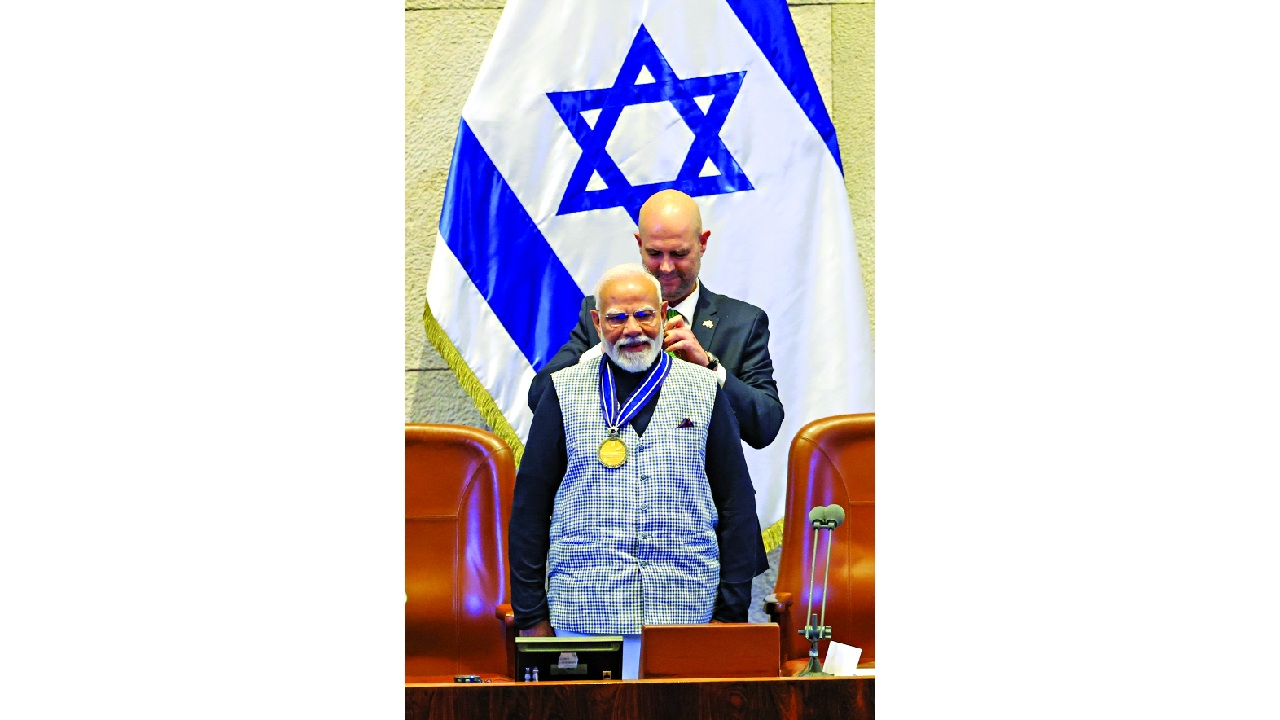
Prime Minister Narendra Modi concluded a historic two-day visit to Israel on February 26, 2026, marking a significant deepening of the “Special Strategic Partnership” between the two nations.
Historic Knesset Address: PM Modi became the first Indian Prime Minister to address the Israeli Parliament (Knesset), receiving a standing ovation and the “Speaker of the Knesset Medal”, the parliament’s highest honour.
Solidarity Against Terrorism: He strongly condemned the October 7 attacks as “barbaric,” stating India stands “firmly with full conviction” with Israel while referencing India’s own pain from the 26/11 Mumbai attacks.
Gaza Peace Initiative: PM Modi extended full support to the Gaza Peace Plan, asserting that “humanity must never become a victim of conflict” and supporting regional stability efforts.
Defence & Technology Expansion: The two countries agreed to expand cooperation in joint development and production of military hardware, including advanced technology like the Iron Beam laser system and AI-driven security.
Economic & Digital Integration:
- An agreement was reached for the use of UPI in Israel.
- Both nations vowed to soon finalise a Free Trade Agreement (FTA) to boost bilateral trade.
Humanitarian & Cultural Ties:
- PM Modi paid respects at Yad Vashem, Israel’s official memorial to Holocaust victims.
- The visit highlighted the contribution of the Indian caregiver and construction sectors to Israel.
Strategic Alliances: Discussions touched upon the proposed “Hexagon of Alliances” (India, Israel, Greece, Cyprus, etc.) to coordinate security and economic efforts in the region.
Context: Modi’s 2017 Visit
This 2026 trip built on PM Modi’s first visit in July 2017, which was the first-ever by an Indian PM to Israel. Key outcomes of that visit included:
De-hyphenation Policy: Formally treating relations with Israel and Palestine separately by skipping the traditional stop in Ramallah.
Haifa Memorial: Honouring Indian soldiers who died in the 1918 Battle of Haifa.
OCI Cards: Announcing Overseas Citizenship of India (OCI) cards for Indian-origin Jews who served in the IDF.
The writer is an Associate Editor (Foreign Affairs) at The Pioneer. He has visited Israel on many occassions.; views are personal