Modi–Netanyahu Camaraderie Elevates India–Israel Strategic Partnership
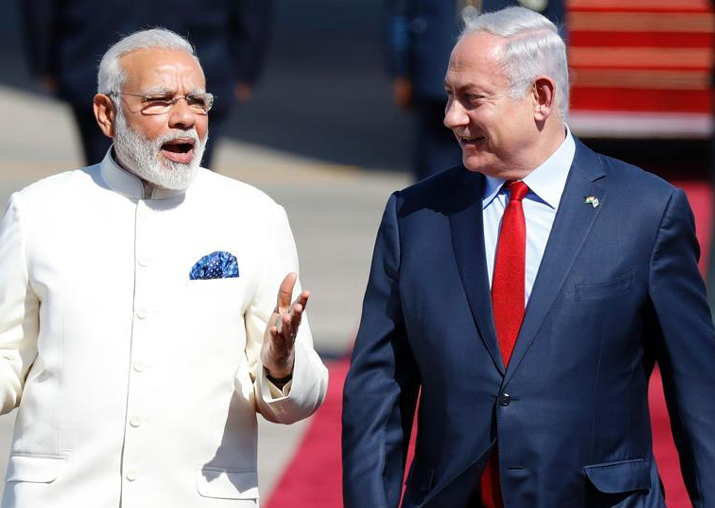
India–Israel ties have entered a new strategic phase, shaped decisively by the personal chemistry and political alignment between Prime Minister Narendra Modi and Israeli Prime Minister Benjamin Netanyahu. Modi’s latest visit to Israel underscores how a relationship once defined by diplomatic caution has evolved into an assertive, multidimensional partnership spanning defence, technology, trade and geopolitics.
For decades after independence, India kept Israel at arm’s length, aligning itself with the Palestinian cause and the broader Non-Aligned Movement consensus. Although New Delhi formally established diplomatic ties with Israel in 1992, engagement remained relatively low-key. The turning point came in 2014 when Modi assumed office. In 2017, he became the first Indian prime minister to visit Israel — a symbolic break from past hesitations. Netanyahu’s highly publicised visit to India in 2018 further cemented what both leaders began calling a “strategic partnership.”
At the heart of this growing closeness is defence cooperation. India is now among Israel’s largest arms customers, procuring advanced missile systems, drones, radar technologies and surveillance equipment. Security collaboration has deepened beyond hardware purchases to include intelligence sharing, counterterrorism training and joint research. Both governments frame their cooperation around shared security concerns, particularly threats from extremist violence and regional instability.
Technology and innovation form the second pillar of the partnership. Israel’s global reputation as a start-up hub complements India’s scale and digital ambitions. Bilateral discussions increasingly focus on artificial intelligence, cybersecurity, quantum technologies, water management and agricultural innovation. A new Bilateral Investment Treaty has replaced the 1996 agreement, aiming to provide greater investor protection and stimulate two-way flows. Talks toward a Free Trade Agreement are also advancing, reflecting a shift from primarily defence-driven ties to a broader economic integration.
Trade has grown dramatically — from roughly $200 million in 1992 to more than $6 billion today. India exports precious stones, chemicals, machinery and fuel products to Israel, while importing high-tech equipment, defence systems and agricultural technologies. Both sides see untapped potential in infrastructure, renewable energy and innovation-led manufacturing.
Ideologically, analysts note parallels between Modi’s Bharatiya Janata Party (BJP) vision of a civilisationally rooted India and Israel’s self-conception as a Jewish state. This perceived convergence has fostered political warmth between the two leaderships. Netanyahu frequently describes India as a key partner in building a bloc of nations committed to stability and technological advancement.
Yet the partnership unfolds against a complex regional backdrop. India balances its ties with Israel alongside longstanding relations with Arab states and Iran, particularly in energy and connectivity projects. New Delhi’s diplomatic positioning often reflects a careful calibration — supporting Israel strategically while occasionally joining multilateral statements critical of certain Israeli policies.
Ultimately, the Modi–Netanyahu partnership signals India’s willingness to pursue pragmatic, interest-driven diplomacy. It reflects a broader transformation in India’s foreign policy — one less constrained by Cold War-era alignments and more focused on strategic autonomy, defence modernisation and technological competitiveness. As regional tensions rise, India–Israel ties appear set to deepen further, anchored by leadership-level trust and converging national priorities.