The NCERT– Judiciary Row: Textbook, Trust and Turbulence

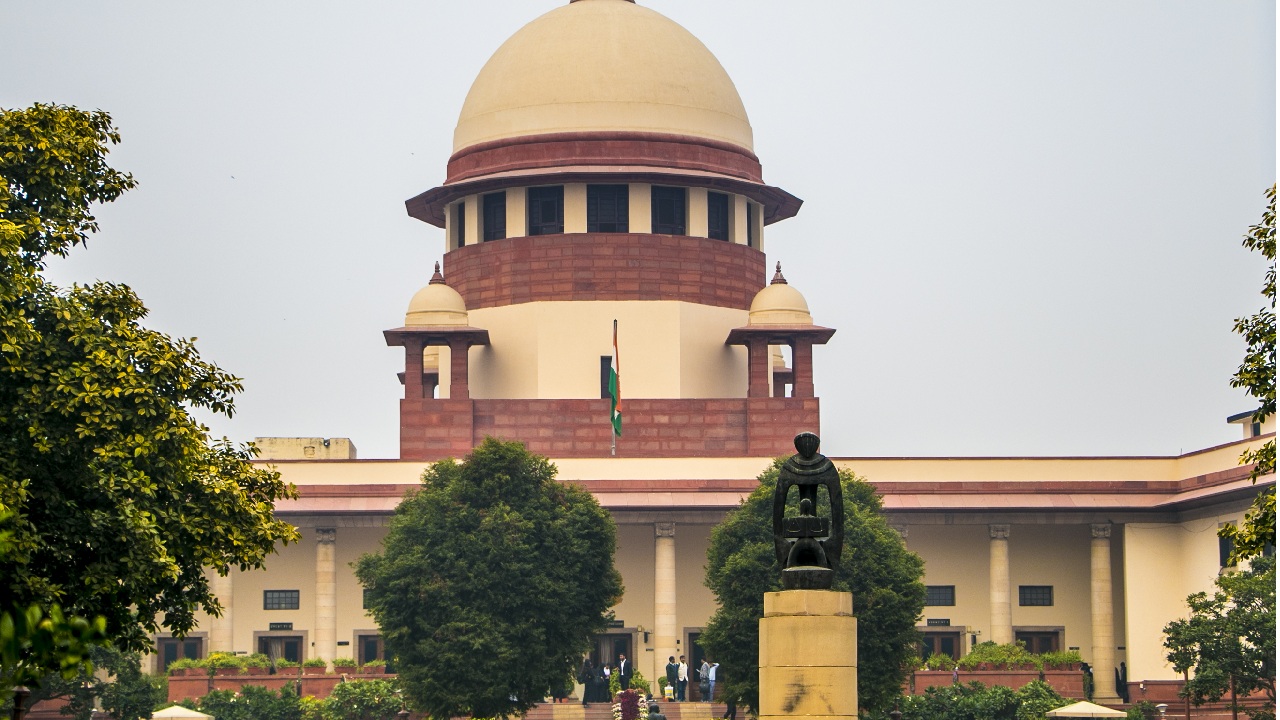
The recent controversy surrounding a Class VIII NCERT textbook chapter on corruption in the judiciary has triggered an unusually strong response from the Supreme Court of India. The Court termed the matter serious and even questioned whether a mere apology from NCERT would suffice. Such a reaction is unprecedented. Never before has the institution found itself at the centre of a judicial storm of this magnitude.
At the heart of the issue is a chapter discussing corruption in the judiciary, written for children aged 13 to 14. It is important to note that discussions around corruption in other institutions - political systems, bureaucracy and governance structures - have appeared in textbooks in earlier classes as well. However, this particular reference to the judiciary appears to have struck a sensitive chord, prompting reactions not only from the Bench but also from members of the Bar and others associated with the judicial system. In the process, NCERT has been portrayed as a culprit.
Such an image sits uneasily with those who have known the institution from within. Having worked at NCERT for over three decades and served as its Director for five years, I find the turn of events sudden and deeply troubling.
The National Council of Educational Research and Training prepares more than 240 textbooks across classes and disciplines. These books are not produced casually; they are developed through an elaborate, multi-stage process that spans two to three years. Over time, NCERT textbooks have earned immense credibility - not only within India but also internationally. They are regarded as professionally sound, academically rigorous, and updated in accordance with contemporary research and pedagogical developments. NCERT is not a casual body but an institution comprising eminent and young academicians who constantly monitor trends in school education, both in India and abroad. Specialists in psychology, sociology, sciences, and social sciences contribute to its work.
The institution was created to assist the government in all matters of school education, including teacher education. Most State Governments rely heavily on NCERT’s curricular frameworks and textbooks.
To suggest that such an institution would deliberately attempt to malign the judiciary or present a biased interpretation stretches credibility. The textbook writing process involves experts from leading institutions - teachers from across the country, scholars from universities, IITs, institutes of social sciences, and national training bodies - all working together. It is a rare platform where classroom teachers and top-level academics sit side by side, bringing both theoretical knowledge and ground realities into discussion.
The question then arises: why did this issue become so sensitive?
In my opinion, it was never intended as a targeted attack on the judiciary. Rather, the broader educational objective may have been to make adolescents aware of the realities of public life. Children around the age of 14 or 15 are on the threshold of citizenship. They must understand the world they will inherit and the institutions they will engage with as responsible citizens.
Corruption, unfortunately, is widely discussed in relation to multiple public institutions - whether courts, police stations, government offices, or public services. Public perception, especially among ordinary citizens who interact with these systems daily, is often not entirely positive. To acknowledge this reality in an educational context does not automatically imply conspiracy or institutional disrespect.
The Supreme Court of India is undoubtedly one of the most respected constitutional institutions in the country. Its authority and moral standing are unquestionable. But NCERT too deserves institutional respect. If the Supreme Court is the conscience keeper of the nation, NCERT can be described as a creator of the nation’s future. It prepares generations who will one day serve as judges, civil servants, lawyers, and lawmakers. Most members of the higher judiciary and civil services have themselves studied from NCERT textbooks.
To attribute “deep-rooted conspiracy” to such an institution is painful for those who have devoted their lives to education. Over five decades in academia, having witnessed the implementation of national education policies of 1968, 1986/1992, and later developments culminating in NEP 2020, I can say with confidence that NCERT has built its reputation painstakingly.
This is not the first time NCERT has faced controversy. Around the early 2000s, objections were raised over errors - including a misplaced map depiction and, on another occasion, copied paragraphs in a textbook. In those instances, responsibility was accepted, corrections were made, and transparency was maintained. Accountability was upheld. But never before was the institution publicly questioned in a manner that suggested mala fide intent.
The present moment, therefore, calls not only for correction where necessary but also for balance - a recognition that while institutions must be accountable, they must also be trusted.
Trust, Process and the Spirit of Academic Responsibility
Today, one must pause and imagine the demoralisation among academics across the country - particularly within the five Regional Institutes of Education under the National Council
of Educational Research and Training. These institutions house respected scholars whose work is acknowledged nationally and internationally. To see their integrity questioned so publicly is deeply painful for those who have dedicated their lives to building this system.
Many now ask: what is the actual process behind an NCERT textbook? What happens before publication?
Let me outline the framework as it functioned during my tenure.
The process begins with the development of a National Curriculum Framework. In 2000, the Curriculum Framework for School Education was formally released on November 14 - Children’s Day - marking the birth anniversary of Jawaharlal Nehru. The symbolism was deliberate. The release was not merely bureaucratic; it was an educational celebration attended by thousands of schoolchildren. NCERT has always visualised itself not as a distant office in Delhi, but as a national pedagogic institution - serving every teacher and every child in India.
Once the curriculum framework defines stage-wise learning goals, subject-specific syllabi are prepared by expert committees. These committees include NCERT faculty, university scholars, researchers from premier institutions, and most importantly, schoolteachers from across the country. Experts from higher education understand disciplinary depth; teachers bring classroom realities. Together, they deliberate and decide what should be taught and who should write each chapter.
Draft chapters are not simply written and printed. They pass through multiple stages of review. Every word is scrutinised. Workshops are conducted where experts sit together and debate language, clarity, examples, and pedagogy.
During my time, once a manuscript was ready, we invited 15-20 practising schoolteachers from different states - from Rajkot to West Bengal - who were teaching that very subject at that very class level. They read the book line by line. They pointed out if an experiment could not be performed in rural schools, if a concept was too difficult, or if a diagram lacked clarity. Their suggestions were often outstanding. Changes were made accordingly.
After academic review, the manuscript was examined departmentally, approved by the Director, and then sent to the publication division. Even during editing, queries were raised and sometimes referred back to authors or expert groups. On occasion, experts were recalled for clarification. It is an extended, rigorous and layered process.
Yes, glitches have occurred - as they do in any large institution. I have publicly acknowledged errors during my tenure, including a misplaced map and an instance of unattributed text. Responsibility was accepted and corrections were made. That is how institutions mature - through accountability, not accusation.
Some have asked whether textbooks should undergo legal vetting before publication. I would respectfully disagree with such a proposition. Courts consult legal experts while delivering judgments; academic institutions consult subject experts while writing textbooks. Expertise must be respected in its domain. To mandate legal clearance for pedagogical content risks undermining academic autonomy and trust in scholarly processes.
Established in 1961, NCERT is a post-independence institution that has played a crucial role in shaping modern India. It assisted in implementing the 1968 National Policy on Education under the guidance of visionaries like DS Kothari. It was during that phase that science and mathematics were made compulsory up to Class X - a transformative move that expanded scientific literacy across the nation, including for millions of girls who went on to careers in space science, nuclear research, aeronautics and technology.
The contribution of NCERT to nation-building is visible in generations of professionals - scientists, civil servants, technologists - many of whom studied from its textbooks. The institutional culture has always been one of continuous improvement. Throughout the year, NCERT receives suggestions from teachers, parents, public representatives and even students. These are examined carefully, and necessary revisions are incorporated in subsequent reprints. Textbooks are not static documents; they evolve.
I recall receiving a handwritten letter from a Class III child pointing out that an illustration showed a farmer standing in his field with a plough, but the caption suggested he was already ploughing. The child observed the inconsistency.
I immediately wrote back appreciating his attentiveness and ensured the correction was made in the next edition. Such feedback is valued. That is the level of openness the institution has practised. Transparency has never been absent from the process. Experts are invited widely. Scientists and scholars - despite demanding schedules - have contributed generously.
The NCERT– Judiciary Row: Textbook, Trust and Turbulence I do not recall a single instance where a serious academic declined to help. On the matter of constitutional respect, NCERT’s record speaks for itself. In 2000, we requested eminent constitutional scholar Subhash C. Kashyap to write a simple book on the Constitution for teachers and common readers. Initially hesitant, he eventually produced a lucid volume explaining constitutional principles in accessible language. When we proposed translating it into Hindi, he personally rewrote it to ensure conceptual clarity. The objective was clear: generate informed respect for the Constitution and its institutions.
The Supreme Court of India is one of the most respected pillars of Indian democracy. Its role as guardian of the Constitution is unquestionable. But institutions like NCERT also serve the Republic - by nurturing informed, critical and responsible citizens who will one day occupy positions in the judiciary, executive and legislature.
Academic freedom and institutional respect are not opposing values; they are complementary. Both are essential for a healthy democracy. An episode such as the present one should lead to careful review, correction where necessary, and constructive dialogue - not erosion of trust.
In the larger scheme of nation-building, the Supreme Court safeguards constitutional morality, while NCERT prepares the minds that will uphold it in the future. Both institutions, in their respective spheres, serve the same national purpose.
Values, Responsibility and the Larger Democratic Balance
Those who argue that NCERT does not nurture constitutional values overlook the depth of its long-standing commitment to value education. The National Council of Educational Research and Training has consistently researched how ethical foundations, civic responsibility and Gandhian thought can be meaningfully integrated into school education.
For years, textbooks carried the Preamble to the Constitution. Later, the Fundamental Duties were prominently included. Equally significant was the inclusion of Gandhiji’s talisman - his reminder that before taking any decision, one must think of the “last person” and ask whether that action will benefit the most vulnerable. This inclusion was made on the suggestion of D. S. Kothari, one of India’s most respected educationists.
Pick up almost any NCERT textbook, and you will find at least two - often all three - of these guiding constitutional elements: the Preamble, the Fundamental Duties, and Gandhian ethical reflection. These are not ornamental additions; they reflect a conscious effort to cultivate responsible citizenship.
The institution has also sought to promote interfaith understanding. Eminent scholars such as Wahiduddin Khan were invited to contribute perspectives on mutuality and harmony within Islam. Such writings were published and widely distributed to foster respect, dialogue and social cohesion.
Education, by its very nature, cannot be selective about reality. If textbooks teach constitutional ideals, they must also acknowledge historical truths - including Partition, social conflict, and the challenges of communal tension. Young students will grow into citizens who must navigate these realities. Shielding them entirely does not strengthen democracy; preparing them thoughtfully does.
India’s development story - in science, technology, governance and global engagement - rests partly on the foundations laid in school education. NCERT has quietly contributed to this journey for decades. Its impact is not always visible, but it is undeniably significant.
This brings us to the broader question of academic autonomy and institutional respect. The Supreme Court of India is supreme in its constitutional authority. It has every right to comment, review and even criticise when it deems necessary. But with authority also comes responsibility - the responsibility to ensure that institutional critique does not inadvertently demoralise those who have worked with integrity for decades.
Gandhi often reminded us that every right is accompanied by a duty. In a democracy, institutions must hold each other accountable - but they must also uphold each other’s dignity.
There is no denying that corruption, wherever it exists, must be eradicated - whether in the executive, legislature, or judiciary. Public confidence depends on transparency and reform. If a textbook reference has caused concern, it can be reviewed. If procedures need tightening, they can be strengthened. Accountability should be fixed where necessary.
But to suggest mala fide intent or conspiracy within an institution that has built its reputation over sixty years risks undermining trust unnecessarily.
Many of my former colleagues at NCERT are deeply demoralised. They do not deserve that. They deserve recognition for their painstaking labour - the workshops, revisions, consultations and corrections that go into each textbook. They are human; errors can occur. But error is not equivalent to intent.
I would not hesitate to describe NCERT as a teacher of the nation. It shapes the intellectual and moral foundations of millions of children. Every civil servant, judge, scientist or academic who studied in India has, at some stage, been shaped by NCERT books. My own academic growth was nurtured within this institution. Its basic objective has always been to ensure that every child grows into a thoughtful, informed and responsible citizen.
Education transforms an individual into a personality. A child enters school unaware and dependent; education equips that child with understanding, confidence and moral direction. That transformation is the quiet work NCERT performs.
If a lapse has occurred, procedures will address it. Responsibility will be determined. Corrections will be made - as they have been in the past. But the language of accusation should not overshadow decades of contribution.
Institutional autonomy must be protected. It must be respected by governments, political parties, civil society and even constitutional authorities. Democracy thrives not when institutions weaken one another, but when they strengthen each other through constructive engagement.
The Supreme Court safeguards constitutional morality. NCERT prepares the citizens who will live by it. Both serve the Republic. Both deserve respect.
In moments of controversy, what is required is not confrontation, but conversation - not suspicion, but balance. For the sake of our institutions - and for the generations they serve - that balance must prevail. (Based on Mr JS Rajput’s interview with the Pioneer)
Major recent controversies surrounding NCERT curriculum
Chapter on Judiciary Corruption
The Supreme Court of India expressed shock over a Class 8 textbook chapter, “The Role of the Judiciary in Our Society,” which included references to corruption within the judiciary. The court ordered the immediate withdrawal and seizure of these books.
Mughal and Delhi Sultanate Omissions
Massive portions of medieval Indian history, specifically the Mughal era and the Delhi Sultanate, were removed from history textbooks. NCERT replaced these with a focus on regional kingdoms like the Marathas and Ahom warriors, leading to claims of historical erasure.
Mahatma Gandhi & RSS Deletions
References to Gandhi’s assassin Nathuram Godse being a “Brahmin from Pune” and the temporary ban on the Rashtriya Swayamsevak Sangh (RSS) following the assassination were scissored out of Class 12 Political Science books.
Darwin’s Theory & Periodic Table
In 2023, the Theory of Evolution and the Periodic Table were removed from Class 10 textbooks. Over 1,800 scientists signed an open letter condemning this as a setback to scientific temper.
Gujarat Riots & Ayodhya Revisions
Descriptions of the 2002 Gujarat riots were significantly diluted or removed. In 2024, the term “Babri Masjid” was replaced with “three-domed structure,” and the demolition was reframed following the 2019 Supreme Court verdict.
Historical Controversies
The “Cartoon Controversy” (2012)
A 1949 cartoon by Shankar Pillai showing B.R. Ambedkar on a snail (the Constitution) being whipped by Jawaharlal Nehru led to an uproar in Parliament. This resulted in the resignation of advisors Yogendra Yadav and Suhas Palshikar.
Post-Emergency Erasure (1977)
The Janata Party government withdrew books by prominent historians like Romila Thapar and Bipan Chandra, accusing them of a pro-Muslim bias.
Saffronisation vs. De-saffronisation
The NDA government (1998-2004) introduced books emphasizing ancient Indian knowledge. These were largely reversed by the UPA government in 2004 under the banner of “de-saffronisation”.
The author is an educationist, a Padma Shri awardee, and works in religious amity and social cohesion; views are personal