US-Israel attack on Iran: Escalating crisis in West Asia
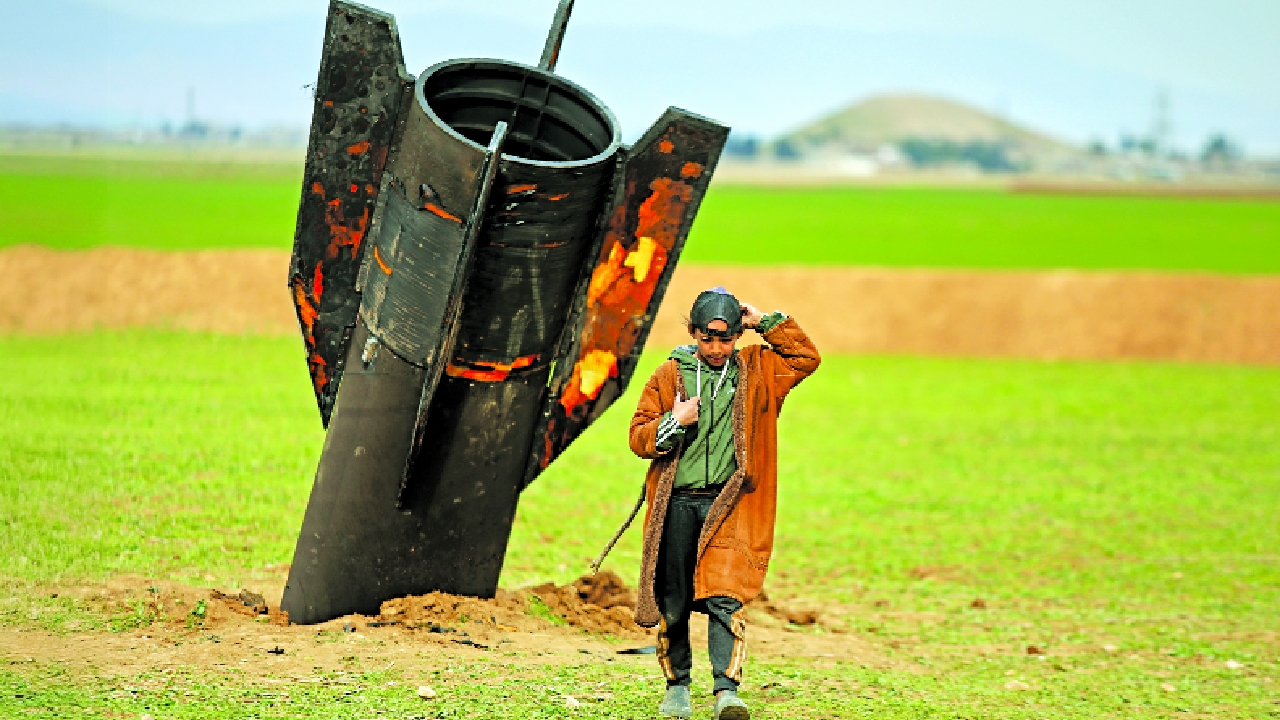
Today, the situation between Iran, Israel, and the US is deeply rooted in several decades of political animosity, strategic competitions and long-standing regional conflicts. Before the 1979 Iranian Revolution, there was a hidden partnership between Iran and Israel that included both military and intelligence cooperation. However, this partnership ended on account of the establishment of the Islamic Republic of Iran by Imam Ruhollah Khomeini in Iran. Iran, since then, has severed all diplomatic ties with Israel and referred to it as the "Islamic enemy." At the same time, Iran began to support Hezbollah and other proxy groups in the region. When Iranian students stormed the US Embassy in Tehran and took 52 US diplomats hostage for 444 days, relations between Iran and the US were severely strained. Relations between Iran and the US have worsened in the last couple of decades due to Iran's increased influence in the region and controversy surrounding its nuclear program. Israel has consistently alleged that a nuclear-armed Iran would present an existential threat; thus, Israel has relied on a variety of covert means to counter this apparent existential threat, including cyber-attacks, as well as periodic military clashes, all of which have contributed to making the geopolitics of West Asia so volatile.
Attacks and Loss of Human Life
The Joint military attacks initiated against Iran by both the United States and Israel have been targeted against significant military infrastructure, such as military bases and command facilities, associated with the Islamic Revolutionary Guards Corps (IRGC), resulting in the loss of numerous senior-level military leaders or security officers. The most significant impact would have been on 28 February 2026, when reports indicated that the commander-in-chief of Iran, the supreme leader, Ali Khamenei, had reportedly been killed, which created an unprecedented political and security void, thus further increasing instability within Iran's leadership and strategic command structure. Civilian losses are among the most disturbing consequences of conflict. One of the deadliest incidents occurred in the southern town of Minab, Iran, when an airstrike took place at the Shajareh Tayyebeh Girls' Elementary School during class hours, causing the deaths of more than 165 people, mostly school girls, and injuring many more. As per both the Iranian Government report and other Independent Reports based on Open-Source Intelligence, satellite imagery indicates that a precision airstrike caused this explosion. In addition to the tragic loss of life from these air strikes, the infrastructure has been destroyed, causing an interruption of daily life and increasing fear of continuing war throughout the country.
The Regional Crisis
Iran's retaliation against both the US and Israel was on a large scale, and the result has escalated quickly into a regional crisis. Iran retaliated with ballistic missiles as well as armed drones, targeting Israeli cities and key US bases in the Gulf (i.e., bases in Bahrain, Kuwait, Qatar, and the United Arab Emirates). Iranian forces targeted the command-and-control locations of the US Fifth Fleet in Bahrain, as well as other US logistic locations, signalling that Iranian forces view US military presence throughout the region as legitimate military targets. In the first wave of attacks from Iran, over 200 ballistic missiles and drones were launched, providing evidence of Iran's increasing capabilities to conduct long-range strikes.
These attacks resulted in significant loss of life and damage to many different infrastructure systems in Gulf countries. A total of at least six US military personnel were reported killed because of the attacks against US bases, while the airports, radars and energy facilities located in the attacked countries have all been severely impacted by these strikes. Additionally, strikes against Israeli cities such as Tel Aviv and Haifa resulted in several Israeli civilian casualties, even with advanced air defence systems attempting to intercept incoming projectiles. With Iran conducting airspace closures and attempting to launch missiles over the cities of Abu Dhabi and Dubai, heightened fears have arisen throughout the Gulf of a possible continuation of the US-Iran confrontation and a wider regional war, with a high probability of further instability in West Asia. The continuing tensions in West Asia have massive economic and strategic ramifications for India, which has extensive commercial, energy, and people-to-people ties to the Gulf region.
The Gulf Cooperation Council countries comprise more than 15% of India's total trade worldwide, with bilateral trade exceeding $178 billion by 2024-25.
One immediate effect of the escalating tensions is on Indian agricultural exports to the Gulf. The UAE, Saudi Arabia, Qatar, and Oman all import substantial quantities of Indian agricultural products, such as grapes, onions, rice, and vegetables. Disruption in shipping routes, port closures, and limited regional airspace have delayed shipments and increased transportation costs, resulting in significant economic losses to both Indian exporters and farmers. Energy security is also a key issue.
Approximately 60% of India's crude oil and natural gas supplies come from the Gulf Region. Any disruption to maritime movements through the Strait of Hormuz would likely create upward pressure on crude oil and natural gas prices as well as increase inflation. The continuing tension could ultimately jeopardise the health and livelihoods of the over 9 million Indians who live in the Gulf Regions.
The Conflict Becoming a Global Crisis
The US-Israel military attacks on Iran have swiftly escalated into a worldwide crisis because of their impact on oil and gas supply chains and how these events affect international trade. The Gulf region supplies between 20% and 30% of the world's oil supply and approximately 20% of liquefied natural gas (LNG). Therefore, this area serves as one of the main energy supply centres for the entire global economy. In response to the increased tensions, several Gulf Cooperation Council (GCC) member governments tightened security for their oil and gas facilities.
Some of them have even temporarily reduced oil production out of fear that hostilities could lead to missile or drone attacks. As a result, this has created instability in the international energy markets, which has caused an increase in crude oil prices. A significant concern remains the ongoing challenges faced by vessels that are transiting through the Strait of Hormuz because it is a key part of the world shipping channel. Approximately 20-21 million barrels of crude oil (or approximately 1/5 of the World's total daily consumption) flow through the Strait of Hormuz each day. Any significant event that disrupts or halts shipping through this vital chokepoint could severely impact global oil supply. As a result of these attacks and subsequent supply chain disruptions, international shipping lanes have been disrupted, and ocean vessel insurance rates have significantly increased. As such, the current tensions between the US, Israel and Iran prove that a regional conflict can escalate rapidly and negatively impact the global economy. The points listed above demonstrate that the negative ramifications of a regional conflict can be felt at a global level.
This rapidly spreading conflict is not at all in the interest of any country or the region. So, it is the responsibility of each nation to work for peace and stability. We are living in the 21st century, and we wish to make this world a better world with the help of Sustainable Development Goals(SDGs). This could only be possible when we respect international law.
( Writer Prof Anisur Rahman associated with the Centre for West Asian Studies, Jamia Millia Islamia)