The cognitive battlefield: Insights on ‘The Jihad Tech Complex’
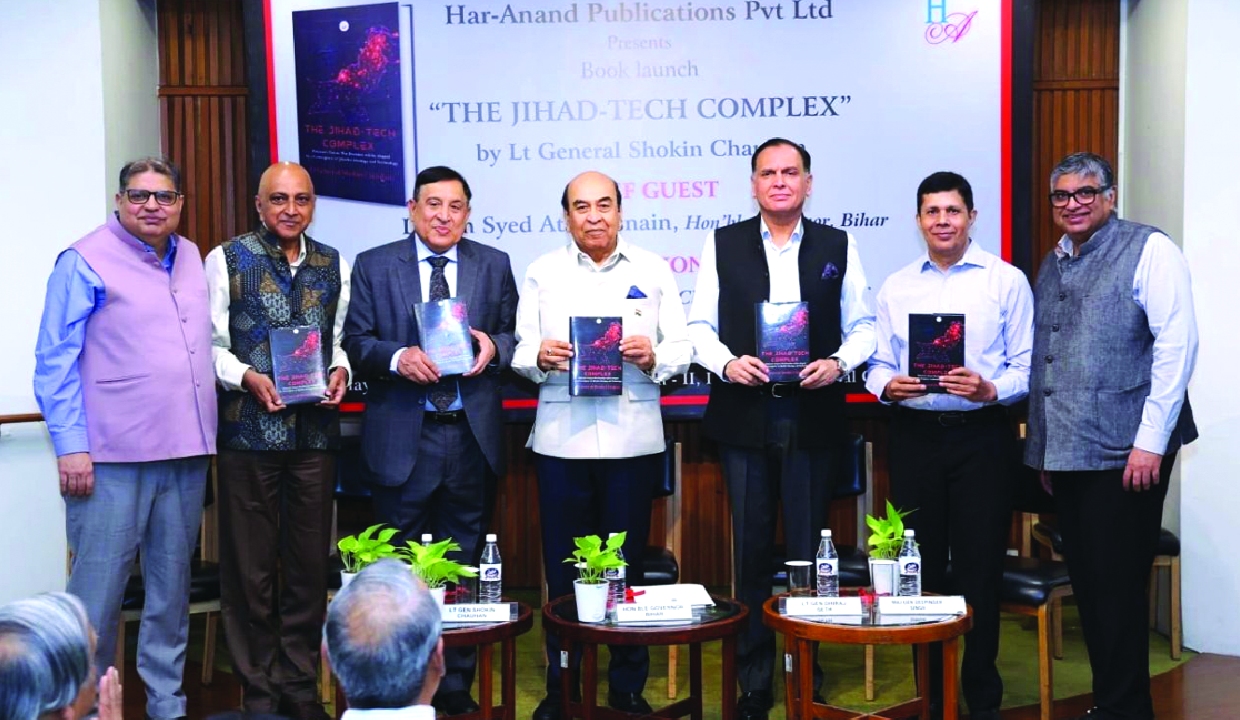
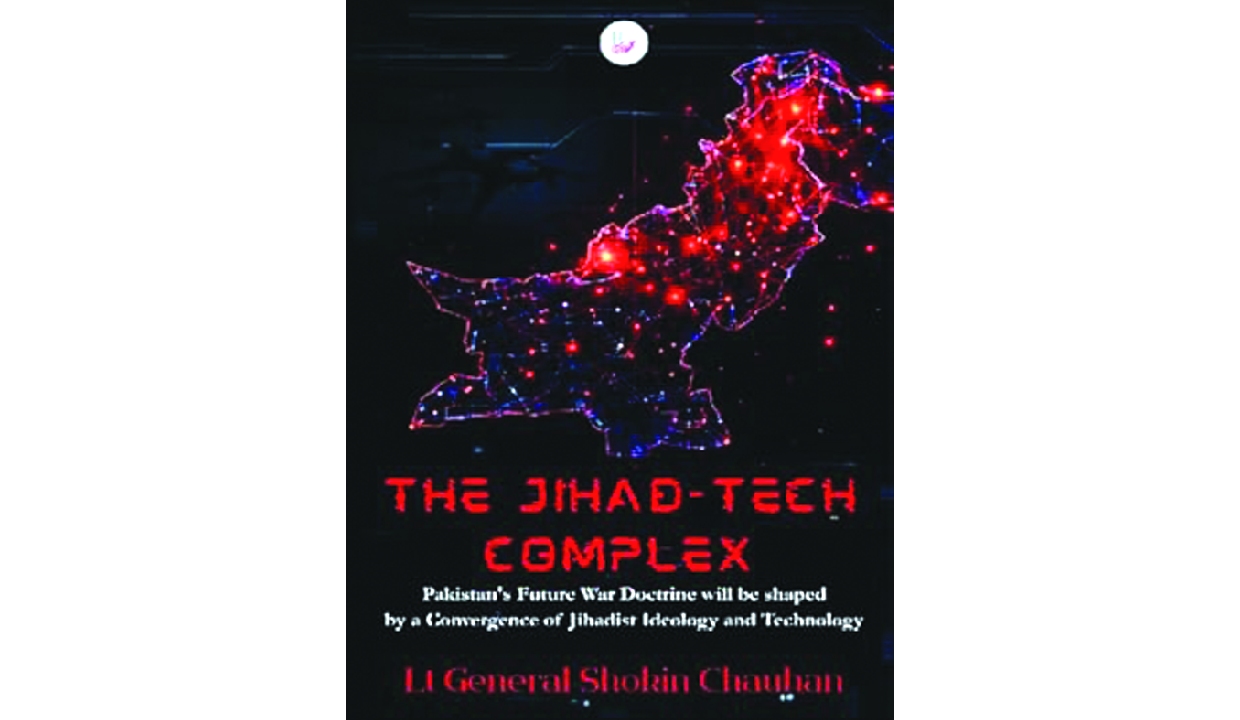
The Jihad-Tech Complex by Lt Gen Shokin Chauhan (Retd) bridges military doctrine and transnational security policy, offering a blueprint for modern national security
Maj Gen Deepinder Singh (Retd) eloquently opened the launch of The Jihad-Tech Complex by Lt Gen Shokin Chauhan (Retd) at the India International Centre on May 15, 2026, marking a critical intervention in contemporary literature. The event brought together distinguished military leaders, veterans, and security analysts to confront a sobering reality: future conflicts will transcend conventional battlefields, morphing into a complex matrix of radicalisation, proxy warfare, cyber capabilities, and information manipulation.
I was privileged and honoured to attend the launch of this strategic book, with a foreword by Lt Gen Syed Ata Hasnain (Retd), alongside Lt Gen Dhiraj Seth, Vice Chief of Army Staff, and Lt Gen Gautam Moorthy (Retd).
The evening, seamlessly guided by Maj Gen Deepinder Singh (Retd) as the Master of Ceremonies, featured acute assessments from India’s top military minds. Lt Gen Shokin Chauhan’s (Retd) core presentation exposed the dangerous convergence of jihadist ideology and technology, laying bare the future architecture of asymmetric conflict.
Reflecting on this threat, Lt Gen Syed Ata Hasnain (Retd), Hon’ble Governor of Bihar, noted in his foreword that Pakistan’s jihad complex has progressively discarded conventional, old-style irregular and proxy warfare. He warned that this “deadly combination” is an emerging threat that must be studied aggressively across both technological and ideological spectrums. Echoing these concerns, Lt Gen Dhiraj Seth, Vice Chief, observed that the book arrives as a necessary guide, preparing modern forces to adapt to the technological dimensions of ideological warfare and navigate modern security challenges with strategic clarity.
At the heart of The Jihad-Tech Complex is the realisation that the sub-conventional battlefield has evolved into a digitised, borderless ecosystem. Lt Gen Chauhan’s (Retd) assessment is a reminder that future conflicts may not always be conventional battlefields alone, but a complex mix of radicalisation, proxy warfare, cyber capabilities, information manipulation, and asymmetric tactics. Understanding these changing dimensions is essential for preparedness, resilience, and strategic clarity.
Terror networks no longer depend solely on physical terrain or rugged sanctuaries. Instead, they weaponise encryption, cyber capabilities, and global digital platforms to scale radicalisation, manage logistics, and execute information warfare with precision and speed. Lt Gen Shokin Chauhan’s (Retd) work on the convergence of jihadist ideology and technology offers important insights into the future architecture of asymmetric conflict.
The book’s themes closely resonated with discussions at the 2022 Special Meeting of the UN Security Council’s Counter Terrorism Committee in New Delhi, where I addressed the role of emerging technologies in countering terror financing, as well as at the 15th South Asia Conference under the aegis of MP-IDSA in 2023, where, in my “Special Address”, I examined regional instability and cross-border terrorism as major impediments to economic integration in South Asia.
A critical takeaway from the text is that terror infrastructure survives not just through weapons, but through sophisticated financial ecosystems and weak accountability mechanisms.
The strategic takeaways from The Jihad-Tech Complex took me back nearly 25 years to a mission where I was involved in investigating the diversion of funds to FARC guerrillas in Colombia. Resources allocated to the Colombian peace process were diverted because ideological ecosystems do not disappear overnight, and financial safeguards proved inadequate to prevent misuse.
Under the garb of humanitarian assistance and sustainability relief, funds often travelled through vulnerable channels, eventually strengthening networks that thrived on violence and instability. The experience reinforced an enduring lesson: that terror infrastructure survives not only through weapons and ideology, but also through financial ecosystems, influence structures, and weak accountability mechanisms. My shortlisting in 2022 for the UN Security Council’s ISIL (Da’esh), Al-Qaeda, and Taliban Sanctions Monitoring Team further deepened my understanding of the nexus between terror financing, ideology, and emerging technologies. This underscores a vital military lesson: kinetic success against individual terror cells is temporary if the grey-zone financial channels feeding them remain intact.
Because technology-enabled ideological warfare respects no physical borders, it frequently expands under the guise of diplomacy, influence, and regional outreach. Consequently, countering state-sponsored terrorism requires shifting national security away from a purely military theatre. It demands unwavering political will backed by a long-term strategy that synchronises state capacity across economic, diplomatic, and technological domains to dismantle the broader ecosystem nurturing state-sponsored terrorism.
In my view, this book is not just essential military literature, but equally a must-read for the diplomatic cadre. Ideological and technology-enabled warfare today often expands across borders under the garb of diplomacy, influence, and outreach.
As an India-Nepal Relations Observer, I found the book particularly relevant in understanding the intersection of ideology, technology, and regional geopolitical security dynamics in India’s neighbourhood. One cannot fight terrorism through a purely military solution alone. Countering state-sponsored terrorism requires unwavering and non-negotiable political will backed by a systematic, long-term strategy across economic, political, diplomatic, technological, and military theatres.
Pakistan’s terror infrastructure has evolved through sustained nurturing, financing, ideological conditioning, and technological enablement over decades. Addressing such ecosystems requires far more than tactical responses. It demands coordinated state capacity, financial vigilance, diplomatic clarity, technological preparedness, international cooperation, and resilience against information warfare.
This makes vigilance not merely a military responsibility, but also a diplomatic imperative. India’s diplomatic leadership must therefore remain alert to the evolving nature of ideological warfare, influence operations, and technological ecosystems that seek to destabilise national security interests from within and beyond borders.
The challenge is not only to neutralise acts of terrorism, but also to dismantle the networks, narratives, financing channels, and strategic ecosystems that enable and sustain them.
The book reviewer is a financial, geopolitical, and security analyst, India-Nepal Relations Observer, and former shortlisted candidate for the UN Security Council’s ISIL, Al-Qaeda, and Taliban Sanctions Monitoring Team; Views presented are personal.