I will return to Bangladesh: Sheikh Hasina
“As for returning by 2027, I do not see it as a matter tied to a specific timeline. The larger issue is the restoration of democracy, political rights, freedom of expression, and the rule of law in Bangladesh. Those conditions are essential not only for my return, but for the future of the country itself”
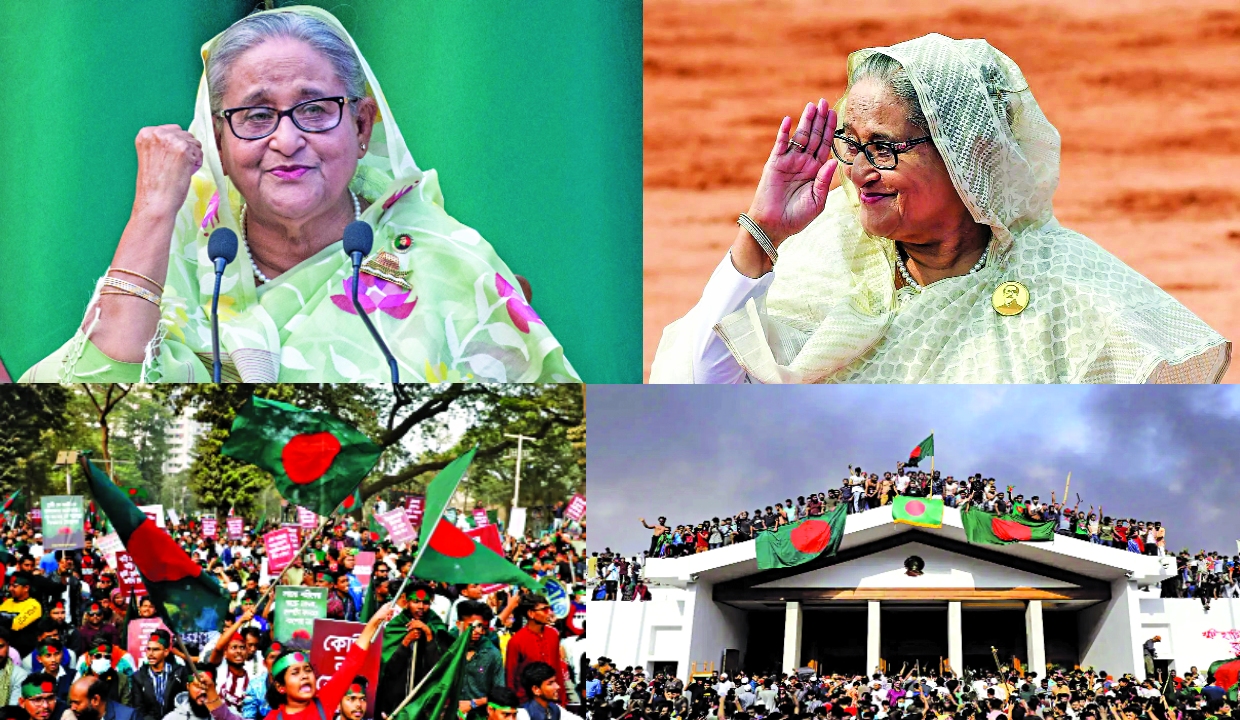
In an exclusive and wide-ranging interview with The Pioneer, exiled former Prime Minister Sheikh Hasina delivers a firm and unambiguous message about her political future and the direction of Bangladesh’s ongoing crisis. Addressing questions on her possible return, the state of democracy, the future of the Awami League, and the country’s mounting economic and political challenges, she asserts that her connection with Bangladesh remains unbroken despite her absence.
Responding to speculation over timelines, Hasina emphasises that her return is not a matter of personal scheduling but of restoring democratic order, constitutional rights, and political stability in the country. Recalling her long political journey, exile, and survival through repeated violence, she reiterates her commitment to what she describes as the unfinished mission of Bangabandhu Sheikh Mujibur Rahman.
From the future of opposition politics to concerns over governance, health systems, foreign policy shifts, and allegations of repression, the interview presents Hasina’s perspective on a deeply polarised Bangladesh—while underscoring her central claim: that she remains politically active, globally engaged, and determined to return when conditions allow.
May 17 marks your Homecoming Day. Even if not in 2026, how possible is your return to Bangladesh by 2027?
Sheikh Hasina: May 17 remains one of the most emotional days of my life. In 1981, after six years in exile and after losing most of my family in the 1975 assassination, I returned to Bangladesh with the support and affection of the people. Despite threats, political cases, and repeated conspiracies, I believed I had a duty to continue the unfinished work of Bangabandhu Sheikh Mujibur Rahman.
As for returning by 2027, I do not see it as a matter tied to a specific timeline. The larger issue is the restoration of democracy, political rights, freedom of expression, and the rule of law in Bangladesh. Those conditions are essential not only for my return, but for the future of the country itself.
Even while outside Bangladesh, I remain politically engaged. We are working through diplomatic channels, legal forums, and international advocacy to present what we believe was the unconstitutional removal of a democratically elected government. International awareness of the situation is gradually increasing.
I have survived numerous assassination attempts during my political career, including the grenade attack of August 21, 2004. I believe my responsibility to the people of Bangladesh is not over, and I remain committed to returning and continuing that struggle.
Your supporters continue to express concern for your health. But if the Awami League faces restrictions. Can you still return to Bangladesh?
Sheikh Hasina: The Awami League is not a party created by military power or administrative authority. It is a party built through mass movements and the support of ordinary people. Throughout history, the party has faced bans and repression, including during the Ayub Khan era and under the Pakistani regime in 1971. Yet it survived because of its connection with the people.
No political party rooted in popular support can be permanently eliminated through administrative measures alone. The Awami League continues to have millions of supporters and activists across Bangladesh despite arrests, intimidation, and political pressure.
Political bans often reflect fear rather than strength. Those in power understand that a politically organised Awami League remains a major force in Bangladesh’s politics. History suggests that suppression alone cannot erase that reality.
There is growing concern about reform and restructuring within the Awami League. Are these concerns worthwhile?
Sheikh Hasina: Every major democratic party undergoes periods of reflection and reform. The Awami League is no exception. As the country’s largest political organisation, allegations or criticisms involving individuals can emerge, and those issues must be addressed responsibly.
However, attempts to weaken political opponents under the banner of “reform” are also common in politics. The Awami League has its own internal democratic mechanisms and organisational structure capable of addressing its challenges.
Difficult periods also reveal who remains committed to the party’s ideals. Many activists continue to stand by the Awami League despite political pressure and personal risk. I believe these experiences will ultimately strengthen the party’s organisational discipline and ideological clarity.
Will Awami League leaders who left the country eventually return?
Sheikh Hasina: I would not describe them as leaders who “left voluntarily.” Many left because they feared for their safety amid the political situation following August 2024.
A large number of leaders and activists have faced arrests, legal cases, harassment, and attacks on their homes or businesses. Under such circumstances, some sought temporary refuge abroad while continuing political and advocacy work internationally.
At the same time, many leaders and activists remain inside Bangladesh despite immense pressure. Their resilience and commitment should be recognised. I believe that once democratic conditions and the rule of law are restored, many who left will return to continue political activities openly.
Bangladesh is facing significant economic challenges. Many citizens still benefit from infrastructure projects completed during your administration. How would you have handled the current crisis?
Sheikh Hasina: Economic development and public welfare have always been central to the Awami League’s political philosophy. During our years in office, Bangladesh experienced significant economic growth alongside major infrastructure development, including the Padma Bridge, Metro Rail, Rooppur Nuclear Power Plant, and Matarbari Deep Sea Port.
The country’s economic indicators improved substantially during that period. Per capita income rose, electricity access expanded nationwide, and Bangladesh gained recognition internationally as one of South Asia’s fastest-growing economies.
Every government faces economic challenges. During our tenure, we dealt with both the COVID-19 pandemic and the global economic impact of the Russia–Ukraine conflict. We focused on maintaining economic stability while protecting vulnerable citizens.
I believe the current crisis is closely linked to political instability, weakened institutional confidence, and uncertainty in governance. Sustainable recovery requires long-term planning, investor confidence, and political stability.
There are concerns over outbreaks of preventable diseases, including measles. Do you believe that the current administration has failed to manage the healthcare systems?
Sheikh Hasina: The death of children from preventable diseases is deeply painful. During our administration, healthcare expansion and immunisation programs were national priorities. Through community clinics and vaccination campaigns carried out in cooperation with international partners, Bangladesh made major progress in reducing child mortality and controlling infectious diseases.
Our immunisation programs were internationally recognised, and we invested heavily in public health infrastructure, including ICU facilities established during the COVID-19 pandemic.
Public health systems require continuity and effective administration. Any disruption in vaccination programs or shortages in medical supplies can quickly create serious public health consequences.
Healthcare should never become politicised. Protecting children and ensuring public health must remain above political conflict.
What steps is the Awami League taking regarding imprisoned leaders, journalists, and intellectuals?
Sheikh Hasina: We are pursuing both legal and diplomatic efforts.
Our representatives remain in communication with international organisations, human rights groups, and democratic institutions to raise concerns about arrests, due process, and political freedoms in Bangladesh.
The independence of the judiciary and equal protection under the law are fundamental to democracy. We believe everyone, regardless of political affiliation, deserves fair legal treatment.
This issue goes beyond party politics. The condition of democratic institutions affects the future stability and credibility of the state itself.
The current government is strengthening ties with China and Pakistan, while anti-India rhetoric has grown considerably. How do you view these developments? Are you also concerned about rising extremism?
Sheikh Hasina: Bangladesh’s foreign policy has traditionally been guided by Bangabandhu’s principle: “Friendship to all, malice toward none.” During our tenure, we sought balanced relations with regional and global partners while safeguarding Bangladesh’s national interests.
India shares deep historical ties with Bangladesh because of its role during the Liberation War. At the same time, Bangladesh must maintain constructive and sovereign relations with all countries.
On extremism, our government maintained a zero-tolerance policy. Bangladesh once faced serious militant threats, but through coordinated counterterrorism efforts and institutional reforms, extremist activity was significantly reduced.
Any weakening of those efforts or political tolerance toward extremist groups would pose risks not only to Bangladesh but also to regional security.
What support are you seeking from the international community to help build an inclusive society in Bangladesh?
Sheikh Hasina: Bangladesh is passing through a difficult political and institutional period. Democratic rights, economic stability, social harmony, and the rule of law must be protected for all citizens.
I urge democratic nations and international organisations to closely observe developments in Bangladesh and support democratic values, human rights, and constitutional governance.
An inclusive Bangladesh must protect political pluralism, minority rights, women’s rights, and freedom of expression. These are essential foundations of a democratic society.
My message to the people of Bangladesh is not to lose hope. Democracy has faced challenges before, and the resilience of the Bangladeshi people remains the country’s greatest strength.
“Every government faces economic challenges. During our tenure, we dealt with both the COVID-19 pandemic and the global economic impact of the Russia–Ukraine conflict. We focused on maintaining economic stability while protecting vulnerable citizens”
The writer is an Associate Editor (Foreign Affairs) at The Pioneer; Views presented are personal.